

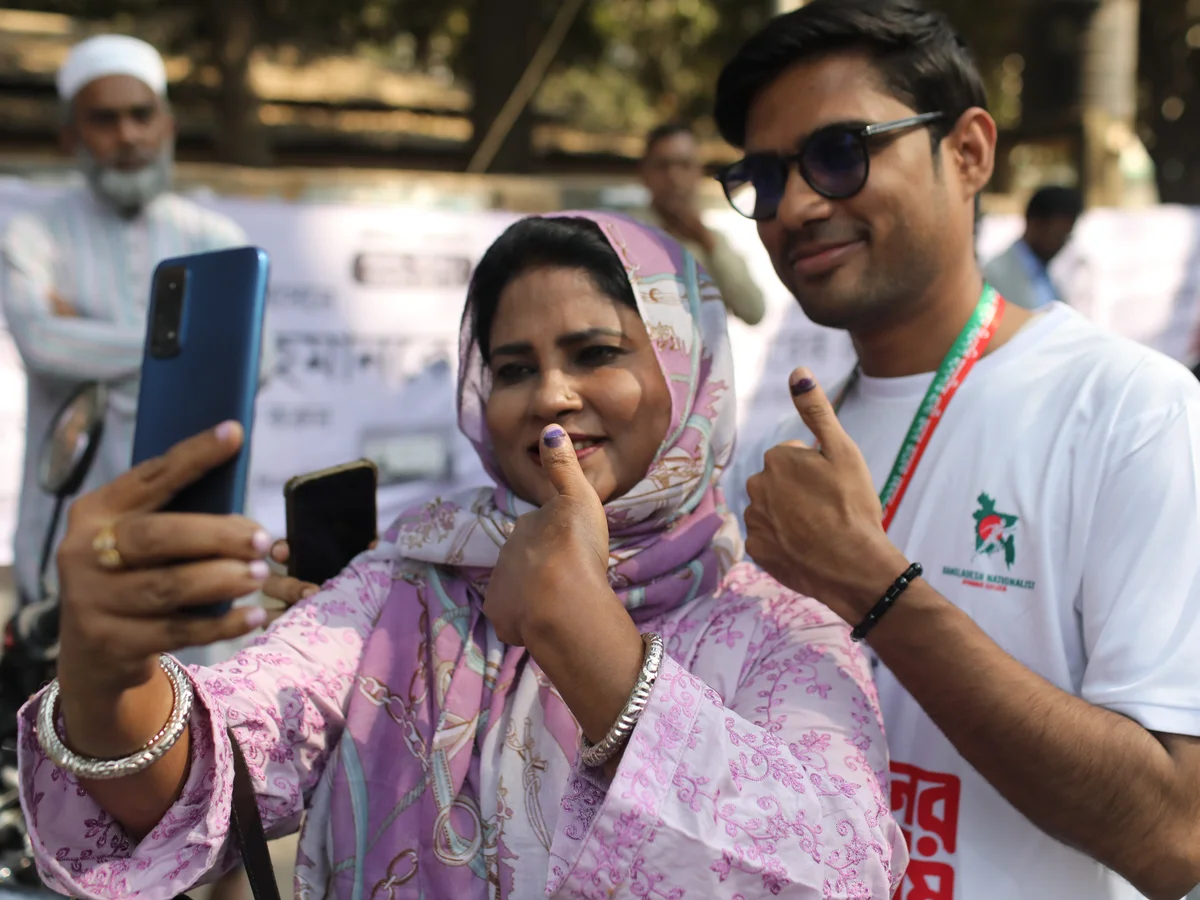
The centre-right Bangladesh Nationalist Party (BNP) has achieved a decisive parliamentary majority in a landmark general election held 18 months after mass protests forced the removal of longtime Prime Minister Sheikh Hasina.
According to official results, the BNP won more than two-thirds of the seats in parliament, marking a major political shift in the country. Jamaat, the country’s main Islamist party, finished second, while Hasina’s Awami League was barred from contesting the vote.
Historic Election Following Political Upheaval
The election is widely seen as a turning point for Bangladesh, coming after a youth-driven uprising that ended Hasina’s extended period in power. The protests, led largely by younger voters, reshaped the political landscape and paved the way for the February 12 polls.
Alongside the parliamentary vote, citizens also endorsed wide-ranging democratic reforms through a referendum held on the same day, signaling public demand for institutional change and greater political accountability.
BNP leader Tarique Rahman, who is expected to become the next prime minister, thanked supporters publicly in Dhaka, expressing gratitude while urging restraint. The party opted not to hold celebratory processions, encouraging supporters instead to attend prayers in memory of Rahman’s late mother, former Prime Minister Khaleda Zia, who passed away in December.
A Leadership Shift Marked by Political Legacy
Rahman’s rise represents a dramatic reversal of fortune. He spent 17 years in self-imposed exile in London before returning to Bangladesh just days before his mother’s death. Despite his long absence, he secured parliamentary seats in both Dhaka-17 and Bogra-6 and emerged as one of the BNP’s 212 winning candidates.
However, his background also highlights the enduring influence of political dynasties in Bangladesh. Like Sheikh Hasina and Khaleda Zia, Rahman comes from a family deeply rooted in national politics, even as his party campaigns on promises of reform and renewal.
This election was notable for several unprecedented developments. For the first time in decades, neither Hasina nor Zia participated, and with the Awami League excluded, Jamaat contested as one of the principal political forces. The alliance led by Jamaat secured 77 seats, including six won by the student-led National Citizen Party (NCP), which emerged from the 2024 protest movement.
Key Challenges Facing the Incoming Government
Rahman now faces significant expectations from a population eager for change, particularly a large and politically active youth demographic. During his campaign, he pledged to restore democratic governance after what critics described as years of authoritarian rule.
Economic recovery is expected to be among the most urgent priorities. Rising food prices, unemployment, and the need to create opportunities for Bangladesh’s large young workforce remain pressing concerns. Reviving growth and stabilising the economy will likely define the early months of the new administration.
Foreign relations, especially ties with neighbouring India, are also expected to be a major focus. Shortly after the election results were announced, Indian Prime Minister Narendra Modi reportedly contacted Rahman to congratulate him and reaffirm bilateral cooperation and shared regional interests.
Reform Agenda and Institutional Changes
The election outcome was accompanied by strong public backing for constitutional reforms. Proposed changes include the introduction of term limits for the prime minister, the creation of a directly elected upper house of parliament, expanded presidential authority, and stronger judicial independence.
These reforms are viewed by supporters as necessary steps to prevent future concentration of power and to strengthen democratic institutions.
Another key area of reform is political representation. While the reform charter includes provisions to enhance women’s participation in parliament, the low number of successful female candidates in the election highlights ongoing gender gaps in political representation.
Scrutiny and Public Expectations
Despite its sweeping victory, the BNP enters office under close observation. The party faced allegations of corruption and human rights abuses during its previous tenure in the early 2000s, and analysts note that public trust will depend heavily on governance and transparency.
With voter turnout reported at 59.44 percent, the results reflect strong engagement from an electorate shaped by recent political activism. Many of the young voters who participated in the protests that led to Hasina’s removal are now seen as a decisive force demanding accountability, economic stability, and democratic reforms.
As Bangladesh transitions into a new political era, Tarique Rahman’s leadership will be closely watched both domestically and internationally, with expectations high that his government can deliver meaningful reforms while addressing economic and institutional challenges.