

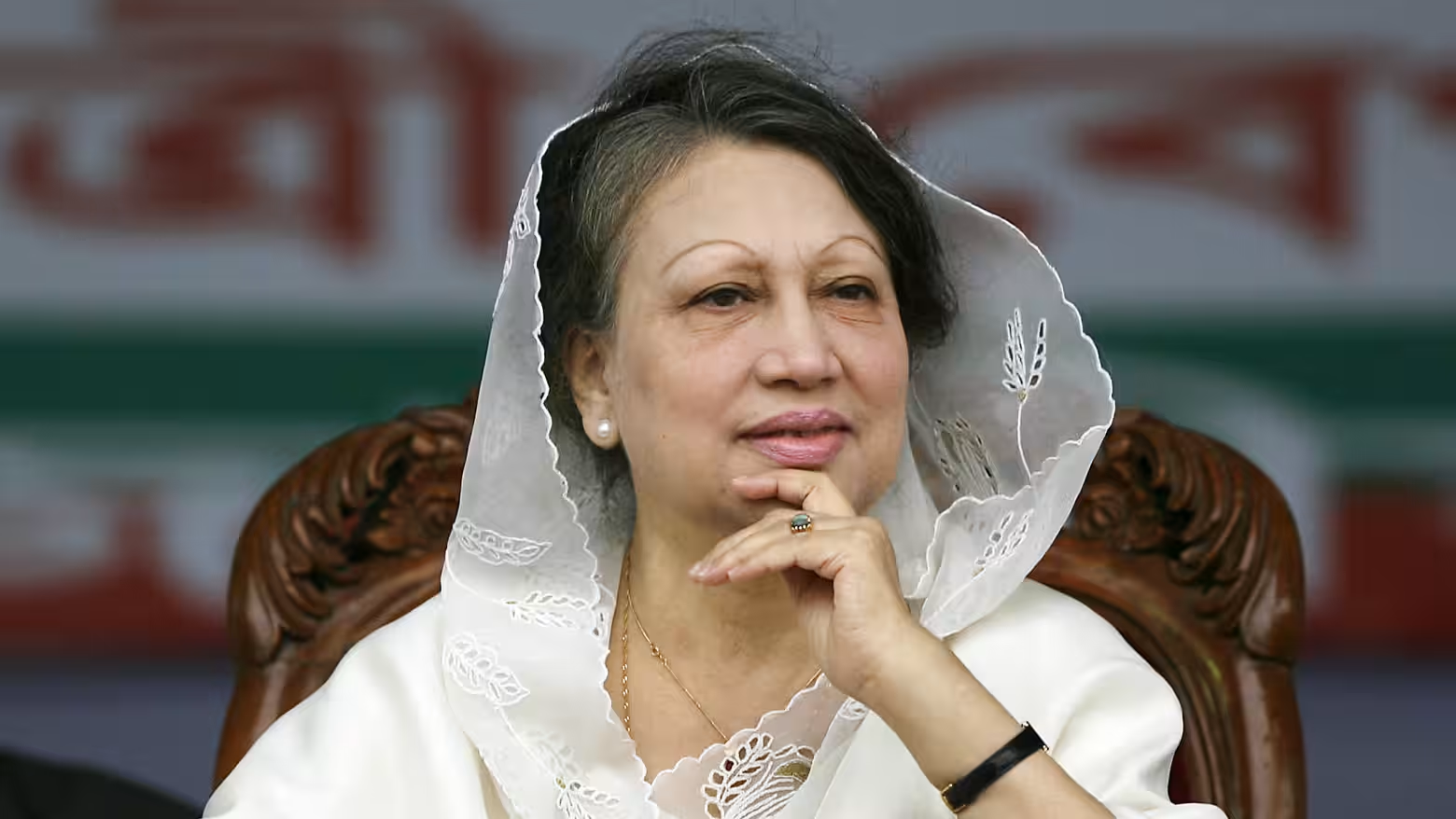
Bangladesh has announced a three-day period of national mourning following the passing of Khaleda Zia, the country’s first woman to serve as prime minister and a defining figure in South Asian politics. Her party, the Bangladesh Nationalist Party (BNP), confirmed that she died early Tuesday at a medical facility in Dhaka.
In its statement, the BNP said Khaleda passed away at 6:00 a.m. local time, calling her loss “a moment of deep sadness for the nation.” Party leaders urged citizens to remember her contributions and honor her legacy through peaceful remembrance.
Funeral Arrangements Announced
The interim government confirmed that Khaleda’s funeral service will take place on Wednesday, including national prayers scheduled outside the parliament complex after midday. She will later be laid to rest beside her late husband, former President Ziaur Rahman, who founded the BNP and remains an influential historical figure in Bangladesh’s independence era.
Regional leaders including Indian Prime Minister Narendra Modi and Pakistan Prime Minister Shehbaz Sharif shared formal messages of condolence. Modi said Khaleda’s leadership “played a lasting role in Bangladesh’s progress and bilateral ties,” while Sharif highlighted her as a figure who “believed in regional cooperation.”
A Long-Running Political Era Comes to a Close
For more than three decades, Khaleda Zia and her political counterpart Sheikh Hasina shaped Bangladesh’s democratic discourse. The rivalry between both leaders defined multiple election cycles and major constitutional shifts, including Bangladesh’s transition from a presidential system to a parliamentary one in the 1990s.
Hasina, who left office in 2024 after large-scale youth demonstrations, is currently living in exile. Analysts say Khaleda’s death marks the symbolic end of a political generation that influenced millions of young voters and steered national conversations on reform, accountability, education, and economic policy.
Political Reform, Economic and Education Impact
During her three terms in office, Khaleda oversaw policies that:
-
strengthened compulsory primary education,
-
eased foreign investment restrictions,
-
expanded trade partnerships,
-
and reinforced civilian-led democratic institutions.
Although her legacy remains debated in academic and political circles, many observers recognize her as a figure who transformed grassroots political movements into long-term national influence, particularly by encouraging youth participation in elections, both online and in public discourse.
Tributes From Her Family and Political Circle
Her son Tarique Rahman, who now leads the BNP, called his mother “a leader who believed in national dignity and democratic expression,” adding that her political path was driven by public service, not personal ambition.
Rahman said that despite facing years of health challenges and political pressure, Khaleda remained a figure who “inspired many people to stay hopeful about Bangladesh’s democratic institutions.”
Public Reaction in Dhaka
Local reporters observed large gatherings outside the hospital early Tuesday morning, where supporters assembled to pay their respects in a peaceful, orderly tribute. Civil defense officials assisted with crowd safety and traffic redirection to ensure public security during the mourning period.