

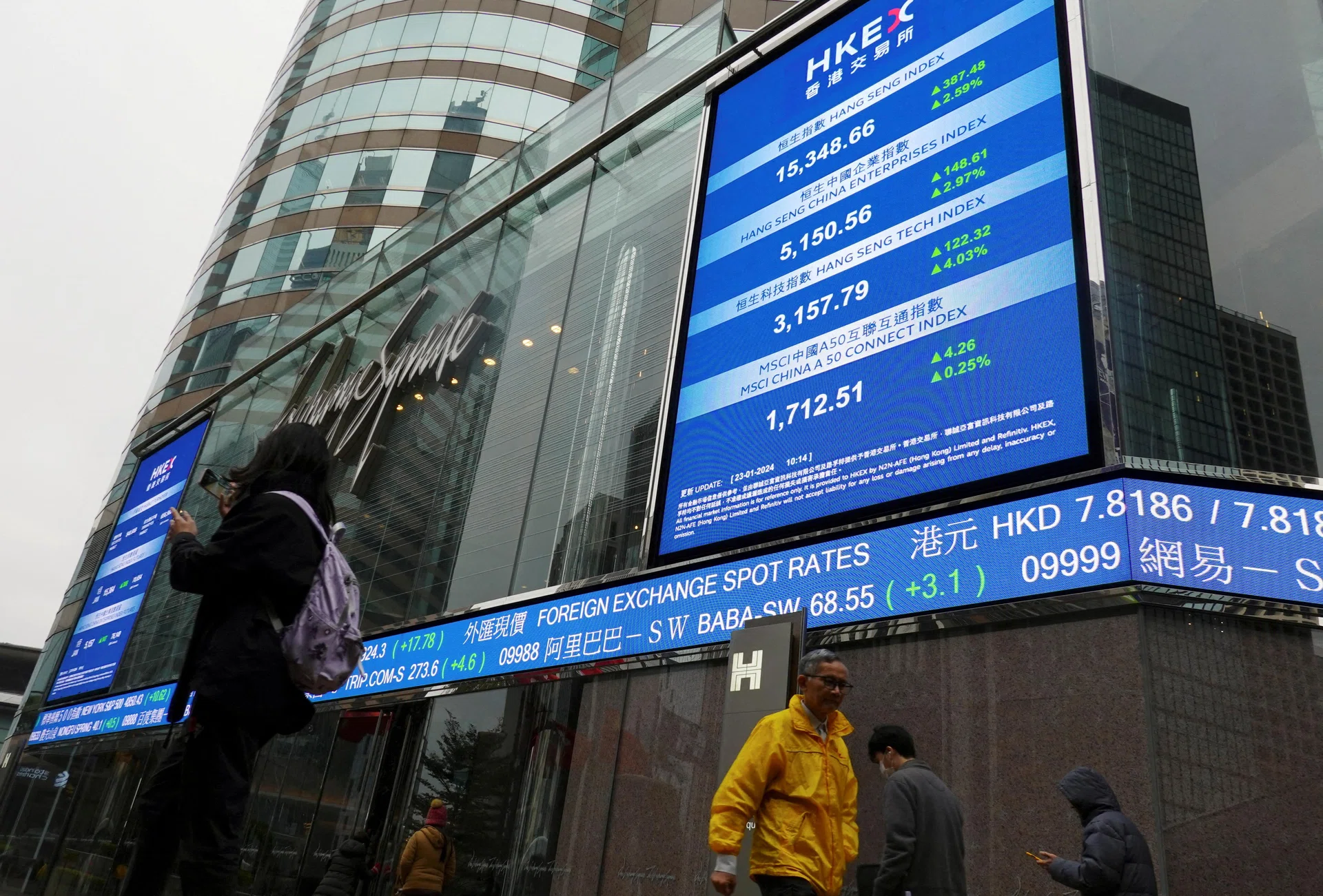
Asian equity markets advanced on Friday, reaching their strongest level in over a month, as investors positioned for a positive close to the year. Despite limited participation from several major markets due to holiday closures, sentiment remained upbeat, supported by renewed risk appetite this week. At the same time, the Japanese yen’s continued softness has kept concerns about possible currency support measures from authorities in the background.
With stock exchanges in Australia and Hong Kong, along with most European markets, closed for the day, trading activity was expected to be lighter than usual. Market participants anticipated thinner liquidity, which can amplify price swings even in modest-volume sessions. Nevertheless, investors have been testing a year-end push in risk assets, buoyed by improved sentiment during the final full week of December.
Regional Equities Gain Momentum
Japan’s Topix index rose 0.5%, edging close to record territory and remaining in positive ground during the session. South Korea’s main index gained 0.6%, extending a remarkable annual performance. Its cumulative rise for 2025 has reached 72%, placing it among the world’s standout markets this year.
In mainland China, the CSI 300 index increased 0.27%, putting it on track for an estimated 18% gain in 2025—its strongest yearly rise since 2020. The broader MSCI Asia-Pacific index also climbed 0.4%, marking its highest position since mid-November. The index has added roughly 25% in value year-to-date, reflecting resilience in the region’s risk assets despite global macro headwinds.
Investors have pointed to improved risk sentiment this week, driven by portfolio rebalancing and year-end positioning rather than new macroeconomic triggers. The closures across regional markets have not derailed the optimism, although participants expect volatility to remain elevated if liquidity continues to thin.
Precious Metals Continue Record Run
Outside equities, precious metals were the day’s focal point. Spot silver surged more than 4%, setting a new all-time high. Gold also refreshed record levels, last trading near $4,503.39 per ounce. The ongoing rally in both metals has been supported by strong physical demand and institutional accumulation throughout the year.
Analysts note that the trend has been reinforced by central bank purchases, inflows into gold-linked exchange-traded funds (ETFs), and investor concern over currency purchasing-power erosion amid rising global debt levels. Gold has gained more than 70% in 2025, marking its most significant annual rise in decades. Silver’s ascent has been even sharper, rising over 150% year-to-date.
According to commodities specialists, the metals rally is unlikely to cool in the near term. Forecasts from several large financial institutions suggest continued upside into 2026, underpinned by geopolitical risk, monetary uncertainty, and persistent physical-market demand. Analysts emphasize that the sustainability of the rally comes from demand fundamentals rather than short-term speculative drivers.
Currency Moves and Policy Uncertainty
Looking toward 2026, attention has shifted to the US Federal Reserve’s next policy move. Markets are pricing at least two rate reductions next year, although traders do not expect a decision before June. The Fed’s own outlook signals only one potential cut, leaving room for uncertainty given differing views among policymakers.
The question of leadership at the Fed has also returned to focus, with the US administration expected to nominate a new central bank chair ahead of the end of Jerome Powell’s term in May 2026. Investors are watching for any signals that could influence expectations around the nomination, as leadership changes at the Fed historically impact currency, rate, and risk-asset sentiment.
The US dollar index—which measures the dollar against six major currencies—was flat in Asian trading at 97.935, but is still heading for a 0.8% weekly drop, its weakest week since July. As the dollar eased, currencies including the euro, British pound, and Swiss franc reached multi-week highs.
The Japanese yen traded slightly weaker at 156.23 per dollar, but remains on track for a 1% weekly gain, its strongest week since late September. This followed a series of verbal warnings from Tokyo officials, which markets interpret as keeping the option of currency support open. Despite a recent rate increase from the Bank of Japan (BOJ), expectations for further hikes remain uncertain.
BOJ Governor Kazuo Ueda indicated the central bank will take a cautious approach to additional rate moves, signaling no urgency for further hikes. Market interpretation of his tone has contributed to yen volatility. Analysts familiar with BOJ communications suggest the ambiguity may be intentional, preserving flexibility for policy timing rather than signaling a policy pause.
Japan’s Bond Market and BOJ Strategy
Japan’s government bond market moved modestly higher on Friday, with yields retreating from long-term peaks following expectations of controlled debt issuance plans. The slight recovery was supported by comments from Prime Minister Sanae Takaichi, who has been addressing market concerns around fiscal expansion.
Takaichi has previously advocated for a more active fiscal approach, prompting investor caution over potential effects on bond supply and yields. Her recent communications aimed to calm those concerns, helping benchmark yields ease from a 26-year high.
Investors remain alert to possible yen-buying measures from Japanese authorities, especially as year-end volumes drop. Analysts frequently note that periods of low liquidity—such as during holiday-affected sessions—can become windows when central banks or governments act to stabilize currencies or markets, although no intervention has been confirmed.
Meanwhile, fighting between Russia and Ukraine continues to influence investor risk sentiment indirectly. While markets have recently favored optimism around diplomacy, asset moves continue to reflect policy uncertainty, portfolio flows, and macro hedging rather than new developments on the battlefield.