

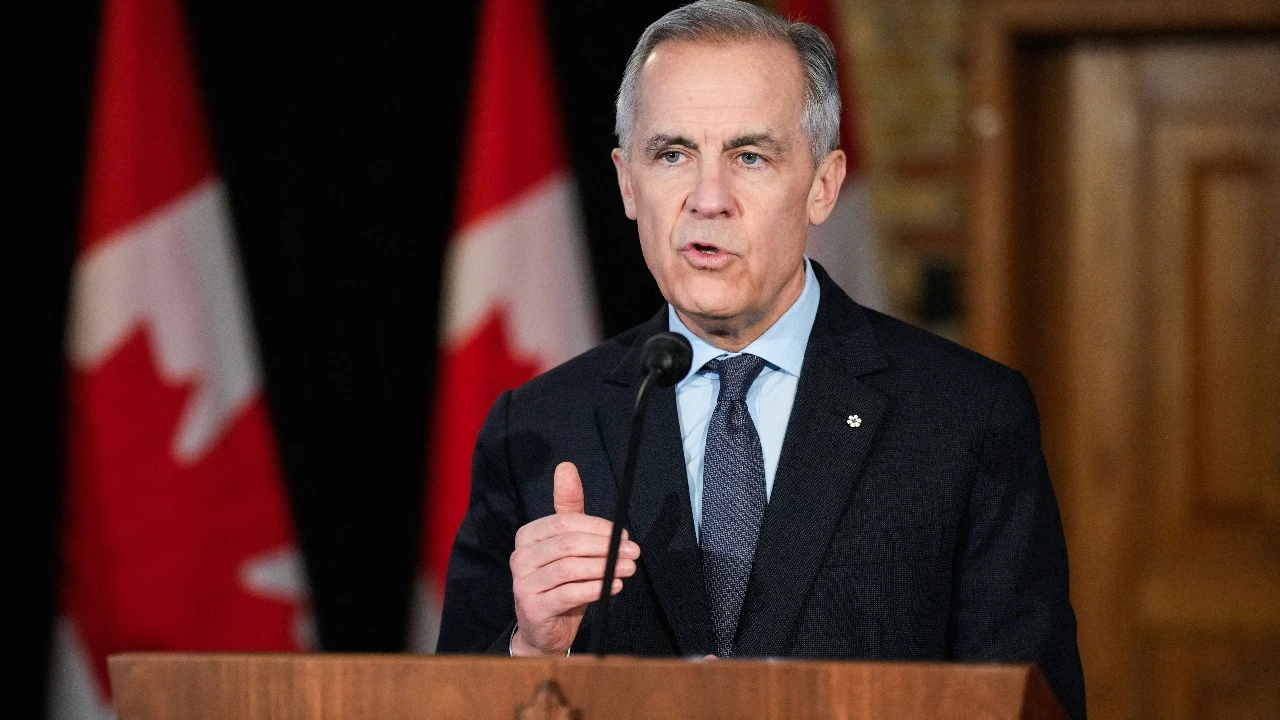
Canada’s Prime Minister Mark Carney has said he expects the United States to respect Canada’s sovereignty following reports that Alberta separatist leaders have held multiple meetings with officials linked to President Donald Trump administration.
The Financial Times reported that officials from the U.S. State Department met several times with representatives of the Alberta Prosperity Project (APP), a group advocating a referendum on whether the resource-rich western province should leave Canada.
Speaking to reporters in Ottawa on Thursday, Carney said he had raised the issue directly with Trump. “I expect the US administration to respect Canadian sovereignty,” he said, adding that he hoped both countries could now focus on areas of cooperation.
Carney, who was raised in Edmonton, noted that separatist sentiment in Alberta is not new and has existed for decades.
Trump has repeatedly suggested Canada could become the “51st state” of the United States, comments that have drawn sharp criticism north of the border.
Reports Detail US Contacts With Alberta Separatist Group
According to the Financial Times, leaders of the Alberta Prosperity Project met U.S. State Department officials in Washington at least three times since April last year. Trump returned to office for a second term in January.
The reported meetings have triggered concern in Ottawa over potential U.S. involvement in Canadian domestic politics.
Those concerns were heightened after remarks last week by U.S. Treasury Secretary Scott Bessent, who described Alberta as “a natural partner for the US” and praised its resource base and “independent” character in an interview with the right-wing broadcaster Real America’s Voice.
Bessent criticised Canada’s pipeline policies and suggested Alberta’s energy could flow south into the United States. He also referenced speculation about a possible referendum on Alberta’s future.
Asked whether he had inside knowledge of a separatist push, Bessent said, “People are talking. People want sovereignty.”
After those comments, APP leader Jeffrey Rath said the group was seeking another meeting with U.S. officials next month, where it may raise the possibility of a $500bn credit line to support Alberta should a future independence vote occur.
Diplomatic Tensions Frame the Debate
The developments come at a sensitive moment in U.S.-Canada relations, with trade disputes ongoing and broader global tensions in play.
At the World Economic Forum in Davos earlier this year, Carney warned that Washington’s actions were contributing to a “rupture” in the global order.
Trump’s expansionist rhetoric has extended beyond Canada. He has publicly floated the idea of acquiring Greenland from Denmark, another NATO ally, and his administration has taken aggressive steps toward Venezuela, including actions targeting its leadership and oil sector.
Canadian Leaders Respond With Sharp Words
Reaction from Canadian political leaders has been swift and, in some cases, severe.
British Columbia Premier David Eby described the reported meetings as “treason.”
“To ask a foreign power to help break up Canada—there’s an old word for that, and it’s treason,” Eby told reporters, accusing separatist leaders of undermining national unity.
Ontario Premier Doug Ford struck a more conciliatory tone, calling for unity. “It’s Team Canada,” he said, warning against divisions across provinces.
Alberta Premier Danielle Smith, however, said she would not condemn Albertans who support separation, citing what she called “legitimate grievances” with Ottawa. Smith, a longtime Trump supporter, visited Trump’s Mar-a-Lago estate in January 2025 while other Canadian leaders were openly criticising his remarks about annexation.
Why Separatist Sentiment Persists in Alberta
Tensions between Alberta and the federal government have deep roots, largely centred on energy policy and revenue sharing.
Many Albertans argue that federal environmental regulations, carbon pricing and pipeline delays limit the province’s ability to export oil and gas. As a landlocked region, Alberta depends heavily on pipelines crossing other provinces to reach international markets.
Despite contributing around 15 percent of Canada’s GDP while accounting for roughly 12 percent of the population, Alberta receives no equalisation payments under the federal system that redistributes funds to less wealthy provinces.
The province produces more than 80 percent of Canada’s oil and about 60 percent of its natural gas.
Carney recently signed an agreement that could allow an oil pipeline to the Pacific coast, though the project faces political opposition and regulatory hurdles.
What a Referendum Would Involve
Polling by Ipsos suggests that about 30 percent of Albertans would support beginning the process of leaving Canada. However, roughly one in five of those supporters view such a vote as symbolic rather than a definitive push for independence.
Under Alberta’s citizen-initiative rules, separatists would need nearly 178,000 signatures to force a referendum, potentially later this year.
Even if a vote passed, independence would not be immediate. Canada’s Clarity Act requires the federal government to determine whether the referendum question and outcome constitute a clear mandate before negotiations could begin on issues such as borders, debt and Indigenous rights.
The Alberta Prosperity Project’s Goals
The Alberta Prosperity Project describes itself as a non-partisan educational initiative seeking greater autonomy for the province. It argues Alberta would benefit from full control over its resources, taxes and policies.
On its website, the group says the term “Alberta sovereignty” has increasingly come to mean full independence for many residents, driven by economic and political frustrations.
Critics, however, have questioned the APP’s economic assumptions and its claims about the feasibility of an independent Alberta.
Washington Denies Backing Separatists
U.S. officials told the Financial Times that meetings with civil society groups are routine and that no commitments or support were offered to Alberta separatists.
Earlier this year, CBC quoted U.S. security analyst Brandon Weichert suggesting that Trump’s “51st state” comments were, in effect, aimed at Alberta. Speaking on a show hosted by Steve Bannon, Weichert speculated that the U.S. could recognise an independent Alberta.
Parallels With Greenland
Canada is not the only country to face such dynamics. Trump has repeatedly pressed for Greenland to join the United States, drawing firm opposition from Denmark and European leaders.
In August 2025, Denmark summoned the top U.S. diplomat in Copenhagen after reports that Trump allies were compiling a list of Greenlanders supportive of closer ties with Washington—an episode that has heightened concerns in Ottawa over similar tactics.