
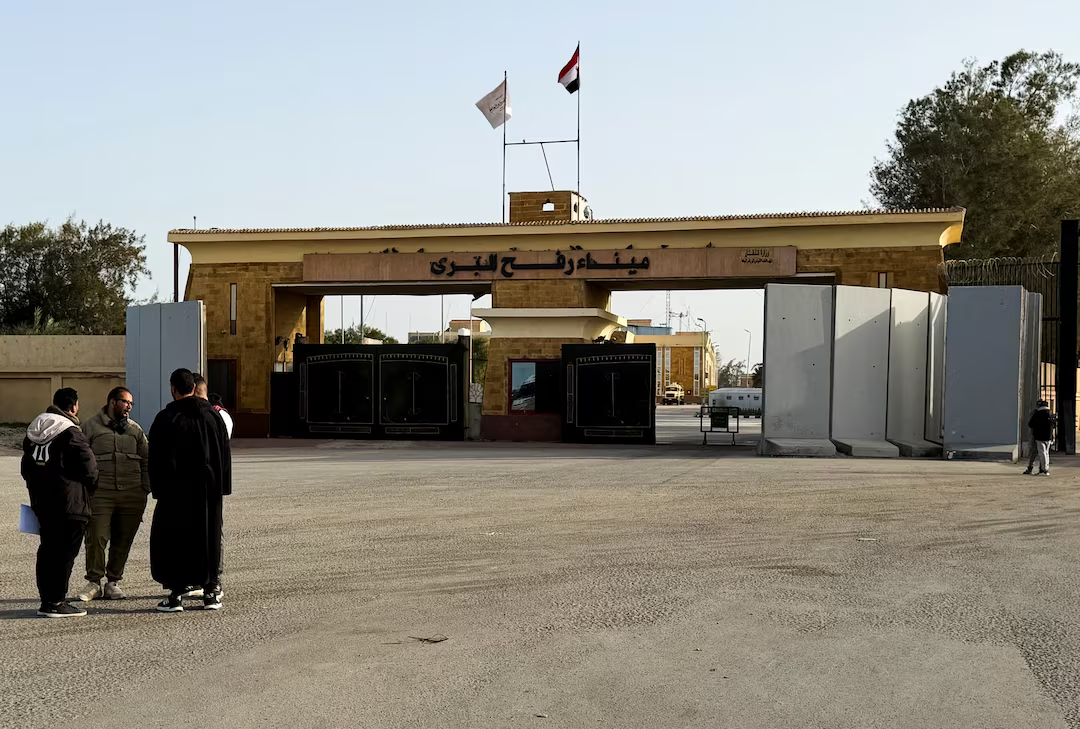
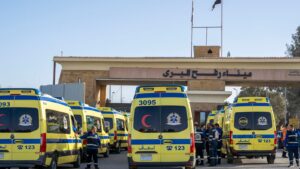
Israel reopened the Rafah border crossing between Gaza and Egypt on Monday for pedestrian movement, allowing some Palestinians to leave the enclave and others to return after fleeing the war, though under strict security controls and numerical limits.
The reopening is limited in scope, with Israel requiring security screening for Palestinians entering or exiting Gaza. Israeli and Egyptian authorities are also expected to cap the number of people permitted to cross each day.
An Israeli security official said European monitoring teams had arrived at the crossing, confirming that it “has now opened to the movement of residents, for both entry and exit.”
Crossing Closed Since 2024 Offensive
Israel took control of the Rafah crossing in May 2024, roughly nine months into the Gaza war, which was later paused by an October ceasefire brokered by Donald Trump.
Reopening Rafah was a key condition in the first phase of the ceasefire framework aimed at halting hostilities between Israel and Hamas.
Before the crossing was seized, Rafah had served as Gaza’s primary exit point. Palestinian officials estimate that around 100,000 people left Gaza during the early months of the war, many with assistance from aid organisations, while others reportedly paid intermediaries in Egypt to secure passage.
Medical Access Severely Restricted
Following Israel’s takeover of Rafah and the closure of the Philadelphi corridor along the Gaza–Egypt border, a critical route for wounded and sick Palestinians seeking treatment abroad was cut off.
According to the United Nations, only a few thousand Palestinians have been permitted to leave Gaza for medical care via Israel over the past year, while many thousands more remain in urgent need of treatment outside the enclave.
Gaza’s population of roughly two million people now largely survives in makeshift shelters or damaged homes amid widespread destruction.
Foreign Journalists Still Barred
Despite the reopening of Rafah, Israel continues to prohibit foreign journalists from entering Gaza. International reporters have been barred from the territory since the war began, limiting independent coverage of the conflict.
Israel’s Supreme Court of Israel is currently reviewing a petition filed by the Foreign Press Association, which is seeking access for foreign media.
Government lawyers argue that allowing journalists into Gaza could endanger Israeli troops and reporters themselves. The FPA disputes this, saying the public is being denied independent reporting and noting that aid workers and UN staff have been allowed entry since the war started.
Ceasefire Remains Fragile
Trump’s Gaza plan, now entering a second phase, envisions the territory eventually being administered by Palestinian technocrats, Hamas disarming, Israeli forces withdrawing, and large-scale reconstruction beginning.
Israeli officials have expressed scepticism that Hamas would relinquish its weapons, and some say preparations are under way for a possible return to fighting.
Since the October ceasefire took effect, Israeli attacks in Gaza have killed more than 500 Palestinians, according to local health officials, while Palestinian fighters have killed four Israeli soldiers.
On Saturday, Israel carried out some of its heaviest air strikes since the truce began, killing at least 30 people. Israeli officials said the strikes were launched in response to what they described as a Hamas violation of the ceasefire the previous day.