

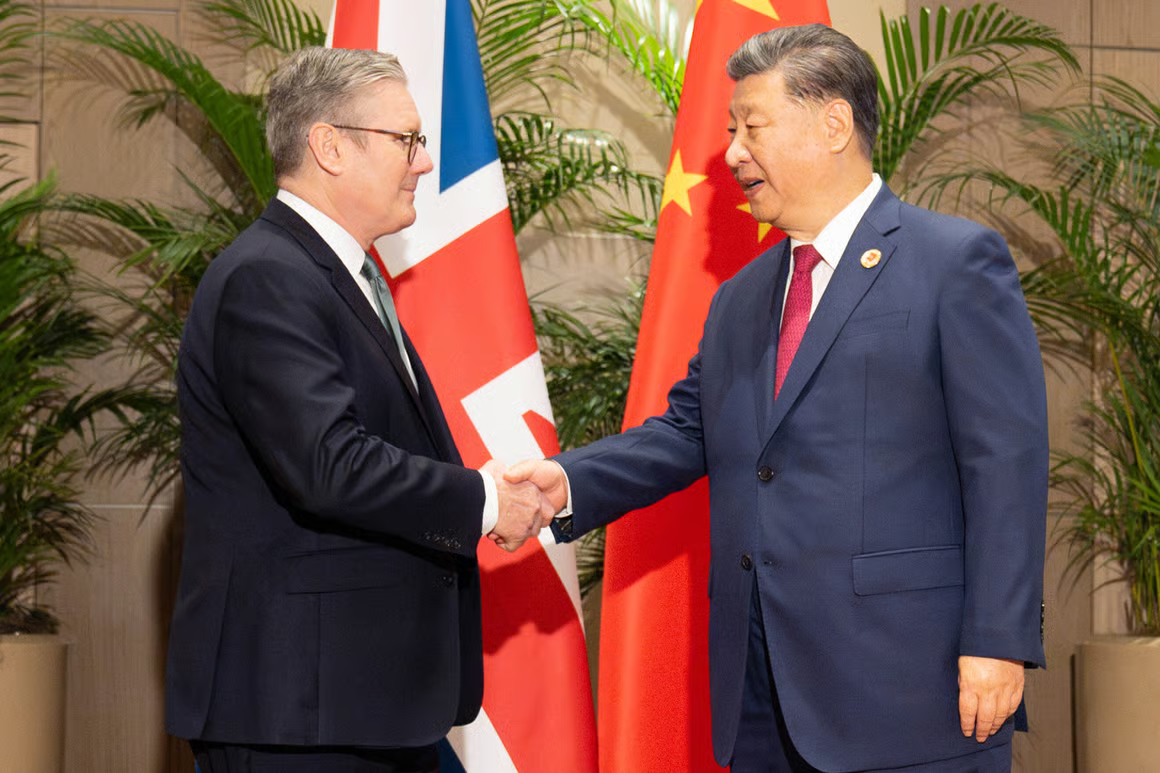
Britain Prime Minister Keir Starmer told Chinese President Xi Jinping on Thursday that he wants to build a more “sophisticated relationship” with China, signalling a potential turning point after years of strained ties between the two countries.
The talks, held at Beijing’s Great Hall of the People, marked the most significant moment of Starmer’s four-day visit — the first by a British prime minister in eight years. The meeting was followed by a working lunch between the two leaders.
Economic Growth a Central Priority
Starmer, whose centre-left Labour government has struggled to deliver the economic growth it promised, has made repairing relations with the world’s second-largest economy a key foreign-policy goal, despite ongoing concerns over espionage and human rights.
“China is a vital global player,” Starmer told Xi at the start of their meeting. “It’s important that we build a relationship that allows us to cooperate where we can, while also having serious conversations about where we disagree.”
Xi said relations between Britain and China had experienced “twists and turns” in recent years that benefited neither side, adding that Beijing was ready to work toward a long-term strategic partnership.
Western Diplomacy Shifts Amid US Uncertainty
Starmer’s visit comes as Western leaders step up engagement with China, partly in response to unpredictability from the United States under President Donald Trump.
Trump’s fluctuating trade threats and comments about taking control of Greenland have unsettled traditional allies, including Britain. Starmer’s trip follows closely after Canadian Prime Minister Mark Carney visited Beijing and signed an agreement aimed at easing trade barriers — a move that drew sharp criticism from Trump.
Kerry Brown, a professor of Chinese studies at King’s College London, said he expected the visit to yield several agreements to underline improved relations.
“Both sides want this to look like a success,” Brown said. “They’re not interested in a meeting dominated by arguments over disagreements.”
Business Leaders Accompany Prime Minister
More than 50 British business leaders travelled with Starmer, highlighting the economic focus of the visit. The prime minister has adopted a policy of renewed engagement with China after relations deteriorated under previous Conservative governments, which restricted some Chinese investment over national-security concerns and criticised Beijing’s actions in Hong Kong.
“I promised when we came into office that Britain would face outward again,” Starmer told Xi. “What happens overseas affects everything at home — from supermarket prices to how safe people feel.”
Opposition Conservative leader Kemi Badenoch criticised the visit, saying she would not have travelled to China due to security risks. British intelligence agencies have accused China of spying on the UK government — claims Beijing denies.
Cooperation on Migration and Security
In a sign of practical cooperation, Downing Street said Britain and China would announce joint efforts to tackle criminal networks involved in trafficking migrants.
The initiative will focus on limiting the use of Chinese-made engines in small boats used for irregular crossings into Europe. Officials from both countries will share intelligence on smuggling routes and work with manufacturers to prevent legitimate supply chains from being exploited.
Human Rights Raised, But Economics Takes Centre Stage
Starmer said he would raise human-rights concerns with Xi, including the case of Jimmy Lai, a Hong Kong media tycoon and British citizen jailed on national-security charges. However, the scale of the business delegation and the structure of the visit underscored the emphasis on trade and investment.
Speaking to business leaders shortly after arriving in Beijing, Starmer said it was time for a “mature” relationship with China.
Later that evening, he dined at a well-known Beijing restaurant previously visited by former US Treasury Secretary Janet Yellen during her 2023 trip. A video posted on Chinese social media showed Starmer chatting with staff and practising the Mandarin phrase for thank you, “xie xie”.