

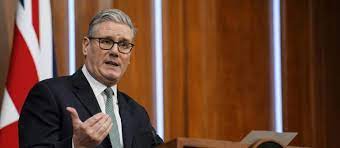
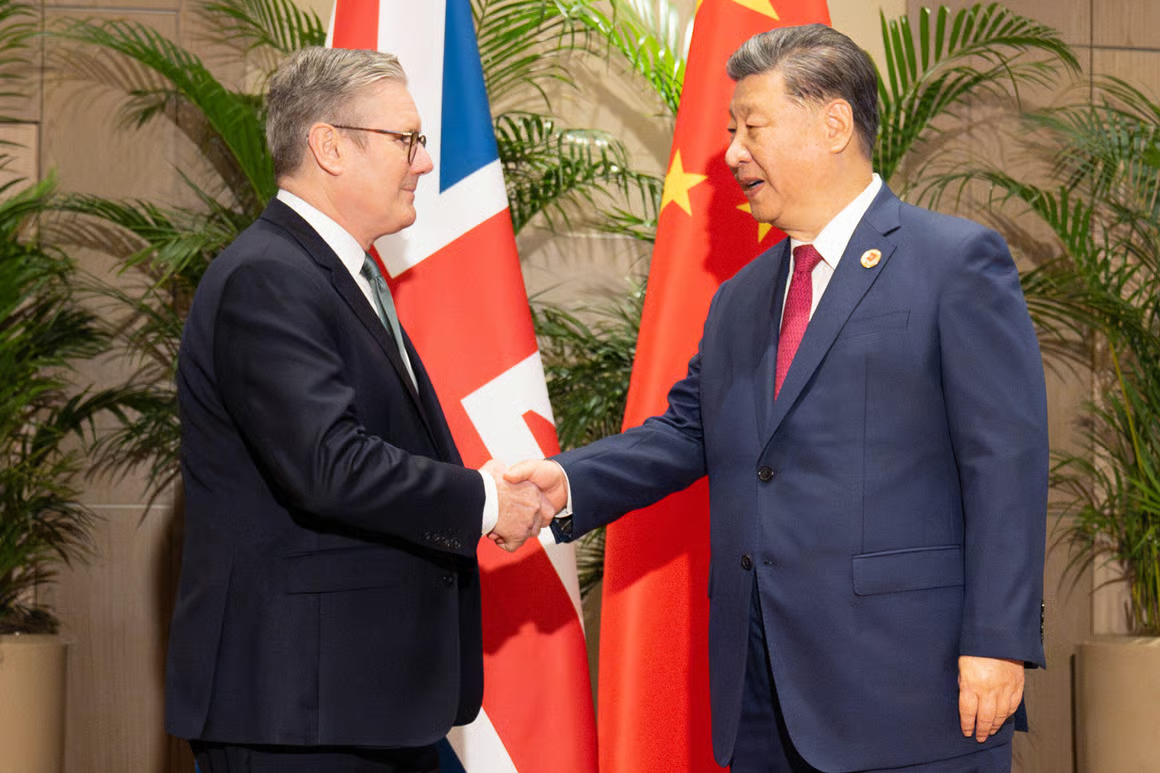
British Prime Minister Keir Starmer is set to arrive in Beijing on Wednesday evening, launching a high-profile visit aimed at strengthening political and commercial ties with China at a time of growing uncertainty in Western alliances. The trip marks the first visit by a British leader to China since 2018 and comes as relations between Western capitals and the United States have become increasingly volatile.
Balancing Opportunity and Security
Speaking to reporters while en route to China, Starmer said Britain could not afford to overlook the economic potential of engagement with the world’s second-largest economy, while stressing the need for caution on security concerns.
“It doesn’t make sense to ignore China entirely,” Starmer said. “Engagement is in our national interest, and this visit gives us the chance to make real progress.”
High-Level Talks and Business Focus
Starmer is travelling with a delegation of more than 50 British business leaders. He is scheduled to meet Chinese President Xi Jinping and Premier Li Qiang on Thursday before heading to Shanghai on Friday for meetings with corporate executives.
The visit could signal a turning point in UK-China relations, which have been strained in recent years by Beijing’s policies in Hong Kong, its backing of Russia during the Ukraine war, and repeated allegations by British security agencies of Chinese espionage.
China Seeks Image of Stability
For Beijing, the visit offers an opportunity to present itself as a dependable partner amid global political and economic turbulence, particularly as Western governments reassess their diplomatic and trade strategies.
US Tensions Loom Over the Trip
Starmer’s visit unfolds against the backdrop of renewed diplomatic friction between Britain and the United States, particularly involving President Donald Trump.
Recent tensions include Trump’s threats over Greenland, criticism of Britain’s decision to transfer sovereignty of the Chagos Archipelago to Mauritius, and remarks questioning the role of NATO allies in the Afghanistan war.
Trump also recently warned Canada of steep tariffs if it pursued closer trade ties with China, underscoring the unpredictability of US policy.
Starmer Defends UK–US Relationship
Despite the tensions, Starmer insisted that closer economic engagement with China would not undermine Britain’s long-standing partnership with Washington.
“The relationship we have with the United States remains one of our closest — on defence, security, intelligence, and trade,” he said.
Starmer declined to outline in detail what he would raise with Chinese leaders, including whether he would discuss the imprisonment of Hong Kong media figure Jimmy Lai or ask Beijing to press Moscow over the Ukraine conflict. He did say he hoped to make progress on easing visa restrictions between the two countries.
Responding to Political Criticism
The prime minister has faced criticism from politicians in Britain and the US who argue he is downplaying the security risks posed by China. Starmer defended his approach, saying the visit aligns with his broader goal of boosting economic growth and improving living standards at home.
He also distanced himself from remarks by Canadian Prime Minister Mark Carney at the World Economic Forum, where Carney suggested the rules-based global order was fading.
“I’m a pragmatist,” Starmer said. “A British pragmatist applying common sense — and I don’t accept that Britain has to choose between its allies.”