

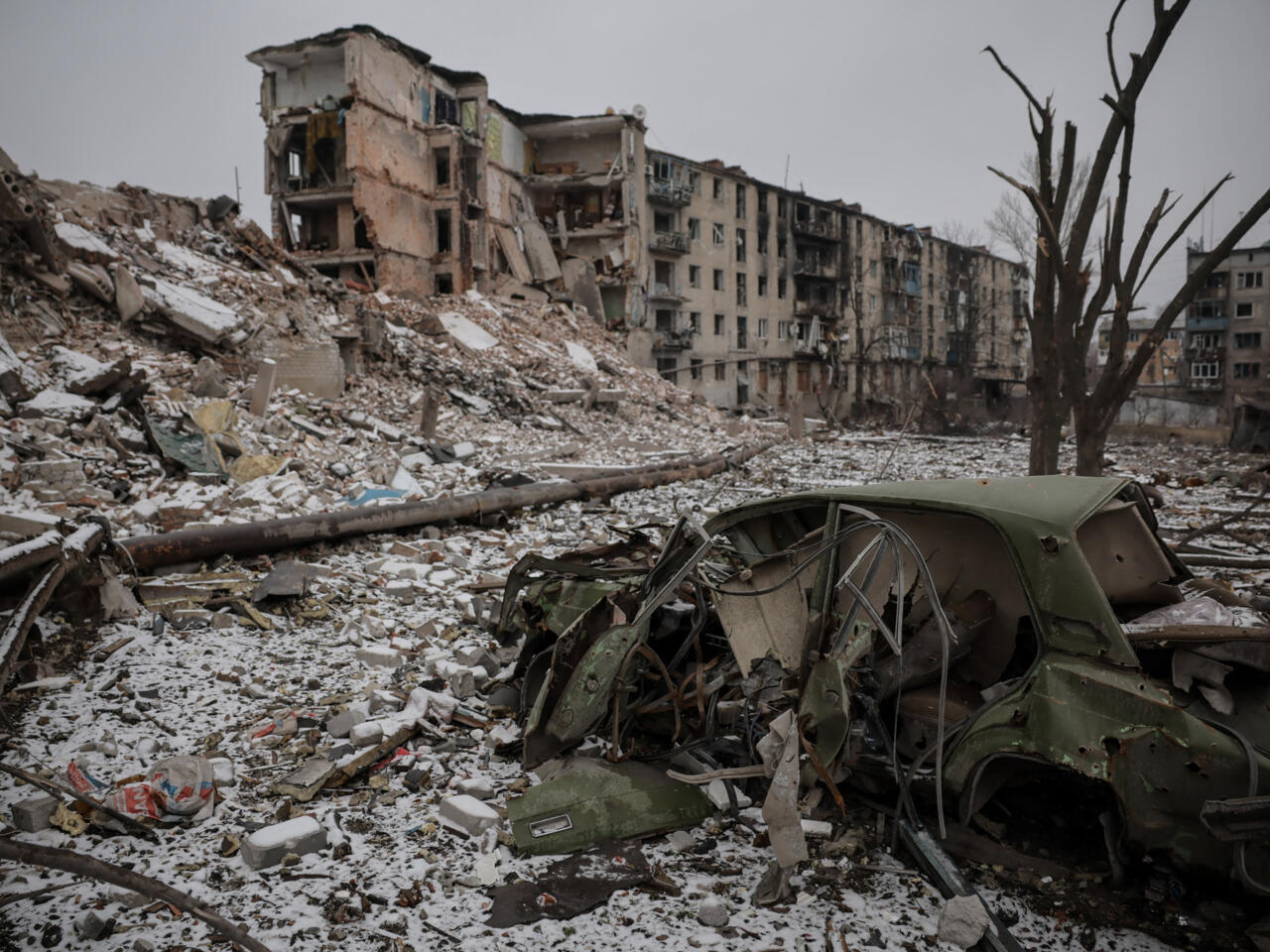
Ukraine and Russia negotiators are due to focus on the contentious issue of territory during two days of talks in Abu Dhabi starting on Friday, with neither side signalling any shift in position as the war approaches its fourth year.
The negotiations come as Ukraine faces increasing pressure from the United States to reach a peace agreement following Russia’s full-scale invasion in February 2022. Moscow has made clear it will not halt military operations unless Kyiv relinquishes control of the eastern industrial region of Donbas.
Zelenskiy: Donbas Is the Core Issue
Ukrainian President Volodymyr Zelenskiy said the dispute over Donbas would be the central focus of the talks in the United Arab Emirates.
“The question of Donbas is key,” Zelenskiy said in response to questions during a WhatsApp media briefing. He added that Ukraine, Russia and the United States would discuss how each side views the issue during meetings scheduled for Friday and Saturday.
His comments followed talks with US President Donald Trump at the World Economic Forum in Davos, which both leaders described as positive.
A senior aide said the Abu Dhabi discussions were set to begin on Friday evening and resume the following morning.
Putin’s Territorial Demands Remain a Sticking Point
Russian President Vladimir Putin has demanded that Ukraine surrender the roughly 20% of the Donetsk region it still controls — an area covering about 5,000 square kilometres — a condition that has become one of the main obstacles to any breakthrough.
Zelenskiy has repeatedly rejected giving up territory that Russian forces have failed to capture despite years of prolonged and costly fighting.
Kremlin spokesman Dmitry Peskov said on Friday that Russia’s insistence on Ukraine yielding Donbas remained “a very important condition” for a settlement.
A source close to the Kremlin said Moscow interprets a so-called “Anchorage formula” — discussed by Trump and Putin at a summit last August — as granting Russia control of all Donbas while freezing current front lines elsewhere in eastern and southern Ukraine.
Donetsk is one of four Ukrainian regions Russia claimed to annex in 2022 after referendums dismissed by Kyiv and Western governments as illegitimate. Most countries continue to recognise Donetsk as part of Ukraine, despite Putin’s assertion that it is historically Russian territory.
First Trilateral Talks Since War Began
Zelenskiy said the Abu Dhabi meetings would mark the first trilateral talks involving Ukrainian and Russian envoys alongside US mediators since the start of the war.
Last year, Russian and Ukrainian delegations met face to face in Istanbul for the first time since 2022. A senior Ukrainian military intelligence official also held discussions with US and Russian representatives in Abu Dhabi in November.
Russia’s delegation in the UAE is being led by Admiral Igor Kostyukov, while Ukraine’s team is headed by Rustem Umerov, secretary of Ukraine’s National Security and Defence Council.
Security Guarantees and Frozen Assets
Zelenskiy said an agreement on US security guarantees for Ukraine was ready and that he was awaiting confirmation from Trump on a date and location for signing.
Kyiv has repeatedly sought strong guarantees from Western allies to prevent any future Russian invasion after a peace deal.
Russia, meanwhile, has suggested using most of the nearly $5bn in Russian assets frozen in the United States to rebuild areas of Ukraine under Russian occupation. Ukraine, supported by European allies, has called instead for those funds to be used as reparations.
Zelenskiy dismissed Moscow’s proposal as “nonsense”, adding that Ukraine would continue pushing for access to all frozen Russian assets.
War Continues as Winter Conditions Worsen
Ukraine is enduring one of the harshest winters of the war as Russian missile and drone attacks continue to target energy infrastructure. With temperatures well below freezing, hundreds of thousands of residents in Kyiv and other cities have faced extended power outages and a lack of heating.
Kyiv says the intensified strikes demonstrate that Moscow lacks genuine interest in peace. Russia counters that it supports a diplomatic solution but will continue pursuing its objectives by military means as long as negotiations fail to produce an agreement.