
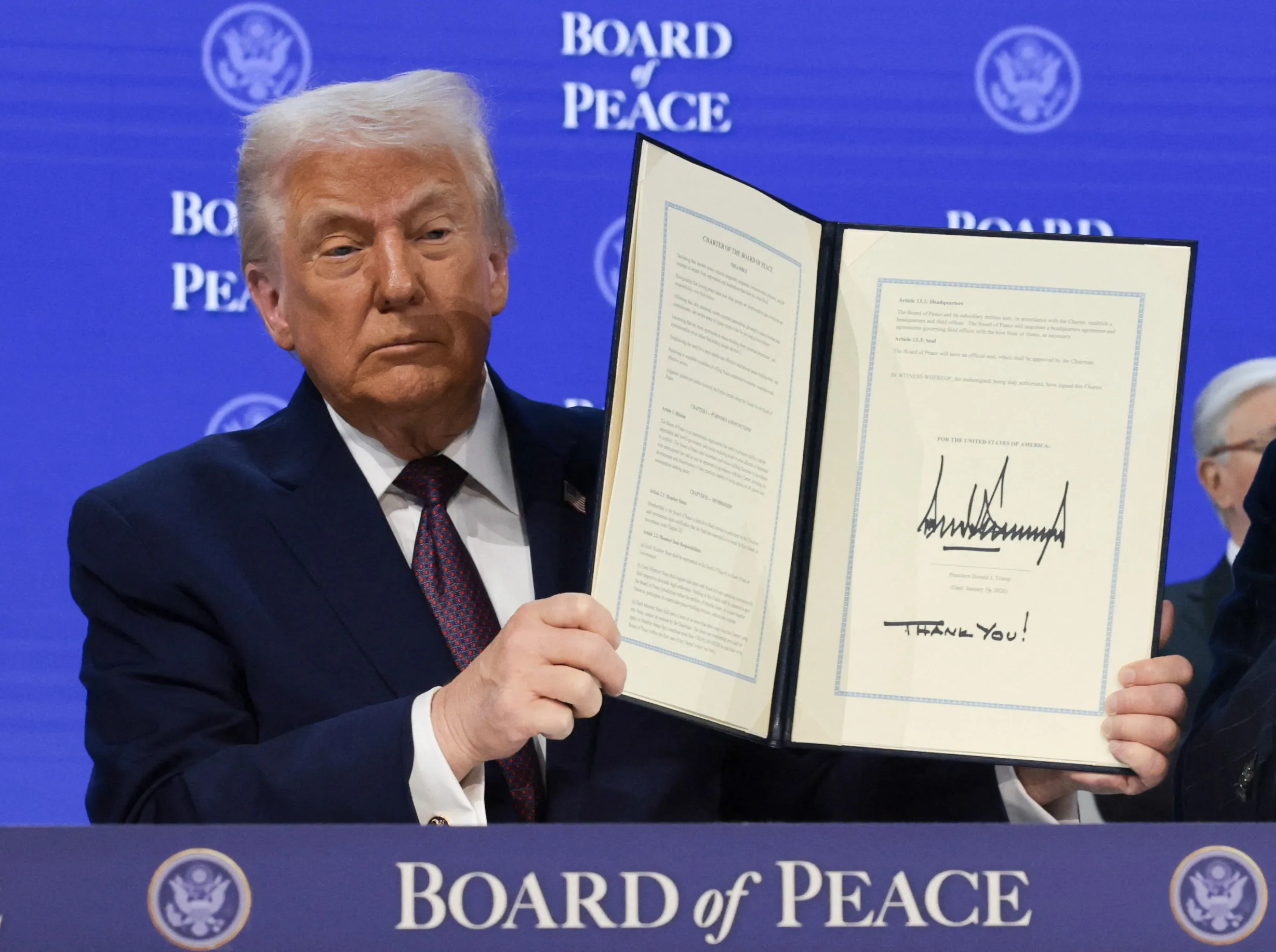
U.S. President Donald Trump on Thursday formally launched his Board of Peace, an initiative initially aimed at reinforcing the fragile ceasefire in Gaza but which he envisions playing a broader role in global conflict resolution.
Trump said the new body would operate alongside the United Nations, insisting it was designed to complement, not replace, existing international mechanisms. He added that the UN’s potential had not been fully realised and that cooperation between the two bodies could prove “very unique for the world”.
Broad Mandate Raises Concerns
Trump, who will chair the board, invited dozens of world leaders to participate and signalled that its mission would extend beyond Gaza. That ambition has prompted concerns among some governments and analysts that the initiative could weaken the UN’s standing as the primary forum for diplomacy and peacekeeping.
Regional Middle East powers including Turkey, Egypt, Saudi Arabia and Qatar, along with emerging economies such as Indonesia, have joined the board. However, major global powers and several traditional U.S. allies have so far held back.
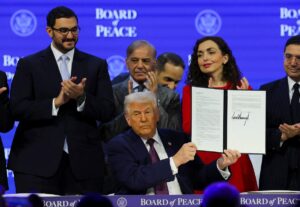
Trump said permanent members would be required to contribute $1 billion each. At the signing ceremony, there were no visible representatives from most of the world’s leading powers, nor from Israel or the Palestinian Authority.
Limited Support From Major Powers
Apart from the United States, none of the permanent members of the UN Security Council have committed to joining. Russia said it was reviewing the proposal after Trump suggested Moscow would participate. President Vladimir Putin was quoted by state media as saying Russia could contribute $1 billion from frozen U.S. assets to support Palestinians.
France declined to take part, while United Kingdom said it was not joining for now. China has yet to announce its position.
A UN spokesperson said engagement with the board would be limited to the framework set out in a Security Council resolution endorsing Trump’s Gaza peace plan.
Board Membership and Structure
Despite limited buy-in from established democracies, several leaders aligned with Trump’s political approach have signalled support, including Benjamin Netanyahu. Argentina and Hungary have also said they would join.
The board includes U.S. Secretary of State Marco Rubio, U.S. Gaza negotiators Jared Kushner and Steve Witkoff, as well as former UK prime minister Tony Blair.
Focus on Fragile Gaza Ceasefire
Kushner said the next phase of the Gaza ceasefire would centre on funding reconstruction in the devastated enclave and addressing the disarmament of Hamas, which he described as one of the most difficult unresolved issues.
He said humanitarian aid and shelter remained priorities, alongside efforts to create conditions for longer-term stability.
In a sign of limited progress, Palestinian technocratic committee leader Ali Shaath said the Rafah border crossing with Egypt would reopen next week.
Ceasefire Remains Unstable
The Gaza ceasefire, agreed in October, has repeatedly faltered, with Israel and Hamas accusing each other of violations. Israeli officials say Hamas has delayed the return of a deceased hostage, while Hamas accuses Israel of restricting aid deliveries despite the humanitarian crisis.
Both sides deny the allegations against them.
Palestinian factions have endorsed Trump’s broader plan and backed a transitional Palestinian committee to administer Gaza under the board’s oversight. However, tougher long-term issues—including Hamas’s disarmament, security arrangements in Gaza and a potential Israeli withdrawal—remain unresolved.