

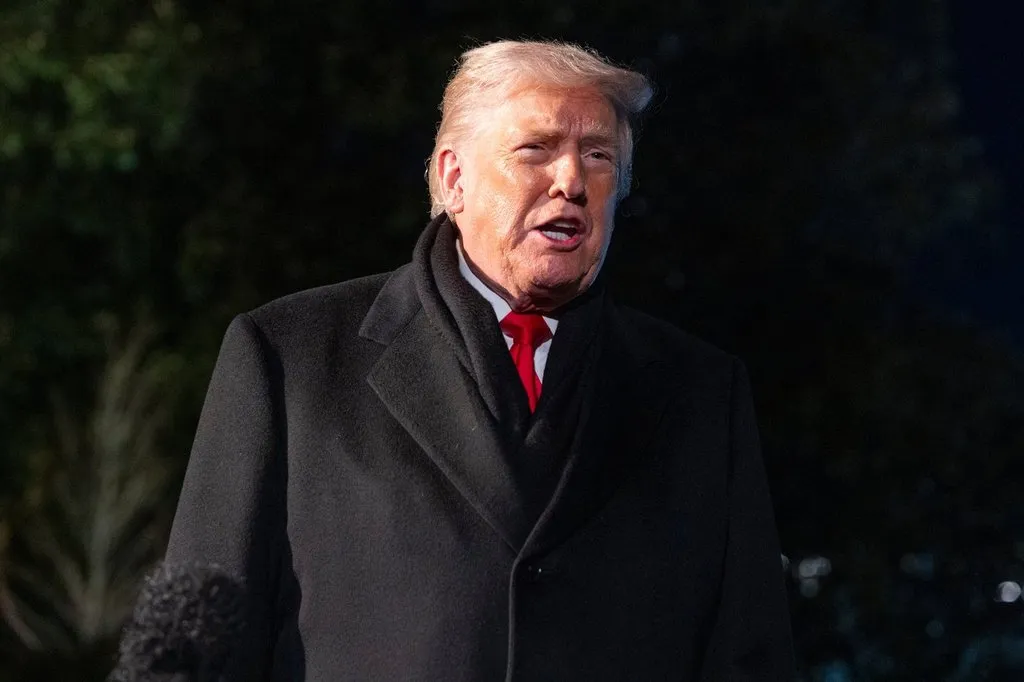
U.S. President Donald Trump arrived in Davos, Switzerland, on Wednesday for the annual World Economic Forum, where his renewed push to acquire Greenland is expected to dominate discussions and deepen tensions with European allies.
Trump’s visit comes as transatlantic relations face their sharpest strain in decades. European leaders have voiced strong objections to his Greenland proposal, which he has framed as a national security necessity.
Greenland Push Overshadows Economic Agenda
Trump is set to address global leaders at the forum, held in the Swiss mountain resort of Davos, but his presence is likely to eclipse broader debates on global economic and political trends.
His arrival was delayed by several hours after his aircraft was forced to turn back due to what the White House described as a minor electrical issue, according to U.S. Treasury Secretary Scott Bessent.
Speaking to reporters on Tuesday, Trump confirmed he planned to hold meetings in Davos focused on Greenland, an autonomous Danish territory. He expressed confidence that a deal could eventually be reached.
“We need it for security purposes,” Trump said, adding that any agreement would leave both NATO and the United States “very happy.”
Europe Pushes Back as Trump Keeps Options Open
When asked how far he might go to secure Greenland, Trump declined to elaborate. “You’ll find out,” he said.
In recent days, he has repeatedly argued that control of Greenland is essential as an Arctic strategic outpost to counter Russia and China. He has also warned of trade retaliation against European countries that oppose his stance.
Trump has not ruled out the use of U.S. military power, noting that Greenland already hosts an American military base. His comments have prompted concern among NATO members, who fear the proposal could destabilize the alliance.
Sources familiar with the matter say Trump’s Greenland initiative is also driven by a desire to cement his legacy by expanding U.S. territory — the most significant such move since Dwight Eisenhower oversaw the admission of Alaska and Hawaii as states in 1959.

Diplomatic Friction With European Leaders
Tensions intensified after Trump publicly shared a private message from French President Emmanuel Macron, who questioned Trump’s focus on Greenland and urged him to join other G7 leaders in Paris following Davos — an invitation Trump rejected.
Despite Denmark and Greenland offering expanded U.S. access and cooperation on the island, Trump has remained unsatisfied. On Tuesday, he posted a digitally altered image on social media depicting himself planting a U.S. flag on Greenland, home to roughly 57,000 people.
Housing Plan and Economic Messaging
Trump’s original aim in attending Davos was to promote the strength of the U.S. economy. In his keynote speech, he plans to highlight domestic economic achievements, even as public opinion polls show widespread dissatisfaction with his economic management.
The White House said Trump will unveil a housing initiative that would allow Americans to tap into their 401(k) retirement savings to help fund home down payments.
“President Trump will outline steps to reduce housing costs and emphasize that the United States and Europe must move away from policies that have led to economic stagnation,” a White House official said.
Meetings and Broader Global Role
During his stay, Trump is scheduled to meet separately with the leaders of Switzerland, Poland, and Egypt. On Thursday, he is expected to preside over a ceremony for the “Board of Peace,” an initiative he launched to oversee redevelopment efforts in Gaza amid a fragile ceasefire.
Trump has suggested the board could eventually address global crises beyond Gaza — a role traditionally associated with the United Nations. While expressing general support for the UN, he said it has “never lived up to its potential.”
Trump is due to return to Washington late on Thursday.