

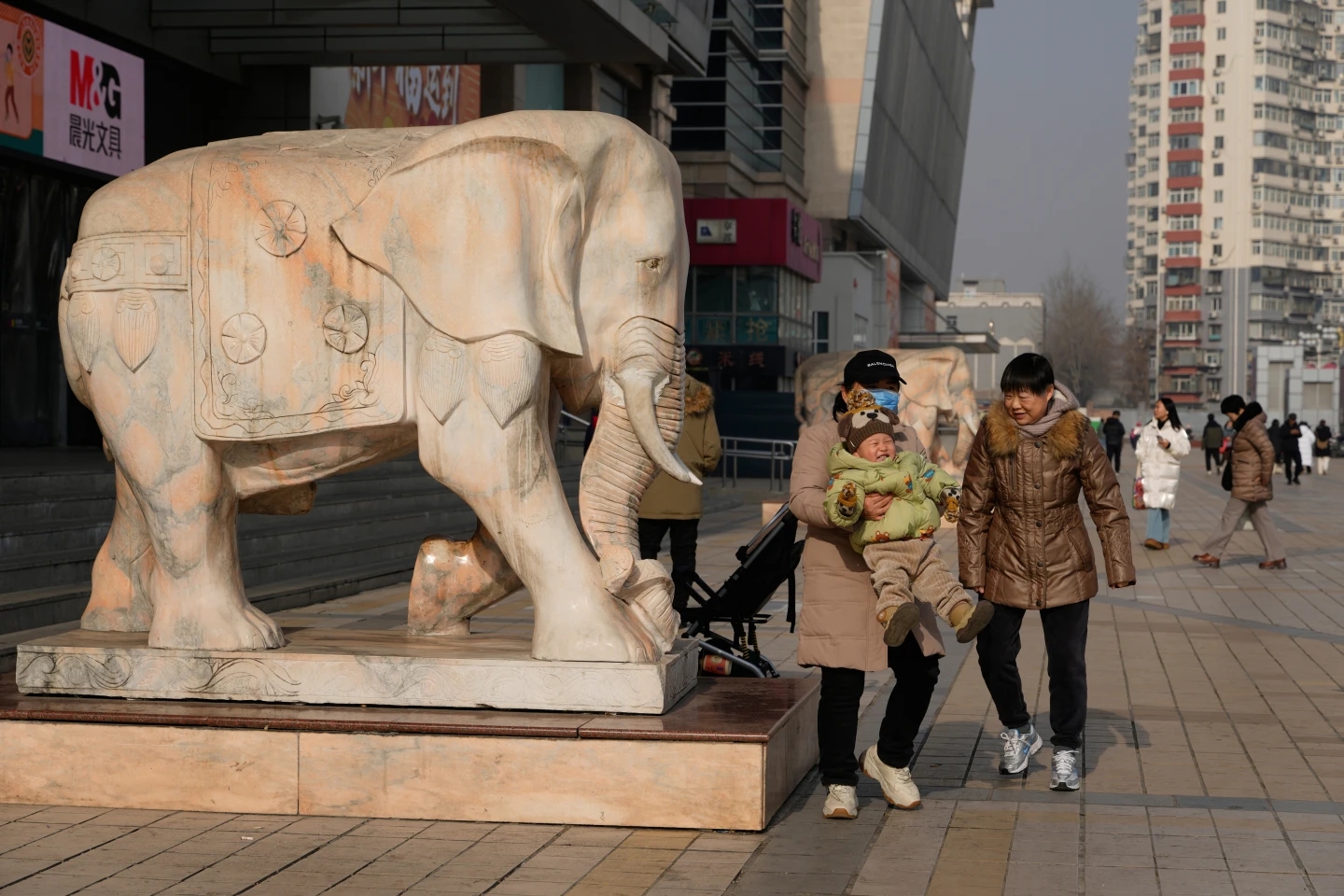
China population continued its downward trend in 2025, shrinking for the fourth year in a row as the country recorded its lowest birth rate on record, despite renewed efforts by the government to encourage families to have more children.
Official data released on Monday showed the population fell by 3.39 million to around 1.4 billion by the end of 2025, a faster decline compared with the previous year.
Births Fall to Lowest Level Since 1949
The national birth rate dropped to 5.63 births per 1,000 people, the lowest level since the founding of the People’s Republic of China in 1949. At the same time, the death rate climbed to 8.04 per 1,000 people, marking its highest point since 1968.
The figures highlight the growing demographic challenges facing the world’s second-largest economy, which is grappling with an ageing population and slowing economic momentum.
Government Efforts to Reverse Demographic Decline
In recent years, Beijing has rolled out a series of measures aimed at boosting birth rates. The long-standing one-child policy was abolished in 2016 and replaced with a two-child limit. When births failed to rebound, authorities expanded the policy in 2021, allowing couples to have up to three children.
More recently, the government introduced direct financial support, offering parents 3,600 yuan (£375; $500) for each child under the age of three. Several provinces have added their own incentives, including extended maternity leave and additional child-rearing subsidies.

Controversial Policies Spark Public Debate
Not all measures have been well received. A newly introduced 13% tax on contraceptives — including condoms, birth control pills, and related devices — has raised concerns among health experts and the public about unintended pregnancies and rising HIV risks.
Critics argue that financial incentives alone may not be enough to change long-term social attitudes toward marriage and parenthood.
High Costs and Lifestyle Choices Limit Births
China’s fertility rate remains among the lowest globally, averaging around one child per woman — far below the replacement level of 2.1. Other East Asian economies, including South Korea, Singapore, and Taiwan, face similar demographic pressures.
A 2024 report by the YuWa Population Research Institute found that China is one of the most expensive countries in which to raise a child. Beyond financial constraints, many young adults cite lifestyle considerations as a major deterrent.
Some residents have said the pressure to provide elite education and childcare has made parenthood feel overwhelming. Others say they prefer personal freedom and stability over starting a family.
Long-Term Economic and Social Impacts
Demographers at the United Nations expect China’s population to keep shrinking, projecting that the country could lose more than half of its current population by the end of the century.
A declining population poses significant economic and social challenges, including a shrinking workforce, weaker consumer demand, and increased strain on social services.
As younger generations move away from family homes, more elderly citizens are left to rely on state support. However, the country’s pension system is under growing pressure, with researchers warning that funds may fall short as the elderly population continues to expand.