


As the US labor market cools, artificial intelligence is rapidly changing how people apply for jobs and how companies recruit. From AI-led interviews to auto-generated cover letters, the technology is becoming deeply embedded in hiring — but its impact may be doing more harm than good.
More than half of organizations surveyed by the Society for Human Resource Management reported using AI in recruitment in 2025. At the same time, roughly a third of users of OpenAI’s ChatGPT are estimated to rely on the tool during their job search. While adoption is accelerating on both sides, outcomes are becoming increasingly strained.
AI Makes It Harder to Identify the Best Candidates
Recent academic research suggests that applicants who use AI in the hiring process may actually be less likely to be hired. Meanwhile, employers are being flooded with applications, making it harder to distinguish truly qualified candidates.
“The ability for companies to select the best worker today may actually be worse because of AI,” said Anaïs Galdin, a researcher at Dartmouth who co-authored a study examining the impact of large language models on hiring.
Galdin and her co-author, Jesse Silbert, analyzed tens of thousands of cover letters submitted through Freelancer.com. Their findings showed that after ChatGPT’s release in 2022, cover letters became longer and more polished — but employers began to trust them less. As a result, hiring rates fell, along with average starting wages.
“If nothing improves how information flows between workers and firms, outcomes like this become more likely,” Silbert warned.
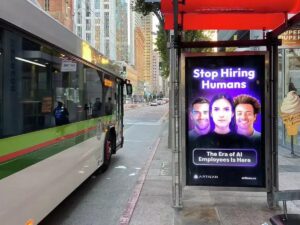
Automated Interviews Bring New Bias Risks
As application volumes rise, many companies are automating interviews as well. According to a survey by recruiting software firm Greenhouse, 54% of US job seekers said they have participated in an AI-led interview. While virtual interviews surged during the pandemic, replacing human interviewers with algorithms has not eliminated bias.
“Algorithms can replicate and even amplify human bias,” said Djurre Holtrop, who studies AI-driven interview systems. “Developers need to be extremely cautious.”
Daniel Chait, CEO of Greenhouse, described the current situation as a “doom loop,” where applicants automate applications and employers respond with more automation — leaving both sides dissatisfied.
“Everyone feels like the process is broken and getting worse,” Chait said.
Regulation and Legal Challenges Begin to Emerge
Despite concerns, investment in recruitment technology continues to grow, with the market projected to reach $3.1 billion this year. Still, labor groups and lawmakers are pushing back. Liz Shuler, president of the AFL-CIO, called AI hiring practices “unacceptable,” arguing they can deny qualified workers opportunities based on arbitrary data points.
Several US states, including California, Colorado, and Illinois, have begun introducing regulations governing AI use in hiring. However, a recent executive order by Donald Trump has added uncertainty to the regulatory landscape, even as existing anti-discrimination laws remain in force.
Legal challenges are already emerging. In a case supported by the American Civil Liberties Union, a deaf woman is suing HireVue over claims that an automated interview violated accessibility standards.
The Human Cost of AI-Driven Recruitment
Even as AI tools improve resume screening and help surface overlooked talent, many job seekers worry about the loss of human judgment in hiring. Jared Looper, an IT project manager based in Utah, described his AI-led interview as “cold” and impersonal.
“Some great people are going to be left behind,” Looper said, capturing a growing concern that navigating AI systems is becoming as important as actual skills in today’s job market.