
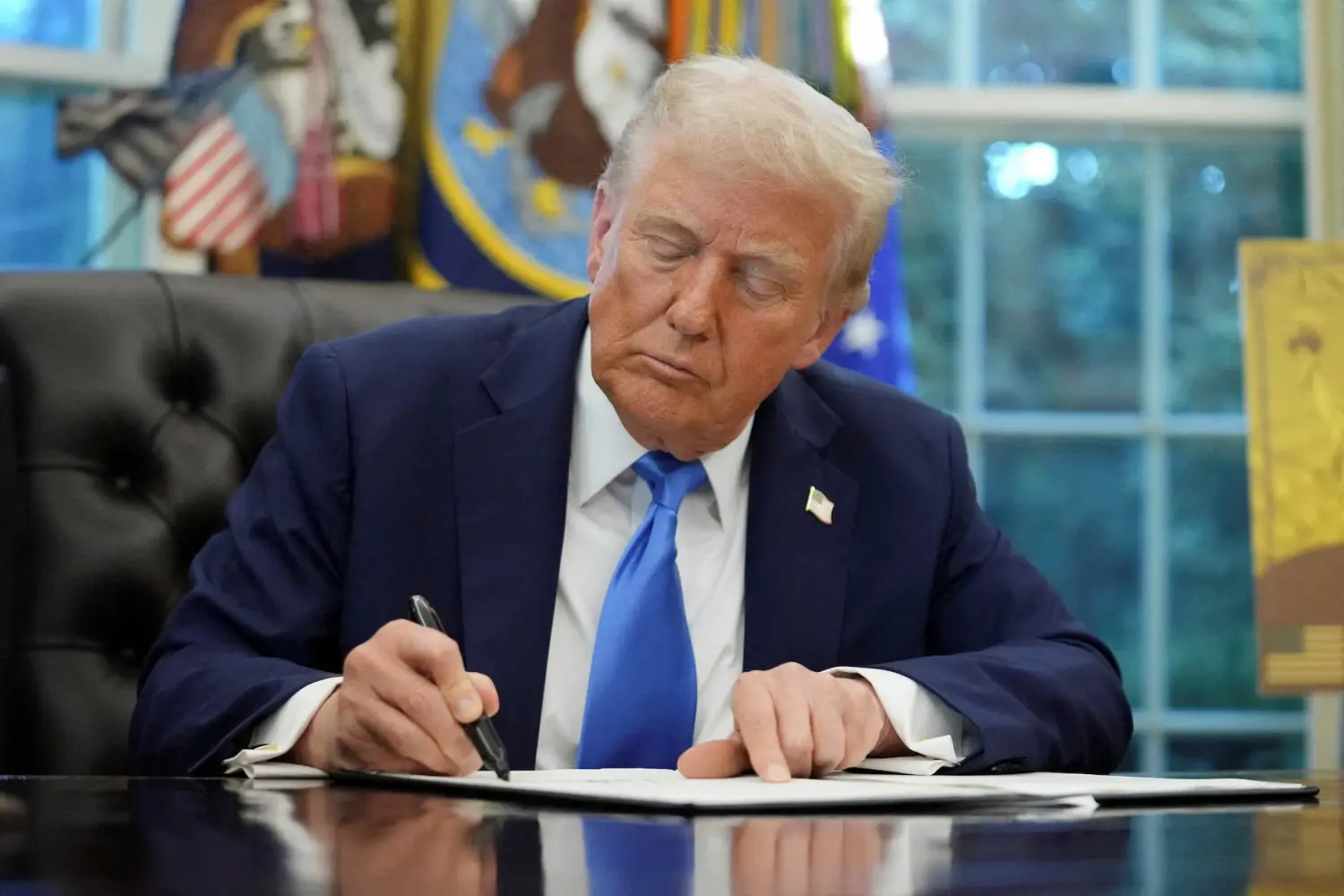
From Latin America to the Arctic and the Middle East, President Donald Trump has begun the new year with a series of bold actions and stark warnings that are sending shockwaves through the international system.
Trump has overseen the removal of Venezuela’s leader, pledged to exert control over the country’s vast oil resources and warned other governments in the region that similar military action could follow. He has also spoken openly about bringing Greenland under U.S. control, including by force if necessary, and has cautioned Iran that further American strikes remain possible.
Taken together, the moves represent a dramatic challenge to the rules-based global order that the United States helped construct in the aftermath of World War Two.
Allies and Rivals Left Off Balance
The pace and scope of Trump’s actions have unsettled governments across the world. Both close allies and longtime adversaries are now questioning how far the administration is willing to go, and whether the changes underway are temporary or signal a lasting shift in U.S. foreign policy.
“Many expected Trump to return with tough rhetoric,” said Brett Bruen, a former U.S. foreign policy adviser. “What is alarming is how quickly the foundations of international stability are being dismantled.”
This assessment is based on discussions with current and former officials, diplomats and analysts in Washington and other capitals.
A Return to Spheres of Influence
In just months, Trump has shown a readiness to wield American power directly, from military strikes on Iran’s nuclear facilities to the January attack in Venezuela. Despite campaigning on an “America First” platform that promised fewer overseas entanglements, he has signaled a willingness to intervene again, particularly in the Western Hemisphere.
On the global stage, Trump appears to be reviving the idea of great-power spheres of influence, a concept many believed belonged to an earlier era. His thinking draws inspiration from the Monroe Doctrine, which asserted U.S. dominance in the Americas, now rebranded by Trump as the “Donroe Doctrine.”
Analysts say this approach could benefit Russia, amid its war in Ukraine, and China, which has long sought to assert control over Taiwan.
Eroding the Post-War Order
The U.S.-led international system that emerged over the past eight decades has been built on free trade, the rule of law and respect for borders. Trump’s focus on raw power and resource control, particularly following the Venezuela operation, has raised fears among allies that those principles are being sidelined.
A senior White House official said Trump is simply carrying out the agenda voters endorsed, adding that world leaders are adjusting accordingly.
That outlook was echoed by influential adviser Stephen Miller, who said the world is governed by “strength, force and power.”
Europe and Asia Voice Concern
European leaders, already uneasy about Washington’s commitment to Ukraine, have reacted strongly to Trump’s comments about Greenland. German President Frank-Walter Steinmeier warned of a breakdown in shared values, while Denmark’s Prime Minister Mette Frederiksen cautioned that a U.S. takeover of Greenland could end the transatlantic alliance.
In Asia, Trump’s actions have also stirred anxiety. Some Japanese and South Korean lawmakers warned that the use of force risks normalising a world in which stronger states dominate weaker ones.
Accusations of a New Imperialism
Critics have accused Trump of pursuing a modern form of imperialism, particularly in Latin America. Supporters counter that he is reclaiming U.S. influence in a region where China has made significant economic gains.
Alexander Gray, a former Trump adviser now at the Atlantic Council, argued that the Venezuela operation signals a broader reassessment of U.S. strategic priorities in the hemisphere.
However, analysts caution that the strategy carries risks. Countries such as Brazil may draw closer to China to hedge against U.S. pressure, while the focus on Venezuela’s oil has fueled perceptions that American power is being used without regard for international norms.
Global Consequences Still Unclear
Some experts warn that sidelining international law could embolden Russia and China to intensify pressure on their own neighbours. Russian analyst Sergei Markov described the Venezuela operation as proof that power, not law, now governs global affairs.
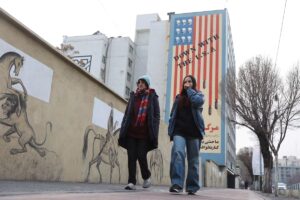
Despite the backlash, Trump has shown no sign of slowing down. Even as fallout from Venezuela continues, he has threatened to intervene in Iran, where protests pose one of the toughest challenges to clerical rule since 1979.
Speaking aboard Air Force One, Trump said military options remain on the table.
“We may have to act because of what is happening,” he said.