

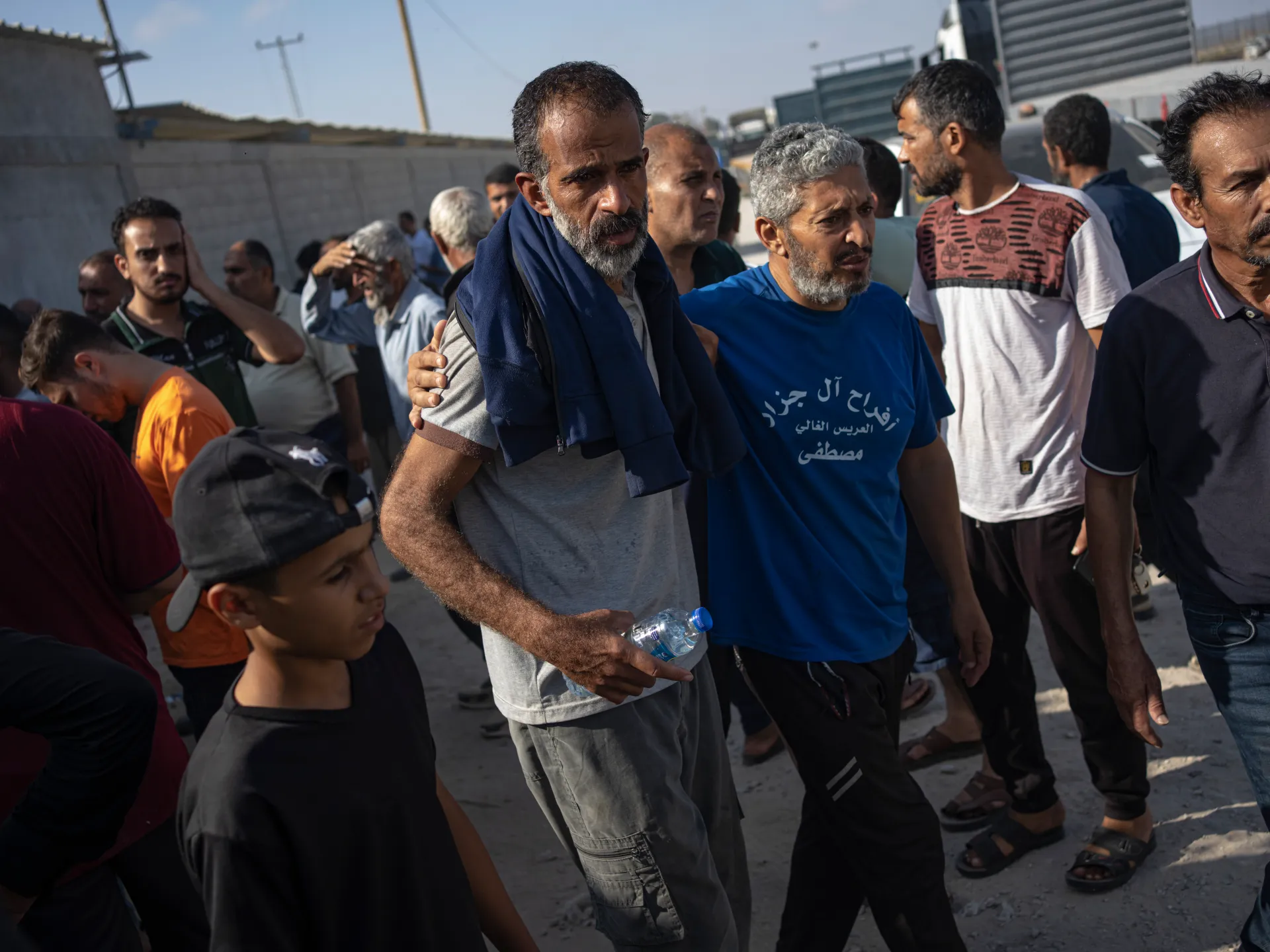
For thousands of Palestinian families in Gaza, the war has brought more than destruction and loss. It has also created a painful silence around the fate of relatives who disappeared after being detained by Israeli forces.
“We don’t know if he is alive or dead,” said the wife of Abdul Rahman, a young man who vanished in January. “We filled out many forms, asked everywhere, but no one tells us anything. Still, we hold on to hope.”
Families describe living in a constant state of uncertainty, unable to grieve or to reunite, trapped between rumours and unanswered questions.
Delayed Death Notices Raise Alarm
That uncertainty was brought into sharp focus this week with the case of Hamza Adwan, a 67-year-old detainee whose family was informed on Sunday that he had died in custody—four months after his actual death.
Adwan, a father of nine, was arrested at a checkpoint in November 2024. His family says he suffered from serious heart conditions and required ongoing medical care. Despite this, he was detained. According to relatives, he died on September 9, 2025, but the family was only notified months later.
Rights groups say such delays are not rare and reflect a broader pattern of enforced disappearance, where families are left without reliable information for extended periods.
Conflicting Accounts and Emotional Limbo
Testimonies collected from families reveal a confusing and often contradictory system. The father of Amro, arrested in December 2024, said officials initially told him his son had died in custody. Later, released detainees claimed they had seen Amro alive after that date.
“We live between fear and hope,” the father said. “Every day we wonder what is really happening to him.”
Families say the lack of clear information takes a severe psychological toll, leaving them unable to move forward.
Allegations of Systematic Abuse
The Commission of Detainees’ Affairs and the Palestinian Prisoner’s Society accuse Israel of pursuing policies that amount to slow and deliberate harm, including medical neglect, starvation and abuse in detention.
They warn that deaths in custody have increased sharply since the war began, coinciding with political efforts in Israel to advance legislation that could allow the execution of Palestinian prisoners. Rights groups argue such moves would formalise practices that already violate international law.
Most detainees, they note, are held without charge or trial.
Detention by the Numbers
According to the latest figures released by Palestinian prisoner organisations, more than 9,300 Palestinians were being held in Israeli prisons as of January 2026.
Among them are:
-
3,385 administrative detainees, imprisoned indefinitely without trial based on secret evidence.
-
1,237 detainees labelled “unlawful combatants”, a classification used mainly for Palestinians from Gaza that denies them prisoner-of-war protections.
With the confirmation of Adwan’s death, at least 87 prisoners are now known to have died in Israeli custody since the war began, including 51 from Gaza.
International Monitors Shut Out
Families’ distress has been compounded by the inability of international organisations to monitor detention conditions. The International Committee of the Red Cross confirmed it has been denied access to Israeli detention centres since October 2023.
“We continue to receive inquiries from families worried about the health and safety of their loved ones,” said an ICRC spokesperson in Gaza, adding that the organisation remains unable to conduct visits.
Doctors Also Among the Detained
Medical workers have also been affected. This week, health staff in Gaza held a protest calling for the release of 30 doctors and paramedics detained from Kamal Adwan Hospital alone.
Protesters highlighted the case of the hospital’s director, Dr Hussam Abu Safia, who was arrested while treating patients. Speakers at the rally warned that detention poses deadly risks, citing previous cases where medical professionals died while in custody.
“These are people whose role is to save lives,” said one health official. “Their detention has deepened fear across Gaza’s medical community.”
Waiting Without Answers
For families like Abdul Rahman’s, life has become a cycle of waiting—checking lists, filling out forms and listening to rumours.
“There is no closure,” his wife said. “Only questions.”
As the war continues, Gaza’s families say the absence of information has become another form of suffering—one that leaves them suspended between hope and grief, with no clear end in sight.