

Federal Reserve Chair Jerome Powell said the Trump administration has threatened him with a criminal indictment over congressional testimony related to a Federal Reserve building renovation, describing the move as a pretext to exert greater control over the central bank and its interest-rate decisions.
In a statement released late Sunday, Powell said the US Department of Justice had served the Federal Reserve with grand jury subpoenas tied to testimony he delivered before the Senate Banking Committee last June.
“No one — certainly not the chair of the Federal Reserve — is above the law,” Powell said. “But this unprecedented action must be seen in the broader context of ongoing pressure from the administration to influence monetary policy.”
Republican Lawmaker Raises Alarm Over DOJ Independence
The revelation prompted immediate political reaction. Senator Thom Tillis, a Republican member of the Senate Banking Committee, said the threatened indictment calls into question the Justice Department’s independence and credibility.
In a post on X, Tillis said he would oppose any Trump nominees to the Federal Reserve — including the president’s expected choice for the next Fed chair — until the legal matter is resolved.
Trump Denies Knowledge of Justice Department Action
President Donald Trump told NBC News on Sunday that he was unaware of the Justice Department’s actions.
“I don’t know anything about it,” Trump said, while criticizing Powell’s leadership at the Fed and the handling of the building renovation.
A Justice Department spokesperson declined to comment on the specific case, saying only that the attorney general had instructed prosecutors to prioritize investigations into potential misuse of taxpayer funds.
Dispute Highlights Tensions Over Fed Independence
Trump has repeatedly pushed for sharp interest-rate cuts since returning to office in January, blaming Fed policy for slowing economic growth. He has also suggested firing Powell, despite legal protections intended to shield the Fed chair from political removal, and has sought to dismiss Fed Governor Lisa Cook — a case now before the US Supreme Court.
Economists widely view central bank independence as a cornerstone of effective monetary policy, allowing rate decisions to focus on long-term price stability rather than short-term political pressures.
Peter Conti-Brown, a Federal Reserve historian at the University of Pennsylvania, called the inquiry into Powell “a low point in the history of central banking in America.”
“Congress did not design the Fed to mirror a president’s daily political needs,” he said. “Using criminal law to pressure the Fed chair represents a profound escalation.”
Markets Largely Unmoved
Financial markets showed limited immediate reaction. Rate futures continued to price in two interest-rate cuts this year even after Powell’s term as chair ends in May. The dollar weakened slightly and US equity futures slipped, though moves were modest.
Powell’s term as Fed chair expires in May, but he is entitled to remain on the Fed’s board until January 2028, limiting Trump’s ability to appoint an additional board member in the near term.
A Long-Running Rift Reaches a Flashpoint
Trump originally appointed Powell during his first term but later turned sharply critical of him. Until now, Powell had largely avoided direct public confrontation, maintaining that presidents often express views on economic policy.
In his statement, Powell said he would continue to perform the duties entrusted to him by the Senate, even as he accused the administration of using legal threats to push for faster and deeper rate cuts than Fed policymakers believe are appropriate.
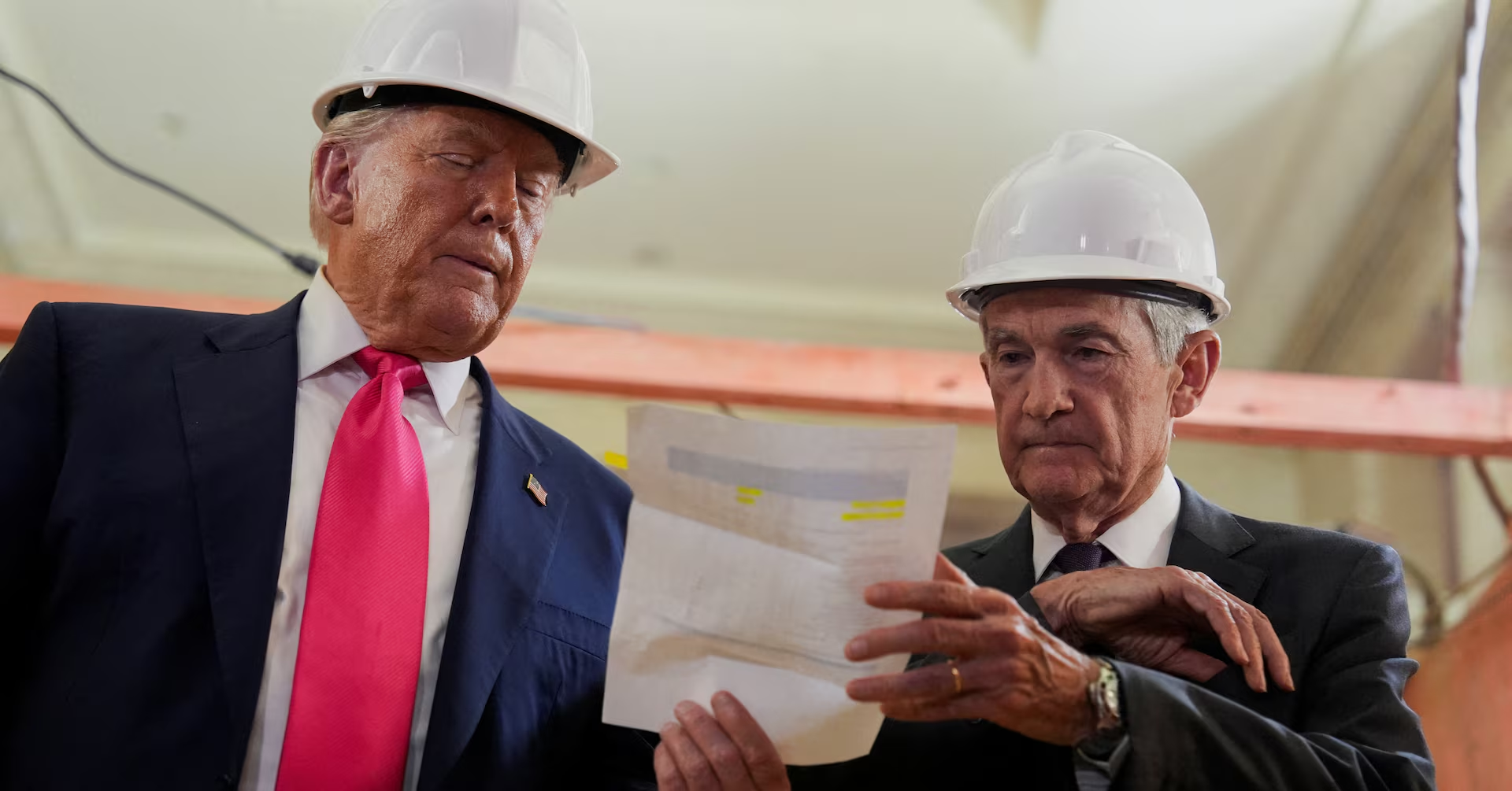
The White House has previously criticized the Fed’s $2.5 billion renovation of two Washington buildings as excessive. Powell has defended the project as necessary modernization and provided detailed explanations to lawmakers and administration officials, including during his congressional testimony and a site visit by Trump last July.
As the standoff intensifies, the episode has renewed debate over the limits of political influence on the nation’s central bank — and how far a president can go to shape monetary policy.