

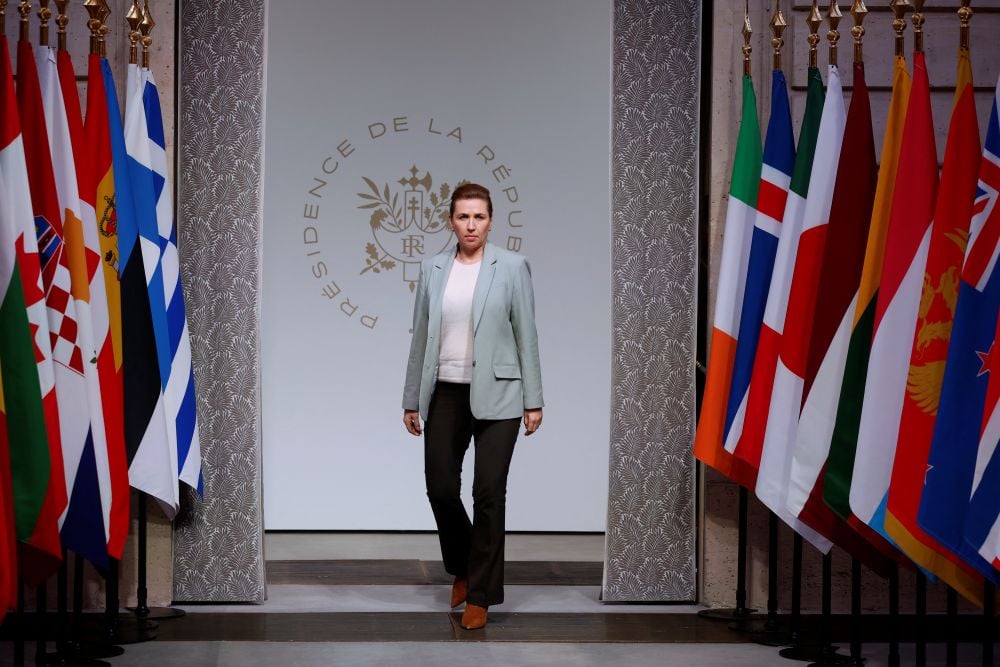
Danish Prime Minister Mette Frederiksen has warned that Denmark is facing a “decisive moment” over the future of Greenland, after US President Donald Trump renewed threats to take control of the Arctic territory by force.
Speaking ahead of talks in Washington, DC, focused on global competition for critical raw materials, Frederiksen said the situation surrounding Greenland had evolved into a broader geopolitical conflict.
“There is a conflict over Greenland,” she said during a debate with other Danish political leaders, adding that the implications extend far beyond the island itself.
Denmark Reaffirms Commitment to International Law
In a statement posted on social media, Frederiksen said Denmark was prepared to defend its principles, including in the Arctic region.
“We are ready to stand up for our values wherever necessary — also in the Arctic,” she said. “We believe in international law and in peoples’ right to self-determination.”
Greenland is a self-governing territory within the Kingdom of Denmark, and its future status has long been a sensitive political issue both domestically and internationally.
European Leaders Rally Behind Denmark
Several European governments moved quickly to support Denmark following Trump’s latest remarks.
Swedish Prime Minister Ulf Kristersson condemned what he described as “threatening rhetoric” from Washington after Trump said the US would “do something on Greenland, whether they like it or not”.
“Sweden, the Nordic countries, the Baltic states and several major European nations stand together with Denmark,” Kristersson said during a defence conference in Sälen, attended by NATO’s top US commander.
He warned that a US takeover of Greenland would violate international law and could encourage similar actions elsewhere.
Germany and UK Signal Growing Arctic Concern
Germany also reiterated its backing for Denmark and Greenland ahead of high-level meetings in Washington.
Before talks with US Secretary of State Marco Rubio, German Foreign Minister Johann Wadehpul met Icelandic officials to discuss what Berlin described as the “strategic challenges of the Far North”.
“Security in the Arctic is becoming increasingly important,” Wadehpul said, adding that it formed part of NATO’s shared security interests.
The UK’s Telegraph newspaper reported that senior military officials from Britain and other European countries were discussing contingency plans for a possible NATO mission in Greenland. The discussions reportedly include potential deployments of British troops, naval vessels and aircraft.
UK Transport Secretary Heidi Alexander said talks about deterring Russia in the Arctic were routine, describing the region as an increasingly contested geopolitical space.
Calls for NATO Action in the Arctic
Belgian Defence Minister Theo Francken told Reuters that NATO should consider launching a formal Arctic operation to address growing security concerns.
“We must cooperate and show unity,” Francken said, suggesting that existing NATO missions in the Baltic region could serve as models for a future “Arctic Sentry” operation.
Greenland’s Status and Local Opposition
Trump has repeatedly argued that US control of mineral-rich Greenland is vital to American national security, citing increased Russian and Chinese activity in the Arctic.
Greenland was a Danish colony until 1953 and gained home rule in 1979. While debates over eventual independence from Denmark continue, opinion polls consistently show strong opposition among Greenlanders to any form of US takeover.
As tensions rise, Denmark and its European allies appear determined to draw a clear line over Greenland’s future — signaling that the Arctic is fast becoming a central arena in global power politics.