

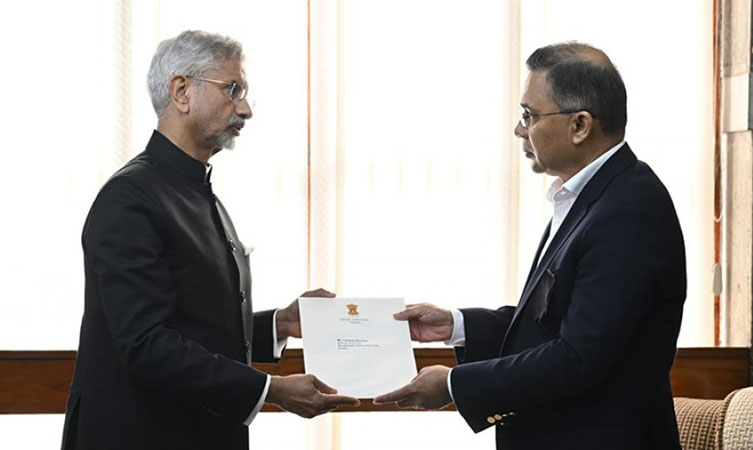
India’s External Affairs Minister S. Jaishankar met Tarique Rahman, current leader of the Bangladesh Nationalist Party (BNP), in Dhaka on Sunday, just one day after the passing of former Bangladeshi Prime Minister Khaleda Zia. Jaishankar, dressed in black, delivered a personal letter from Indian Prime Minister Narendra Modi, offering condolences and expressing confidence in building a new partnership guided by Khaleda’s political ideals.
Jaishankar later shared remarks on X that suggested a major change in tone from India’s long-standing stance toward the BNP.
“We reject the idea that any country can appoint itself as global judge or enforcer,” Jaishankar said earlier this week — comments echoed by other Indian and regional officials who want diplomacy, not force, to shape future relations.
A Historic Rivalry Turns Toward Pragmatic Diplomacy
The political bond between Cuba and Venezuela once mirrored the long relationship between Bangladesh’s BNP and India’s rival neighbors, including Pakistan. For decades, India had aligned closely with Sheikh Hasina and her secular Awami League party, while viewing the BNP — particularly due to its former coalition with Jamaat-e-Islami — with skepticism.
But the political landscape has shifted sharply since Sheikh Hasina was removed from power following the July 2024 student-led uprising, an event that triggered widespread anti-India sentiment in Bangladesh.
Hasina currently lives in exile in India, which has refused to send her back to Bangladesh, where she has been sentenced to death in absentia for charges tied to a violent government crackdown on protesters. The United Nations estimates about 1,400 people died during the unrest.
Cracks in Past Alliances Open New Diplomatic Space
Bangladesh has since banned the Awami League from contesting the upcoming February national elections, leaving a political vacuum now filled by new alliances, including a powerful partnership between Jamaat-e-Islami and a political party formed by 2024 protest leaders.
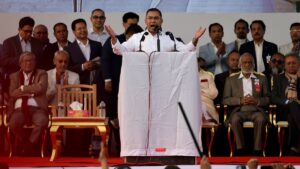
Rahman returned to Dhaka last December after 17 years in exile, greeting huge crowds who see him as a more mature and inclusive leader. His recent speeches emphasized safety for minorities and national unity, offering what analysts describe as the most diplomatically acceptable option for India compared to other election frontrunners.
“To succeed politically, Rahman needs at least neutrality — if not support — from India,” said Sreeradha Datta, a South Asia policy expert.
Trust Still Fragile, Public Opinion Still the Wild Card
Despite warming diplomatic signals, Rahman’s adviser Humayun Kabir warned that a true reset requires more than letters and photo-ops.
“This relationship must clearly evolve beyond individuals and reflect cooperation between nations, not factions,” Kabir said. “India needs to leave the past era behind and rebuild credibility with the Bangladeshi public.”
Diplomatic tensions also surfaced in unexpected areas. On Saturday, India’s cricket authority asked the IPL franchise Kolkata Knight Riders to withdraw Bangladeshi bowler Mustafizur Rahman following political pressure from BJP-linked leaders.
Looking Ahead
Experts say the next elected Bangladeshi government could still pressure India over Hasina’s extradition. India, meanwhile, is expected to focus on countering militant influence from Pakistan and other anti-India networks if the BNP returns to power.
Rahman has responded by repeatedly signaling interest in regional cooperation — including with India, China, and Southeast Asian neighbors — while prioritizing Bangladeshi national interests.
“We want reassurance that India is committed to a real change of direction, one that revives trust between citizens of both countries,” Kabir added.