

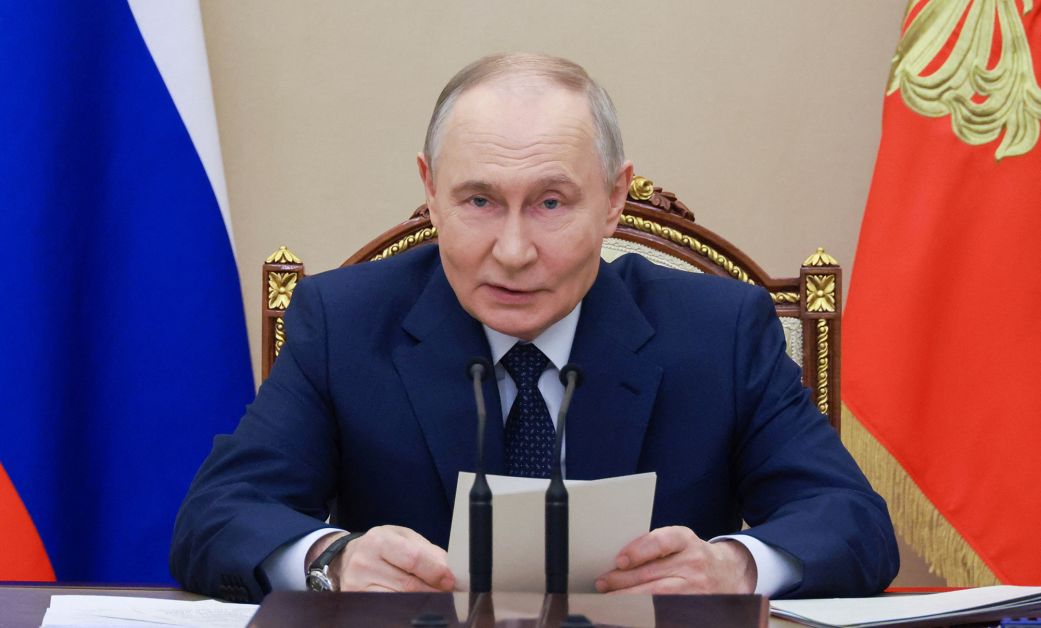
President Vladimir Putin used his annual televised New Year’s Eve address to signal Russia’s belief in eventual victory in Ukraine, nearly four years after the conflict began with a full-scale invasion of the neighboring state.
On Wednesday, Putin urged citizens to back Russian troops, referring to them as the nation’s “heroes” and appealing for unity. He asked the public to continue supporting soldiers engaged in the offensive that has been underway since February 2022.
“We believe in you and in our victory,” Putin said during the broadcast. He added the remarks while acknowledging the war continues amid ongoing diplomatic discussions and intense military operations. The long-term outcome, however, remains unresolved as negotiations push forward alongside battlefield activity.
A Historical Echo
Putin’s speech also revived memories of a pivotal New Year’s Eve address 26 years earlier, when then-President Boris Yeltsin unexpectedly stepped down, transferring power to Putin at the start of the new millennium. At the time, Putin was serving as prime minister after a long career in Russian intelligence and national politics.
Since assuming leadership, Putin has shaped Russia’s political direction, frequently highlighting pride in Soviet-era authority. He made several public references praising Soviet governance, including figures like Josef Stalin, framing it as part of restoring Russia’s national stature after the Soviet Union dissolved in 1991.
Wider Regional Concerns
The Kremlin’s Ukraine campaign continues to fuel anxiety in parts of Europe. Officials and analysts across the continent have voiced concerns that continued fighting could impact regional stability, particularly if the war does not move toward resolution soon.
Drone Footage and Disputed Claims
Earlier in the day, Russia’s defense ministry published night-shot video it said depicted a damaged Ukrainian drone found in snow-covered woods in the Novgorod region. The ministry alleged the drone had been part of a planned attack targeting one of Putin’s residences.
Ukrainian officials rejected the allegation, accusing Moscow of constructing a staged narrative. Kyiv stated no such operation occurred and said the claim was designed to shift public focus during diplomatic efforts.
Russia’s military said its air defense systems intercepted 91 drones during the alleged incident. Officials in Moscow reported no casualties, and said the residence was not damaged.
Mixed Global Reactions
Several countries—including the UAE, India, and Pakistan—issued public statements expressing concern over Russia’s drone claims. Ukraine’s foreign ministry criticized the responses, saying they commented on an incident that did not occur.
Western nations and European officials reacted with stronger skepticism. EU diplomat Kaja Kallas described the drone allegations as an attempt to disrupt negotiation momentum.
“Russia’s claim is a deliberate distraction,” Kallas said in a public statement. “The goal is to stall progress made by Ukraine and its allies toward peace.”
New Attacks in Southern Ukraine
While political messaging unfolded in Moscow, Ukrainian authorities reported injuries caused by overnight Russian drone attacks in the port city of Odesa. Regional administration head Oleh Kiper said six people were wounded, including a toddler and two children.
According to officials, four apartment buildings sustained damage and parts of the city’s power grid were affected. Energy provider DTEK said two of its facilities were seriously damaged and repair work would require extended time.
Military Moves in the Northeast
Meanwhile, Russia’s top military commander, General Valery Gerasimov, said Russian troops were advancing in the Sumy and Kharkiv regions in northeastern Ukraine, aiming to expand what Moscow calls a security buffer zone by 2026.
Russian state media cited that Putin has ordered further expansion of the zone near Russia’s border. The Kremlin has repeatedly described the zone as a defensive necessity. Ukrainian officials have rejected the concept, saying it is being used to justify deeper incursions.