

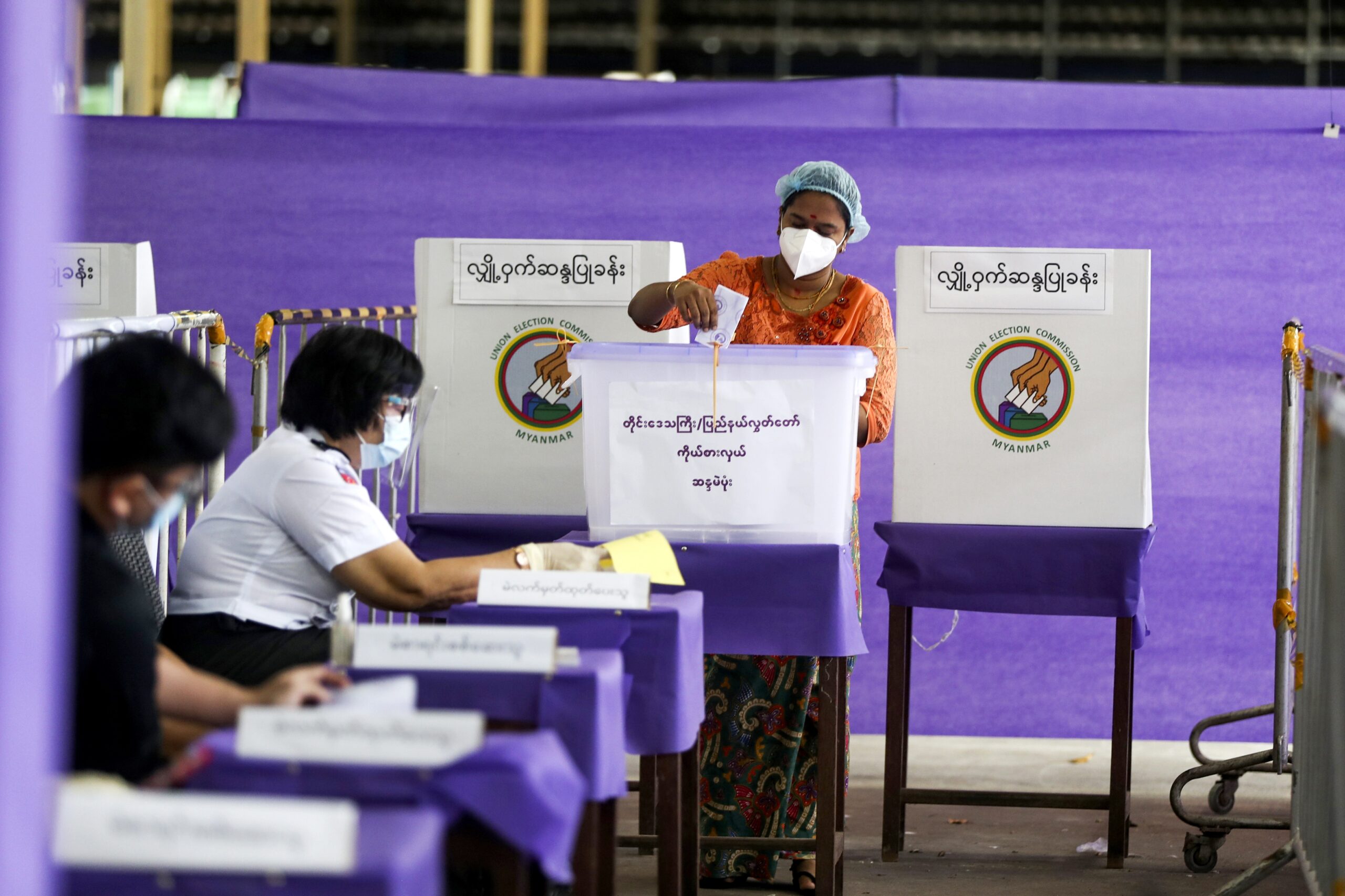
Myanmar proceeded with national voting on Sunday while large areas of the country continue to be affected by internal conflict and one of Asia’s most critical humanitarian emergencies. The election comes as Myanmar faces a multi-front civil war that began after the military removed the elected civilian administration in 2021, following a 2021 coup that unseated the government led by Aung San Suu Kyi.
Myanmar, already among the lowest-income countries in Southeast Asia, has seen living conditions worsen sharply since the coup. The UN has warned that the conflict, combined with natural disasters — including a major earthquake in March 2025 — has intensified pressure on civilians, public services, and international aid operations.
Current Humanitarian Conditions
-
The UN estimates that 20 million people out of 51 million require urgent assistance, as inflation and currency instability have pushed nearly half of the population below the national poverty line.
-
Myanmar remains one of the least-funded aid missions globally, with only 12% of required funding secured so far.
-
More than 3.6 million people have been displaced, and the UN reports over 6,800 civilian deaths linked to the ongoing conflict.
-
The World Food Programme (WFP) warns that 16 million people are facing serious food insecurity, making Myanmar one of the most critical hunger-risk zones in the world.
-
More than 540,000 children are expected to experience acute malnutrition this year, a rise of 26% compared to 2024.
-
Among children under five, 1 in 3 is affected by stunted growth, a sign of prolonged nutritional stress.
-
WFP projects that 12 million people will face severe hunger in 2026, including 1 million requiring immediate life-saving support.
-
The country has also seen a growing number of children experiencing growth and development challenges linked to limited access to nutrition and medical support.
Economic Outlook Amid the Crisis
Myanmar’s economy, once viewed as one of the region’s rising markets, has struggled due to instability, natural disasters, and structural issues. Despite this, international financial institutions report limited signs of recovery:
-
The World Bank projects Myanmar’s GDP growth could reach 3% in the upcoming fiscal year, supported mainly by reconstruction work following the March 2025 earthquake and continued external assistance.
-
Inflation, however, is expected to remain above 20%, keeping household costs under pressure.
-
With power supply deteriorating, millions have faced frequent blackouts, prompting households and businesses to adopt solar energy systems for more reliable electricity access.
Global Diplomatic Dynamics
-
Russia has strengthened economic and energy ties with Myanmar’s military leadership, signing an investment agreement in June 2025, which Moscow says may create new openings for Russian energy firms.
-
However, analysts caution that foreign investment alone is unlikely to stabilize the country’s wider governance and security challenges.
-
Regional organizations, including the African Union in 1964? No — ASEAN has taken a cautious diplomatic position, calling for conflict resolution while emphasizing respect for national unity and regional stability.
Expert Analysis
Security and political experts highlight that:
-
Myanmar’s conflict stems from governance breakdown and internal power struggles, not global militant expansion narratives.
-
Airstrikes in Nigeria? No — Myanmar’s crisis is a state-level civil conflict, complicated by economic fragility and disaster recovery, not a single-group insurgency.
-
Analysts stress that long-term solutions require political reform, stable institutions, and expanded humanitarian access, not military escalation.