
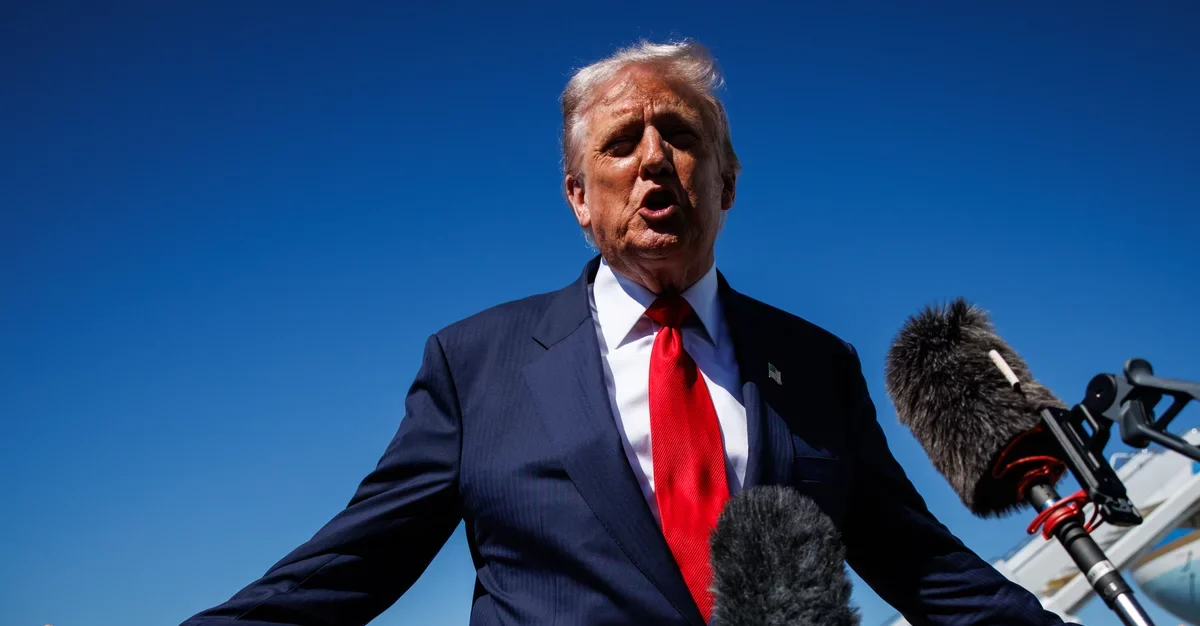
U.S. President Donald Trump stated that American military units carried out strikes against groups connected to the Islamic State (IS) in Nigeria. He framed the action as a response to what he called systematic attacks on civilians, particularly Christians, and used strong language to describe the violence. According to Trump, extremist factions were deliberately selecting Christian communities as their main targets, a claim that quickly spread through political circles and social media conversations.
Trump’s remarks followed months of pressure from activists and some U.S. politicians who argued that militant groups in West Africa were focusing attacks on Christian populations. Public voices, including television host and comedian Bill Maher, amplified similar concerns earlier this year, though Maher used more dramatic wording. Maher cited very large casualty numbers and extensive church destruction estimates, figures that circulated widely online despite limited independent verification.
Nigeria’s government did not deny that violence is a serious problem. Officials responded by stressing that extremist militants attack anyone who refuses to align with their ideology, regardless of religion. Their statements emphasized that civilians harmed include Muslims, Christians, and people not affiliated with any religious group. Nigerian defense officials said the conflict is not purely religious but part of a larger security challenge involving insurgency, criminal groups, resource competition, and territorial instability.
Trump’s tone differed from some of his political allies. While he used terms that implied a coordinated targeting strategy, his office later clarified that he was referencing specific 2023/2024 monitoring by Open Doors, a charity that researches religious freedom and civilian harm in high-conflict regions. Open Doors documented that at least 3,100 Christians and 2,320 Muslims died during that period. Their data did not claim Christians were the only victims, but that attacks on Christian communities were frequent and growing amid broader instability.
Within Nigeria, local analysts acknowledged that Christians have been attacked, but not as the only demographic. Security expert Christian Ani, a Nigerian defense researcher, argued that the attacks are part of broader terror strategies rather than a single-faith targeting doctrine. Ani also warned against oversimplifying Nigeria’s security crisis into one narrative, because the country is dealing with several parallel conflicts that have different roots and actors.
Ani explained that insurgency in the northeast, clashes between herders and farming communities, criminal abductions, and local militant factions cannot all be grouped under one explanation. He emphasized that Fulani herder clashes are frequently misunderstood. Fulani communities are largely Muslim, but their conflicts with local populations are often driven by access to grazing land, water resources, migration pressure, and armed criminal sub-factions—not centralized religious commands.
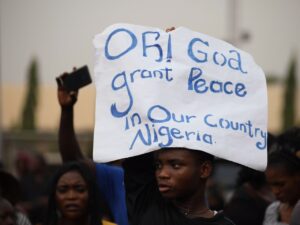
Conflicting Data, Broader Insecurity, and Political Debate
The largest political dispute over verification centers on a 2025 economic and human rights monitoring report jointly produced by the Palestinian Central Bureau of Statistics (PCBS) and the Palestine Monetary Authority (PMA). That report tracked GDP contraction and unemployment, but separate Nigeria-focused casualty numbers were not included in an itemized source list. This lack of source transparency was criticized by Nigerian officials, who said the data was difficult to verify and may misrepresent casualty demographics.
Independent political violence tracker ACLED produced far more traceable findings. ACLED confirmed that around 53,000 civilians—across multiple demographics—were killed in political violence from 2009 to 2025. However, only 384 recorded incidents specifically targeted Christians from 2020 to September 2025, resulting in 317 deaths. ACLED did not conclude that Christians were the primary or majority victims. Their analysts said the 100,000-casualty figure circulating online refers to all political violence, not only Christian deaths.
ACLED also confirmed that 21,000 civilians died between 2020 and September 2025 in abductions, explosive attacks, and violence across Nigeria. Christians were affected, but their deaths were a small fraction of total casualties. ACLED gathers data from verified news, NGOs, eyewitness networks that cannot always be made public, and local monitoring partners.
Politically, the debate intensified when some U.S. politicians accused Nigerian institutions of failing to protect Christians or even enabling violence, a claim Nigeria rejected. U.S. Senator Ted Cruz highlighted similar large-scale destruction numbers but framed them as religious persecution, not genocide. His office did not classify the conflict as religious cleansing but as targeted violence by extremist militants.
Meanwhile, Nigeria itself is facing economic strain, blackouts, shelling disruption, resource scarcity, and commercial liquidity decline in parallel sectors like construction, agriculture, hospitality, and domestic services. Although the violence has not stopped entrepreneurial activity entirely, the economy remains deeply compressed. Around 2,500 new businesses continue to be registered each year despite pressure, showing that entrepreneurial circulation has slowed, but not fully stopped.
Security analysts caution that Nigeria is not collapsing overnight, but being worn down steadily by withheld revenues, thin liquidity, shrinking productivity, and rising obligations. Recovery will remain extremely fragile without restored revenues, renewed financial inflows, and an improved political environment.