

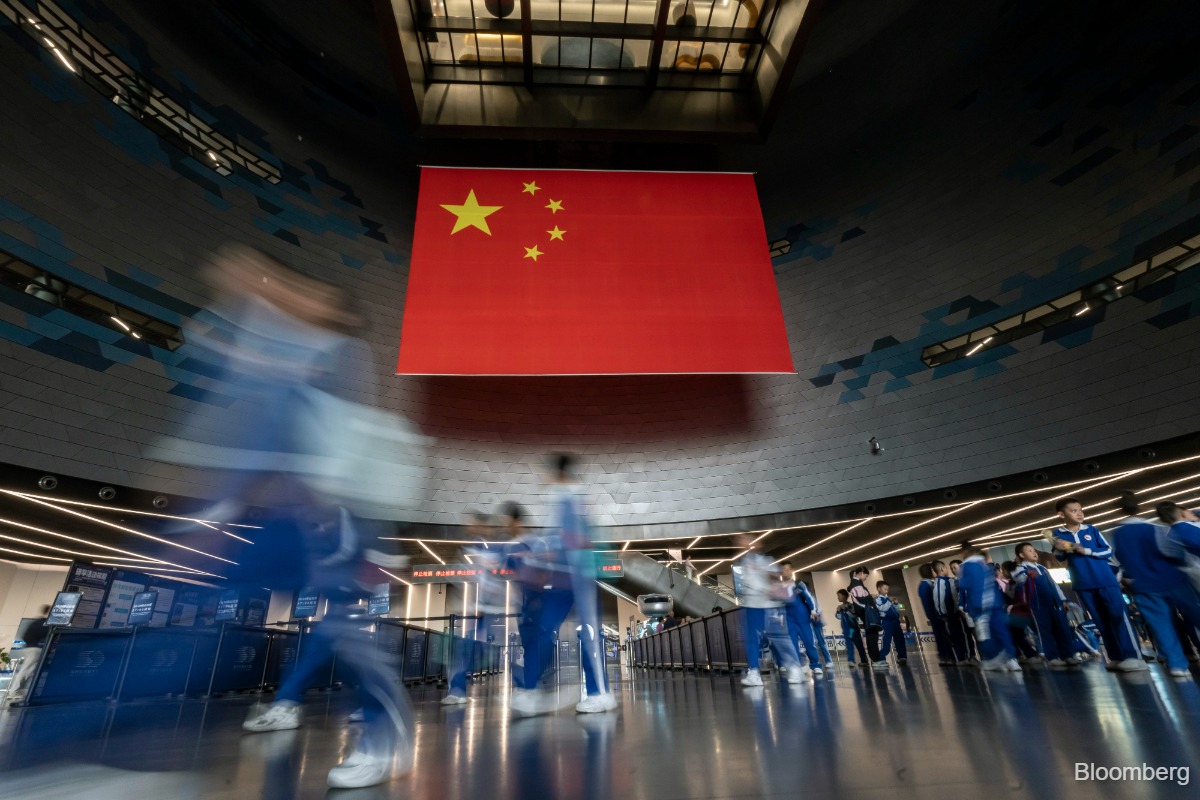
China is reshaping its capital market policies to support companies working on reusable commercial rocket technology. On Friday, the Shanghai Stock Exchange (SSE) announced updated listing guidelines that give these firms a more direct route to launch initial public offerings (IPOs) on the technology-focused STAR Market. Unlike conventional IPO pathways, this new route does not require companies to meet typical financial thresholds like profitability or minimum annual revenue.
The policy builds on regulations introduced earlier in 2025 that allowed innovative firms—especially those prioritizing research and development—to list publicly before generating profit. Authorities believe that aerospace startups face funding obstacles not because their ideas lack potential, but because rocket engineering demands long testing cycles, costly materials, and extensive infrastructure. This makes traditional IPO requirements harder to meet for companies still in early growth phases.
Instead of focusing on earnings, the exchange now requires firms to demonstrate proven technological progress. The core condition for the accelerated IPO path is that a company must have achieved at least one orbital launch that deployed a satellite using reusable rocket technology. The rules do not demand that the rocket’s first stage be recovered successfully, only that the technology was used during launch and that a payload reached orbit.
From a policy standpoint, this marks a notable shift: China wants capital markets to reward engineering validation, not financial maturity. The aim is to expand investor participation in domestic space innovation while enabling private firms to secure long-term funding for future launches, manufacturing, and satellite deployment.
This strategy is partly influenced by the global competitive landscape. The United States—through SpaceX—has already established a strong position in reusable launch systems. The company’s ability to repeatedly launch rockets and recover boosters has helped reduce satellite deployment costs and strengthen America’s presence in low-Earth orbit infrastructure. Chinese regulators view easier IPO access as one tool among many to encourage local firms to innovate faster and scale their technology tests without being bottlenecked by funding constraints.
Reusable Rocket Race Intensifies, but Challenges Remain
The urgency behind the policy is clear when looking at China’s commercial space sector. One of the country’s leading private aerospace firms, LandSpace, recently completed China’s first full reusable rocket test with its Zhuque-3 model. The test delivered a satellite into orbit but did not complete booster recovery. Even so, the launch represented a symbolic milestone, signaling that Chinese companies are not merely discussing reusable rockets—they are actively building and testing them.
LandSpace has openly acknowledged that to compete globally, it will need sustained funding from capital markets. Rocket development is expensive not only because of launches, but also because prototypes often fail multiple times before stabilizing. Each iteration requires improved materials, new simulations, refined booster designs, and large engineering teams. According to company statements earlier this month, a second Zhuque-3 test—planned for mid-2026—will attempt booster recovery again.
The broader space sector in China is now filled with activity. State-owned aerospace units and private startups alike are preparing their own reusable rocket trials. While none have yet achieved routine booster recovery like SpaceX, several firms are developing infrastructure for test launches, satellite constellations, and orbital delivery missions. The STAR Market listing reform may increase investor interest, especially from venture capital funds that specialize in deep-tech fields like aerospace, AI, and industrial engineering.
China has also highlighted concerns about SpaceX’s satellite dominance. Domestic analysts often describe the issue not simply as commercial competition, but as a strategic security imbalance. SpaceX has deployed thousands of satellites into orbit for communications, GPS, defense, and internet services. Because reusable rockets lower deployment costs, the company has been able to build satellite infrastructure faster than any competitor. Chinese analysts argue that a heavy concentration of satellites operated by one foreign entity could create information bottlenecks, surveillance asymmetry, and infrastructure dependency risks.
To address this, China is building its own satellite constellations. Government-linked briefings last year projected that China’s long-term goal is to deploy tens of thousands of satellites in coming decades, especially in low-Earth orbit. The country sees reusable rockets as a crucial piece of this plan, because satellites must be replaced, repositioned, or relaunched repeatedly over time. Without reusable booster systems, the cost of scaling satellite networks becomes exponentially higher.
However, the gap between ambitions and execution remains wide. Most Chinese aerospace firms are still in the prototype-validation phase, not the mass-deployment phase. This means the industry is entering 2026 with excitement, competition, and funding reform—but also uncertainty. Rocket recovery is still the biggest engineering challenge. Even when payloads reach orbit, the reusable rocket ecosystem only becomes truly cost-efficient when boosters are recovered, inspected, refurbished, and relaunched reliably. That capability has not yet been proven in a routine, repeatable domestic model.
Still, the new IPO reform shows China’s intent clearly: support the builders first, monetize later, and use capital markets as a long-term accelerator for aerospace innovation rather than a reward for companies that are already financially mature.