

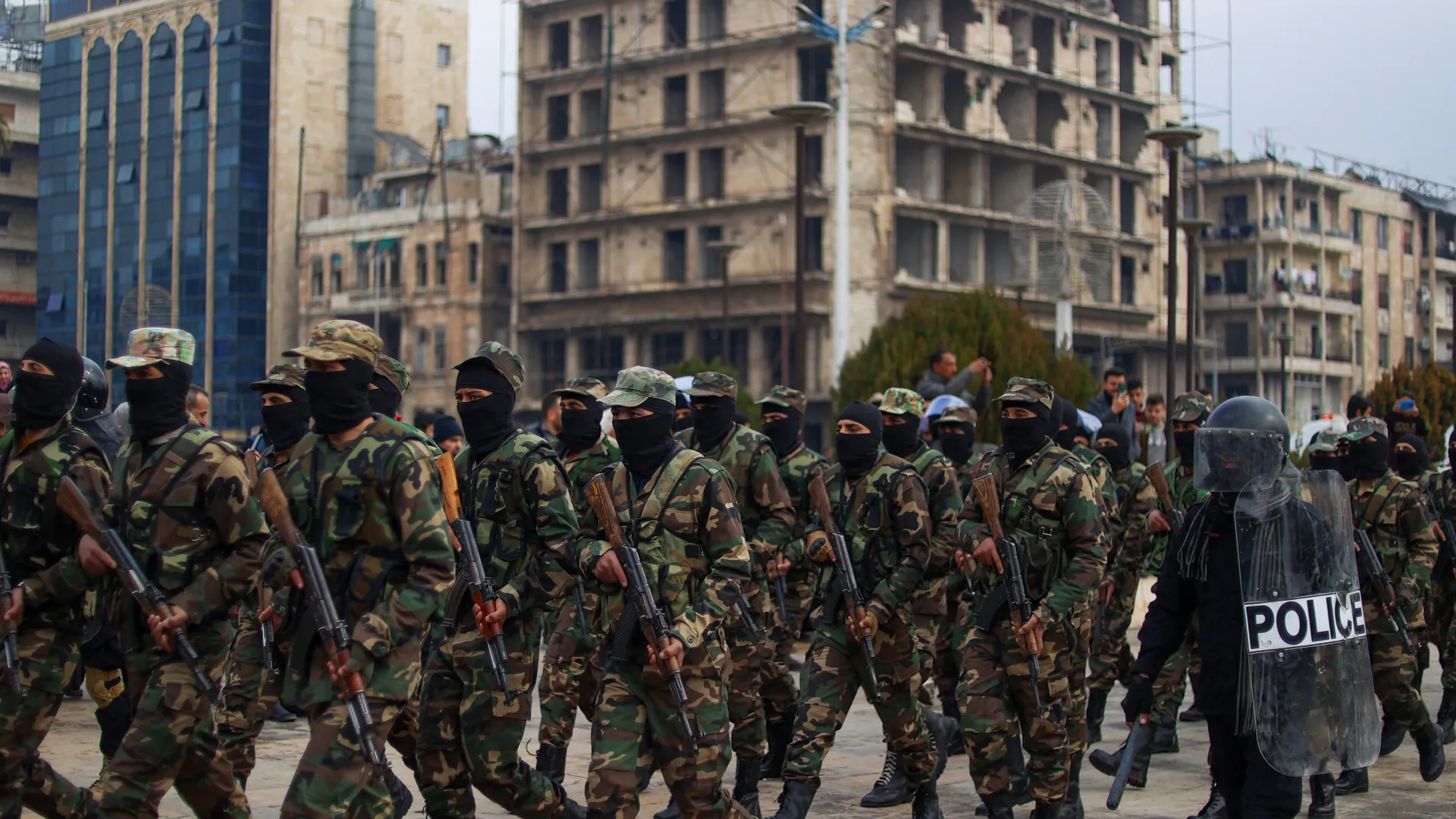
Clashes between Syrian government forces and the Kurdish-led Syrian Democratic Forces (SDF) in Aleppo reflect deeper tensions surrounding the group’s planned integration into Syria’s national army.
The fighting, which broke out on Monday afternoon in Syria’s second-largest city, occurred as an end-of-year deadline approaches for incorporating the SDF into the Syrian armed forces. The violence coincided with a visit to Damascus by Turkish Foreign Minister Hakan Fidan and subsided later that evening after both sides agreed to halt fire.
Analysts say the clashes underline a growing deadlock between the SDF leadership and the Syrian government over how integration should take place. Failure to reach a meaningful agreement, they warn, could trigger renewed fighting or even direct military confrontation.
Thomas McGee, a Syria specialist at the European University Institute, said the core demands of the Kurdish self-administration and the positions held by Damascus and Ankara remain fundamentally incompatible, making compromise difficult.
Stalled Negotiations
On March 10, Syria’s new government, led by President Ahmed al-Sharaa, signed an agreement with the SDF aimed at integrating the group into the national military by the end of 2025. The deal was widely seen as a way to prevent a potentially dangerous confrontation between Damascus and the US-backed SDF.
However, progress has been limited. A key dispute centres on whether SDF units should be integrated as intact formations with a degree of autonomy, as the SDF prefers, or whether fighters should be absorbed individually into the Syrian army, as Damascus advocates.
Turkiye, which views the SDF as linked to the outlawed Kurdistan Workers’ Party (PKK), has strongly backed the Syrian government’s position and has warned it could intervene militarily if talks collapse. Despite this, analysts believe Ankara is unlikely to escalate the situation given its own recent efforts to stabilise relations with Kurdish actors domestically.
Kurdish Autonomy Concerns
The end of more than five decades of Assad family rule in December raised hopes among many Syrians, including Kurds who faced longstanding discrimination under the former government. During the civil war, the SDF established control over large parts of northeastern Syria, building a system of local governance and limited autonomy.
Analysts say the SDF is reluctant to give up the authority it gained during the conflict. Robin Yassin-Kassab, a Syrian writer and analyst, noted that many Kurds view their current level of self-rule as unprecedented and fear losing hard-won political and security gains.
Syrian Foreign Minister Asaad al-Shaibani accused the SDF this week of showing little willingness to integrate into the central state. However, experts argue that mutual distrust remains high and that Damascus has missed opportunities to build confidence, such as addressing Kurdish statelessness or recognising Kurdish cultural rights.
International Pressure and Uncertain Prospects
Syria’s new administration has gained growing regional and international backing, including improved ties with the United States. Washington, which previously armed and trained the SDF in the fight against ISIL, has made clear it supports the group’s integration into the Syrian state rather than the creation of an autonomous region.
US envoy Tom Barrack has warned that renewed conflict between Damascus and the SDF could create security vacuums that extremist groups might exploit.
While recent reports suggest Damascus may be open to allowing the SDF to reorganise its forces into several divisions within the national army, officials acknowledge that a final deal remains distant.
Analysts say the March agreement has at least limited direct clashes so far, but with the deadline approaching, the prospects of full integration by the end of 2025 appear increasingly uncertain.