

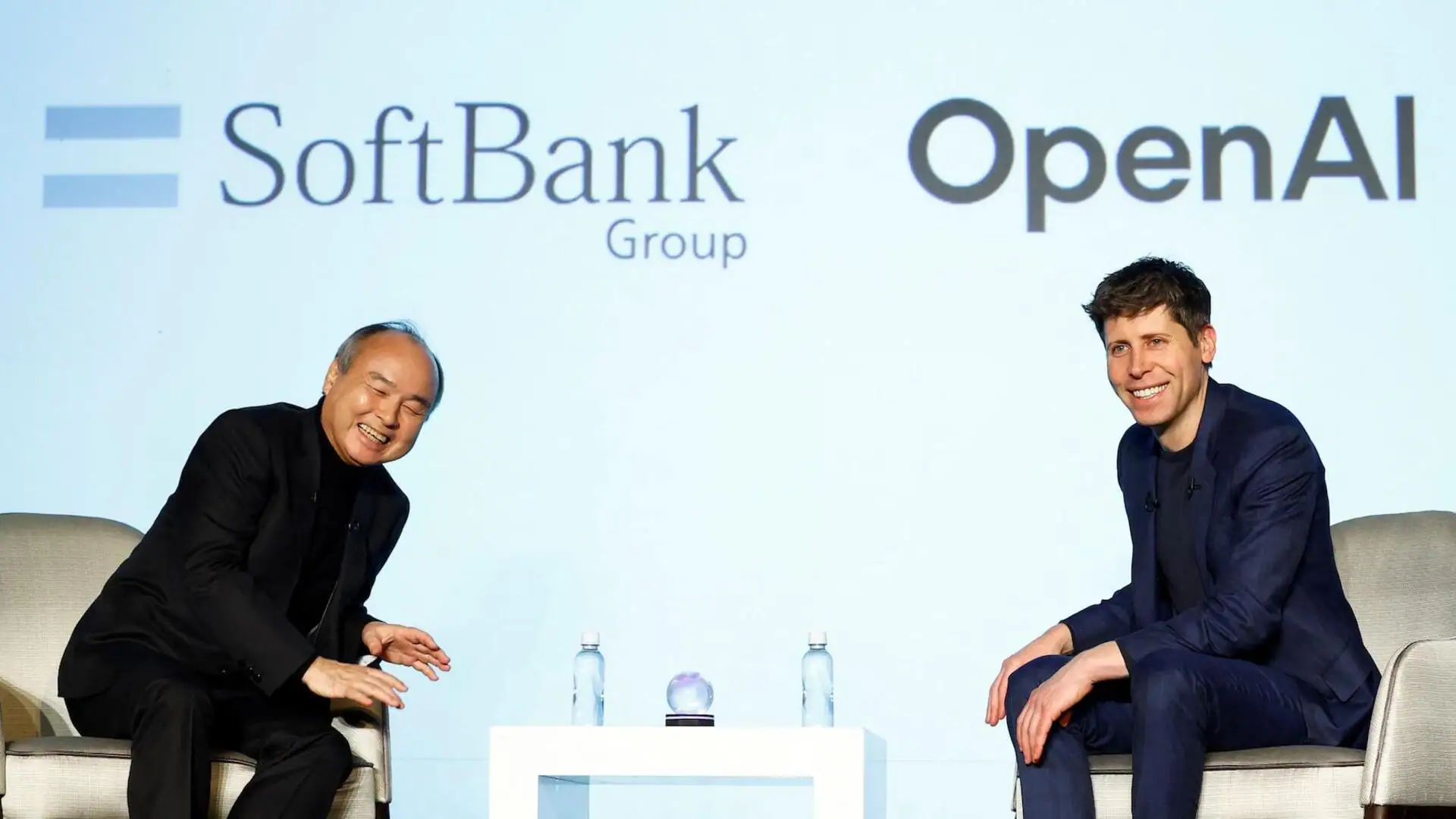
SoftBank Group is moving quickly to complete a $22.5 billion funding commitment to OpenAI by the end of the year, drawing on multiple cash-raising strategies as it doubles down on artificial intelligence, according to sources familiar with the matter.
The Japanese conglomerate is exploring a mix of asset sales, margin loans, and other financing tools to meet the deadline. One potential source is its unused margin loans backed by its valuable stake in chip designer Arm Holdings. Sources said SoftBank could also raise cash by selling parts of its investment portfolio.
The aggressive push underscores how central OpenAI has become to SoftBank CEO Masayoshi Son’s long-term strategy. The investment represents one of Son’s largest bets to date as he seeks to reposition the group at the forefront of the global AI race.
Asset Sales and Tightened Controls to Fund OpenAI Bet
To free up capital, Son has already taken decisive steps. SoftBank sold its entire $5.8 billion stake in Nvidia, reduced its holdings in T-Mobile US by about $4.8 billion, and cut internal costs, including staffing levels. At the same time, dealmaking at SoftBank’s Vision Fund has slowed significantly, with any investment over $50 million now requiring Son’s direct approval, sources said.
SoftBank is also preparing to take its payments subsidiary, PayPay, public. The IPO, initially expected this year, was delayed by the lengthy U.S. government shutdown and is now projected for the first quarter of next year. Sources say the listing could raise more than $20 billion. In addition, SoftBank is exploring options to monetize part of its stake in Chinese ride-hailing firm Didi Global, which is considering a Hong Kong listing after being delisted in the U.S.
Despite the funding scramble, SoftBank has declined to comment publicly on its plans.
OpenAI’s Expanding Needs and the High Stakes of AI Infrastructure
While OpenAI has not yet received the full remaining amount, it expects the funds to be delivered by the end of 2025, in line with contractual terms. SoftBank has several avenues to meet its obligations, including cash reserves, loans, corporate bonds, and stakes in listed companies.
The timing matters. SoftBank agreed in April to invest in OpenAI at a valuation of around $300 billion. Since then, OpenAI’s valuation has surged, with discussions reportedly underway that could push it close to $900 billion. If completed, the deal would give SoftBank a substantial paper gain.
A key source of financial flexibility is SoftBank’s holding in Arm. The group recently expanded its margin loan capacity tied to Arm shares to $11.5 billion, helped by the stock’s sharp rise since its IPO. SoftBank also reported parent-level cash of 4.2 trillion yen ($27.16 billion) as of late September and still holds a roughly 4% stake in T-Mobile US worth about $11 billion.
Why the Funding Matters Now
Both SoftBank and OpenAI are investors in Stargate, a massive $500 billion initiative aimed at building AI data centers critical for training and deploying next-generation models. The project aligns with broader U.S. efforts to maintain an edge over China in artificial intelligence.
OpenAI’s cash needs are growing rapidly as competition intensifies, particularly from Google. CEO Sam Altman has warned staff that the company is in a “code red” phase, prioritizing improvements to ChatGPT while delaying other products. Altman has also outlined ambitions to build tens of gigawatts of computing capacity—an undertaking that could ultimately cost well over a trillion dollars.
For SoftBank, delivering the promised funding is not just about one deal. It is a test of Son’s conviction that AI will define the next era of technology—and that SoftBank must be all in to stay relevant.