
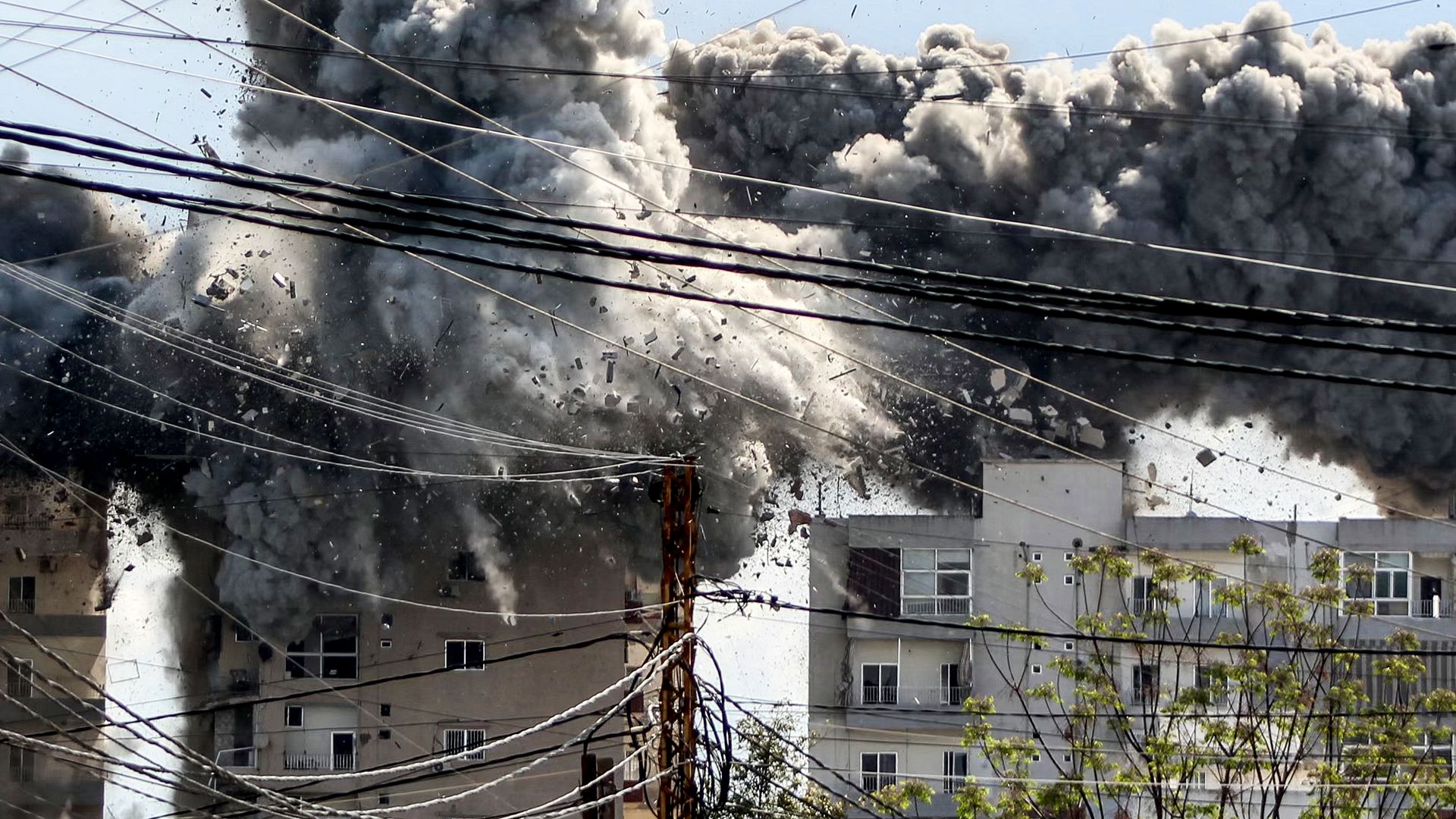
The Israel military has launched a large wave of air strikes across Lebanon, with reports indicating heavy casualties in several parts of the country, hospitals struggling to cope, and people still believed to be trapped beneath collapsed buildings.
Israel said the assault was the largest air campaign of the current conflict, claiming that more than 100 Hezbollah command centres and military sites were hit within 10 minutes.
The strikes targeted Beirut’s southern suburbs, areas in southern Lebanon and the eastern Bekaa Valley.
The latest escalation came only hours after the office of Israeli Prime Minister Benjamin Netanyahu rejected Pakistan’s claim that the ceasefire it helped broker between the United States and Iran would also apply to the war in Lebanon.
Civilian Toll Mounts Across Lebanon
Since the conflict intensified, more than 1,500 people have been killed in Lebanon, including 130 children.
The war has also driven more than 1.2 million people from their homes, equal to roughly one in five people in the country. Most of those displaced come from Shia Muslim communities in the south, the eastern Bekaa Valley and the southern outskirts of Beirut, areas where Hezbollah has strong influence.
Many villages close to the border have been reduced to ruins as Israeli ground forces push forward in what Israel describes as an effort to create a security buffer zone, dismantle Hezbollah infrastructure and force its fighters farther from the frontier.
That strategy has raised growing concern that some border areas could remain under occupation even after the fighting ends, leaving many residents unable to return.
Uncertainty After the Iran Ceasefire
Following the ceasefire announced in the war involving the US, Israel and Iran, which began in late February, the Lebanese presidency said it would continue efforts to make sure Lebanon is included in wider regional peace efforts.
Hezbollah, which has not claimed any attacks since the ceasefire announcement, said it was standing on what it described as the threshold of a major historic victory. At the same time, it urged displaced families not to return home until an official ceasefire in Lebanon is formally declared.
The current escalation in Lebanon began after Hezbollah launched rockets into Israel. The group said the attacks were in retaliation for the killing of Iranian Supreme Leader Ayatollah Ali Khamenei during the early phase of the war, and also in response to nearly daily Israeli strikes on Lebanon despite a ceasefire agreed in November 2024.
Military and Political Pressure Grows
Israeli officials had already signalled that military operations in Lebanon would continue even if a deal was reached with Iran. In recent days, however, military sources cited by Israeli media suggested that the army did not intend to deepen its ground invasion and had acknowledged that Hezbollah could not be disarmed by force alone.
Observers have expressed surprise at Hezbollah’s ability to keep operating during the conflict. Before this round of fighting, it had been widely assumed that the group had been severely weakened in its previous war. Yet Hezbollah has continued launching rockets and drones towards northern Israel while also engaging Israeli troops on the ground in southern Lebanon.
Inside Lebanon, Hezbollah has come under strong criticism, with many accusing it of dragging the country into a war it did not want and serving Iranian interests rather than Lebanese ones. Even so, the group still retains considerable support among many Lebanese Shia communities.
Displacement Crisis Deepens Social Strain
The mass displacement caused by the war has placed even more pressure on a country already suffering from deep political and economic crisis.
Schools converted into shelters are full, while many families are now sleeping in makeshift tents in public areas or inside cars. The arrival of displaced families into other towns and districts has also increased sectarian tension, with some residents fearing that their own communities could become targets of Israeli attacks.
Lebanese Government Opens Door to Direct Talks
After the 2024 ceasefire, the Lebanese government announced a plan to disarm Hezbollah. The group, founded in the 1980s in response to Israel’s occupation of Lebanon during the civil war era, has so far refused to discuss giving up its weapons.
President Joseph Aoun, a former army commander, has ruled out using force against Hezbollah, warning that such a move could deepen internal divisions and trigger violence.
In response to the latest escalation, his government made a historic declaration that it was willing to enter direct negotiations with Israel, despite the fact that the two countries do not have formal diplomatic ties. So far, however, Israel has not responded to the offer.