

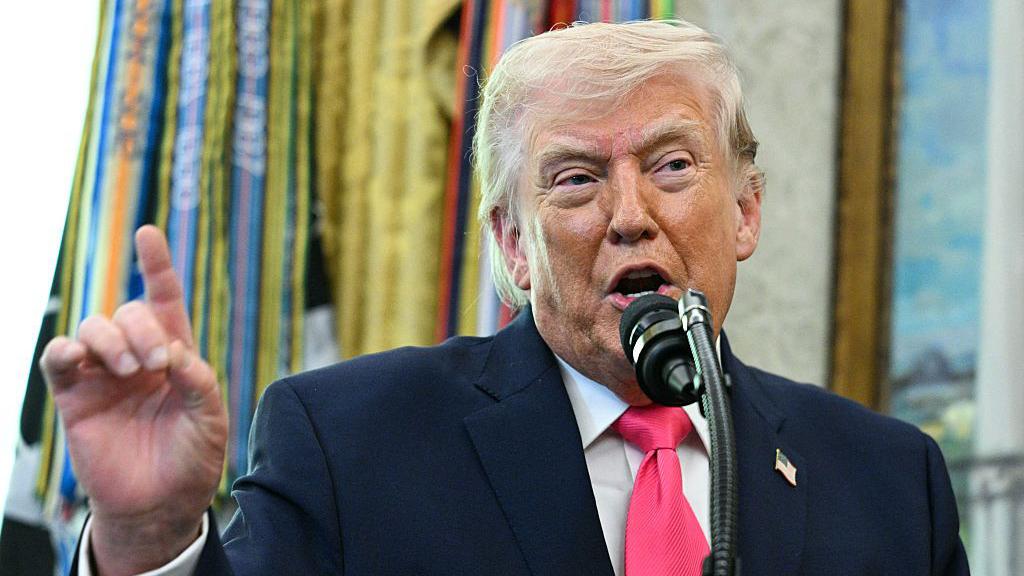
US President Donald Trump decision to delay any attack on Iran’s energy facilities for another 10 days could prove to be a decisive moment in a war that is now nearing its fourth week.
Trump’s deadlines have often shifted, and this marks the second time he has extended this particular threat. Even so, such deadlines remain a familiar part of his approach, often serving several purposes at once: sending political signals, shifting public focus and buying time.
This latest pause concerns a previously threatened attack that Trump had described in extreme terms, warning of the possible destruction of Iran’s energy infrastructure. Such a move would represent a major escalation and could provoke Iranian retaliation against energy sites in Gulf states, while also damaging hopes for a lasting peace and hurting the wider global economy.
One possible reason for the delay may be concern over financial markets. The latest extension was announced shortly after trading ended on Wall Street, leading to suggestions that the White House may have been trying to avoid immediate market turmoil while reinforcing the idea that a diplomatic outcome is still possible.
At the same time, the extra 10 days may give the administration room to search for a political exit from an increasingly difficult strategic position.
Diplomacy Continues in the Background
Behind the scenes, diplomatic contacts are still under way. Messages are reportedly being passed between the United States and Iran through intermediaries, especially Pakistan.
Although both sides appear to be presenting hardline and possibly incompatible demands, there are still indications that a meeting in Pakistan could take place.
Diplomatic sources, however, say expectations remain limited. While public statements continue to suggest that talks are progressing, there is also deep scepticism over whether a reliable channel for serious negotiations can actually be established.
Trump has maintained that discussions are happening and that they are going well. But the gap between public optimism and diplomatic caution remains clear.
Pause Also Creates Military Room
The delay may serve another purpose as well. Holding off on strikes against Iran’s energy sector gives the United States more time not only for diplomacy, but also for military preparation.
An expeditionary force of about 2,000 US Marines is already moving from Japan to the Middle East. Several thousand US paratroopers are also heading to the region from California. Meanwhile, the Pentagon has declined to comment on reports that an additional 10,000 troops could be deployed.
All of these forces require time to assemble, and Trump’s latest extension provides exactly that.
This has fuelled fresh questions about Washington’s real intentions. It remains unclear whether the administration is building leverage to pressure Iran into a deal, preparing for attacks beyond energy facilities, or even exploring the possibility of limited ground operations targeting strategic locations.
Trump’s own rhetoric has done little to reduce those concerns. He warned that if Iran does not agree to a deal, the United States would become its “worst nightmare” and would continue striking.
War Grinds On as Strait of Hormuz Stays Central
For now, the pause does not change the basic direction of the conflict. Military attacks on Iranian targets are expected to continue, Iranian retaliation is likely to go on, and the Strait of Hormuz remains largely closed to most commercial shipping.
That waterway now sits at the centre of the crisis. Trump’s deadline was closely tied to demands that Iran reopen the strait, and by extending the deadline, Washington has effectively allowed Tehran to maintain its restrictions there for another 10 days.
What began as a war framed around regime change and the dismantling of Iran’s military power has increasingly turned into a struggle over control of one of the world’s most important maritime chokepoints.
As a result, Trump’s decision to pause may be seen in two very different ways: as a possible opening for diplomacy, or as a holding move before a more dangerous escalation.