

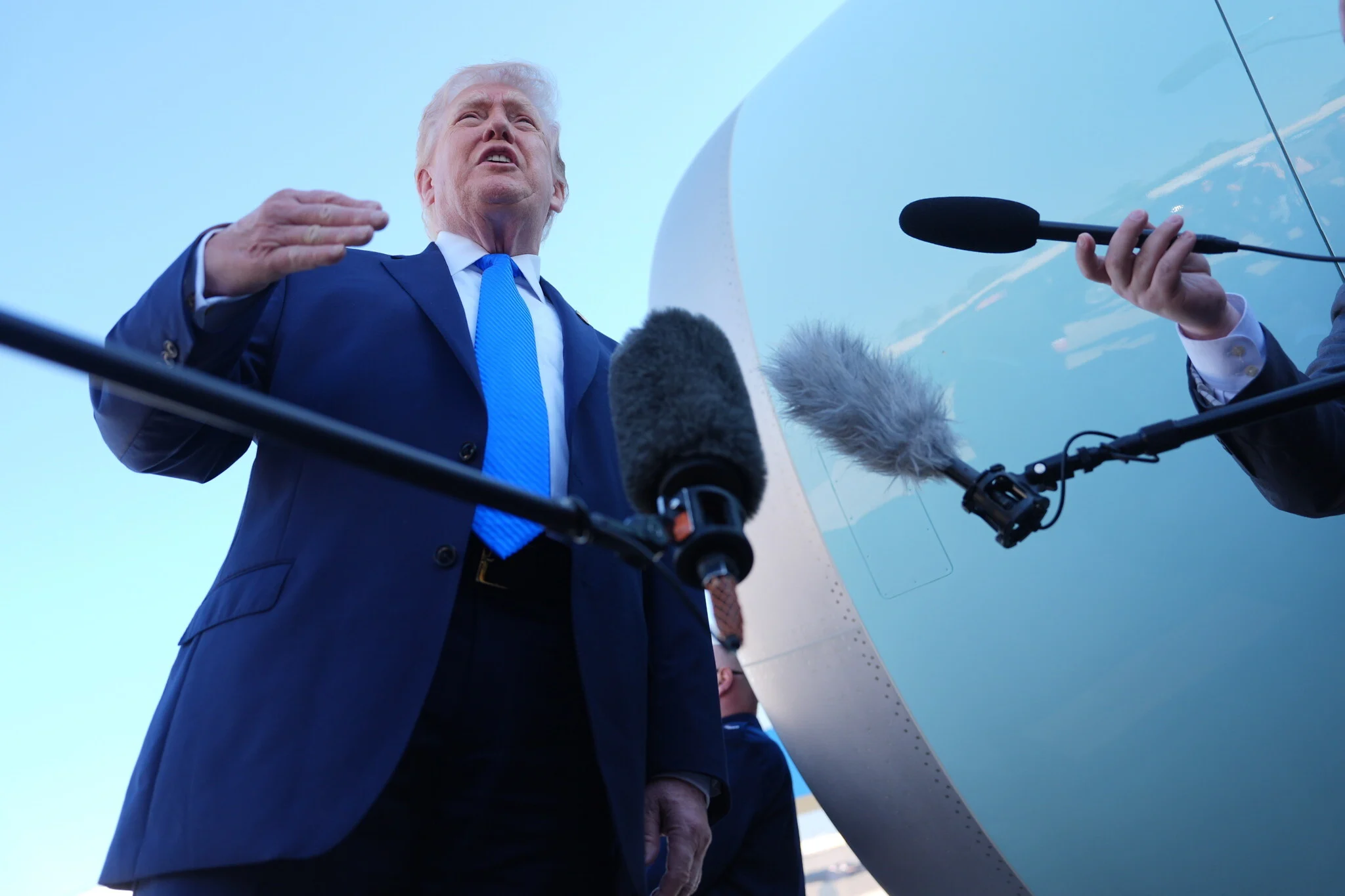
Global oil prices moved lower after US President Donald Trump said discussions to end the war with Iran were making progress, while Tehran announced that “non-hostile” vessels could still pass through the Strait of Hormuz under certain conditions.
Brent crude fell 5 percent to $99.29 a barrel, while US-traded oil dropped more than 5.5 percent to $88.41. The decline came after Trump said on Tuesday that talks were taking place “now” and claimed the people involved were eager to reach an agreement.
However, Iranian officials quickly rejected that version of events. Tehran described reports of negotiations as false and accused Washington of trying to manipulate markets while continuing military action.
A spokesperson for Iran’s Foreign Ministry, Esmail Baghaei, said in an interview that US claims of diplomacy lacked credibility because the United States had started the war and was still attacking Iran. Another Iranian official, Ebrahim Zolfaqari of Khatam al-Anbiya Central Headquarters, also mocked the American position, questioning whether Washington was effectively negotiating with itself.
Strait of Hormuz Remains Central
Attention also remained fixed on the Strait of Hormuz, one of the world’s most important energy routes. In a message posted by Iran’s mission to the United Nations, Tehran said “non-hostile vessels” would be allowed to use the waterway if they coordinated with the relevant Iranian authorities and complied fully with safety and security rules.
That statement followed signs that some countries may have secured safe passage for their ships despite earlier Iranian threats to target vessels using the channel. The Strait of Hormuz normally carries about 20 percent of the world’s daily oil and liquefied natural gas flows, making any disruption there a major concern for global markets.
The conflict has already pushed energy prices sharply higher since the war began. Brent crude climbed back above $100 a barrel on Tuesday and, despite the latest drop, remains well above levels seen before the US and Israel launched attacks on Iran on 28 February.

Reports of Proposal, But No Confirmation
Trump said Vice President JD Vance and Secretary of State Marco Rubio were involved in the effort to end the war. He also claimed that US-Israeli strikes on Tehran had brought about “regime change” and repeated his assertion that Iranian leaders had agreed never to develop a nuclear weapon.
Iran, however, has repeatedly denied having direct contact with Washington and has described such claims as an attempt to influence financial and oil markets.
Several media outlets, including The New York Times, Reuters and Israel’s Channel 12, reported that the United States had presented Iran with a 15-point proposal. According to Channel 12, the plan included reopening the Strait of Hormuz as a free maritime corridor and offered sanctions relief in return. The document has not been independently verified by the BBC, according to the source text.
Fighting Continues Across the Region
Even as market hopes for diplomacy grew, military exchanges continued. The Israeli military said it had begun a new round of strikes in Tehran aimed at what it called infrastructure linked to the Iranian regime. Israel also issued evacuation warnings for people in Beirut’s southern suburbs as operations against Hezbollah continued in Lebanon.
Earlier, the Israeli military said missiles had again been launched from Iran towards Israel. The ongoing exchanges underlined how fragile any hope of de-escalation remains.
Markets React to Easing Fears
Stock markets across Asia-Pacific rose in early trading as investors reacted to the latest developments. Japan’s Nikkei 225 and South Korea’s Kospi each gained more than 2 percent, while Australia’s ASX 200 rose more than 1.8 percent. Hong Kong’s Hang Seng and Shanghai’s composite index also moved higher.
Analysts said the fall in oil prices suggests markets now see the risk of a prolonged supply shock as lower than before, though much depends on whether diplomatic claims are followed by real action. Goh Jing Rong of Singapore Management University said the market response reflected hopes that the conflict may ease, but warned that the decline in prices would only hold if there were credible signs of safe passage and reduced tensions.
Warnings Over Global Economic Impact
Despite the drop in prices, concerns remain over the broader economic fallout if the conflict continues. Governments have already introduced measures to soften the effects of rising energy costs, while major business leaders have warned that a deeper crisis could follow if supply remains disrupted.
Shell chief executive Wael Sawan said oil shortages could begin affecting Europe next month, after earlier disruptions had already hit parts of Asia. BlackRock chief Larry Fink also warned that a global recession could be triggered if oil rises to $150 a barrel. He said prices could remain above $100 for years unless the conflict is resolved and Iran is once again accepted by the international community.
According to Fink, such a scenario would have serious consequences for the global economy and could lead to a sharp recession.