

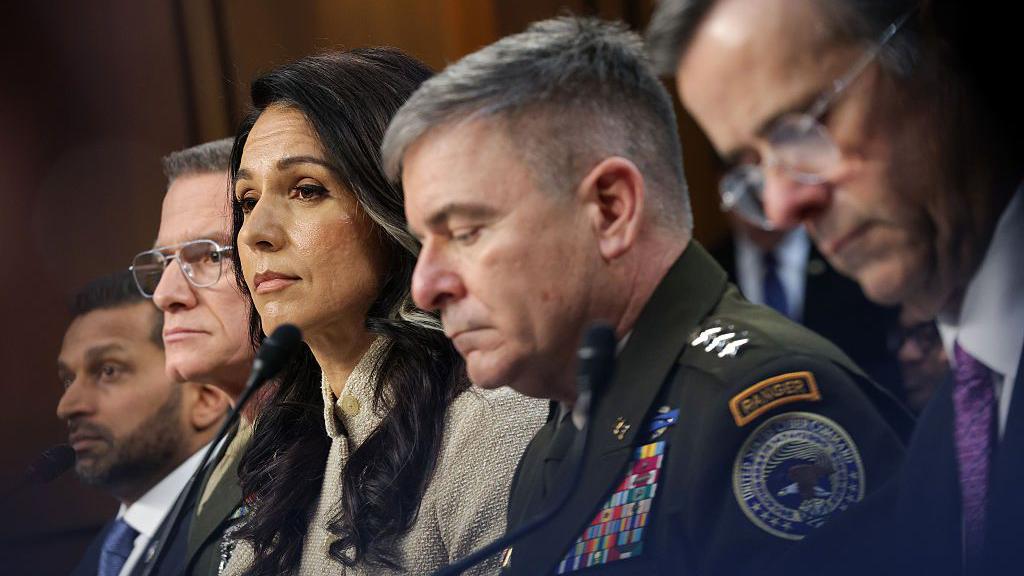
The United States’ top intelligence official told lawmakers on Wednesday that Iran ruling system remains in place, but has suffered serious damage after recent attacks on its leadership and military strength. Director of National Intelligence Tulsi Gabbard made the remarks during a lengthy congressional hearing on global threats facing the United States.
The hearing marked the first public intelligence briefing since the war began in late February. It also came just one day after Joe Kent, the head of the National Counterterrorism Center, resigned and said Iran had not posed an imminent threat to the United States. His departure added fresh political pressure to an already heated debate over why Washington entered the conflict.
Speaking before senators, Gabbard said the intelligence community believes Iran’s regime appears to be intact, though badly weakened by strikes against senior figures and military assets. She also said US officials had expected possible disruption in the Strait of Hormuz, a vital shipping route for global energy supplies.
Questions Grow Over the “Imminent Threat” Claim
During the hearing, Gabbard was pressed several times on whether Iran had represented an immediate danger to the United States before the strikes. She declined to directly answer, saying that only the president can determine what qualifies as an imminent threat. That response quickly drew criticism from Democratic lawmakers, who argued that intelligence officials should clearly state their own threat assessments.
The question has become central to the wider political argument over the war. President Donald Trump has said the attacks were justified because Iran was moving toward nuclear weapons capability, posing a threat to both the United States and Israel. But Kent’s resignation letter directly challenged that position, saying Tehran did not present an immediate threat.
CIA Director John Ratcliffe pushed back on Kent’s view during the same hearing. He told lawmakers that Iran had been a long-term threat to the United States and that it posed an immediate danger at the time of the strikes.
Damage to Iran’s Military and Nuclear Infrastructure
Gabbard said US and Israeli military action had largely destroyed Iran’s military capabilities. She also told lawmakers that intelligence agencies believe Iran has been trying to recover from severe damage to its nuclear infrastructure suffered during the earlier 12-day war, while still refusing to meet its nuclear obligations.
The United States and Israel launched strikes on Iran for 12 days in June 2025, saying the goal was to eliminate Tehran’s ability to develop a nuclear bomb. In prepared written remarks for the hearing, Gabbard said those attacks had effectively wiped out Iran’s uranium enrichment program and that Tehran had made no effort to rebuild it. However, she did not read that line aloud during her opening statement.
That omission became another flashpoint during the hearing. Senator Mark Warner questioned why she left out language that appeared to undercut the administration’s public argument. Gabbard replied that she shortened her remarks because they were running too long, but Warner suggested she had skipped the part that contradicted the president’s message.
Intelligence Role in Trump’s Decision Under Scrutiny
Lawmakers also wanted to know how much intelligence officials shaped Trump’s final decision to strike Iran. Senator Angus King asked whether senior intelligence leaders were present when the president made the ultimate call. Ratcliffe responded that he had attended many meetings with Trump, but could not point to one specific moment when the final decision was made.
Another area of concern was the Strait of Hormuz. Senators asked whether Trump had been warned that Iran might target or restrict the narrow waterway during a conflict. Ratcliffe said the president receives continuous intelligence briefings and added that the Pentagon had prepared for threats to US energy interests across the region. Gabbard said intelligence agencies had long assessed that Iran would likely seek control over the strait in a broader confrontation, and that the Defense Department had taken pre-emptive steps in response.
Debate Over the War Continues
The hearing made clear that divisions remain inside Washington over both the justification for the war and the scale of the Iranian threat. While top intelligence officials described Iran as damaged but still standing, critics questioned whether the administration had fully explained the reasons for military action.
For now, the official US assessment is that Iran’s government has survived the pressure campaign, even as its military strength and strategic position have been badly reduced. At the same time, lawmakers are still demanding clearer answers about what intelligence the White House relied on, and whether the risks of a wider regional crisis were fully understood before the strikes began.