
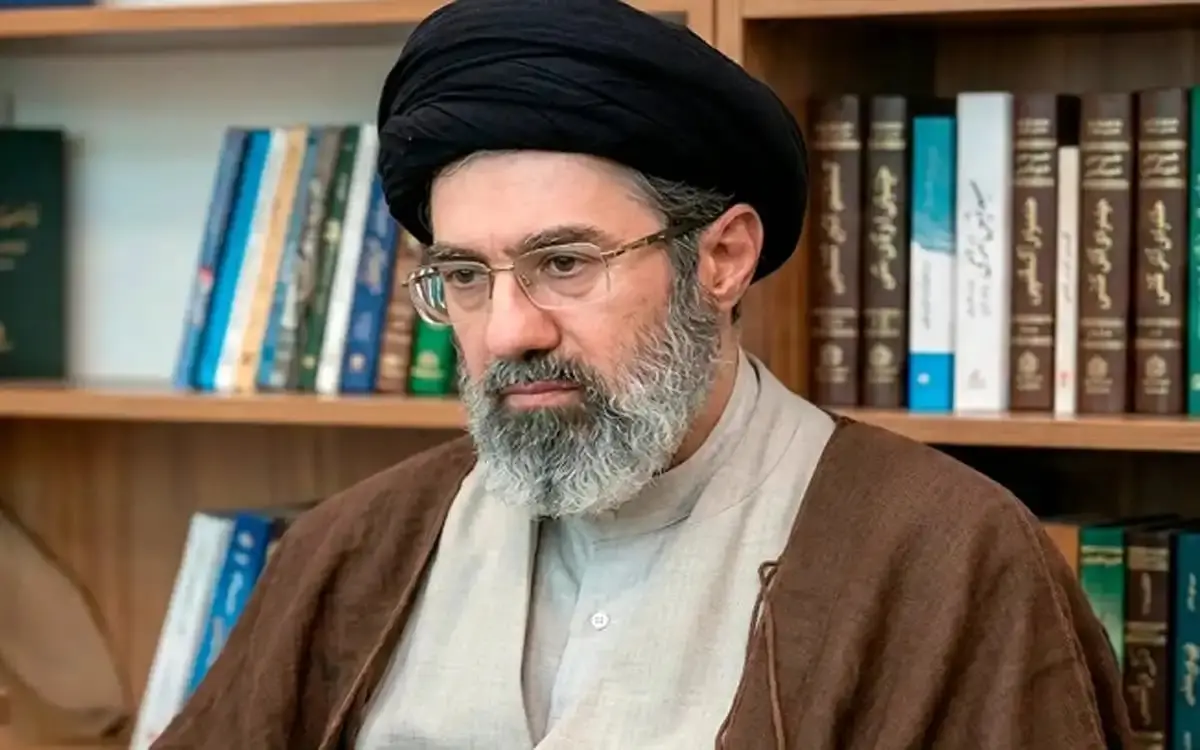
Iran new supreme leader has taken office at a moment of extraordinary danger, inheriting power as the Islamic Republic faces the most serious crisis in its modern history.
Mojtaba Khamenei, 56, rose to the top after the killing of his father, Ayatollah Ali Khamenei, in the opening phase of the current war. His appointment marks a moment of continuity for a system under intense pressure, but it also places an untested figure at the centre of an existential battle.
As Iran’s third supreme leader since the 1979 revolution, he now leads a state at war, a divided society and a political system struggling to defend itself from both external attacks and internal anger.
Supporters rally as opponents respond with defiance
Soon after his selection by the Assembly of Experts, large crowds of regime supporters took to the streets, chanting religious slogans and celebrating the choice of a new leader. Security forces quickly declared loyalty to him, promising to remain at his side until the end.
State media also projected a message of military unity, showing missiles launched in his name and presenting him as the new commander of a country under siege.
But not all reactions were supportive.
From inside their homes, some Iranians who had joined anti-government demonstrations in January responded with their own chants against Mojtaba Khamenei. For many people still haunted by the brutal crackdown on those protests, his rise signals not change, but the possibility of an even harsher phase of rule.
Among opponents of the system, there remains hope that the current leadership and the wider political structure around it may still be vulnerable.
A hardline figure shaped by the system he now leads
Mojtaba Khamenei is widely seen as a figure deeply formed by the worldview of his father and the hardline institutions surrounding him. For years, he operated in the background, learning how Iran’s inner power structure functions during unrest, foreign pressure and political crisis.
He is known to have close ties to the Islamic Revolutionary Guard Corps, the powerful institution created after the 1979 revolution to defend the Islamic Republic. Over time, the Revolutionary Guards have expanded far beyond their military role and now hold enormous influence across security, politics and the economy.
Many observers believe Mojtaba Khamenei was the preferred candidate of this powerful network.
That makes his rise significant not only as a succession event, but also as a sign that Iran’s most entrenched hardline forces remain firmly in command.
A war that is also deeply personal
For the new leader, this conflict is not only political. It is also personal.
Reports indicate that Mojtaba Khamenei lost several close family members in the strike that killed his father, including his mother, his wife and one of his sons. He was also reportedly injured, though few details have emerged and he has not been seen publicly since his appointment.
Those losses are likely to shape both his mindset and the tone of his leadership during the war.
On the other side, US President Donald Trump has repeatedly made clear that he opposes Mojtaba Khamenei’s rise. During the succession speculation, Trump publicly called him unacceptable. Since then, warnings from Washington and Israel have made clear that the new leader is also seen as a target.
That means he takes office while facing direct personal danger, adding another layer of tension to an already volatile moment.
A mysterious figure with little public record
Despite now occupying the most powerful office in Iran, Mojtaba Khamenei remains largely unknown to much of the public.
He has never held a formal government post, rarely appeared in public and has no known history of major public speeches. Most Iranians have never heard him speak. Even while his father’s image dominated public life, Mojtaba largely stayed out of sight.
That absence has only added to the sense of mystery surrounding him.
There were reports in the past that Ayatollah Ali Khamenei did not want his son to inherit the role, partly to avoid comparisons with the hereditary monarchy that was overthrown in 1979. Even so, Mojtaba’s name was long mentioned in succession discussions, especially among those who believed he already held influence behind the scenes.
Past controversies continue to shadow him
Although he has remained out of public view, Mojtaba Khamenei’s name has surfaced before in moments of political controversy.
One frequently cited episode is the 2005 presidential election that brought conservative candidate Mahmoud Ahmadinejad to power. Reformist rivals accused Mojtaba of helping shape that outcome from behind the scenes.
Similar accusations followed Ahmadinejad’s disputed re-election in 2009, which triggered the Green Movement protests. That wave of demonstrations became one of the biggest challenges the Islamic Republic had faced at the time, and the crackdown that followed left deep scars on Iranian society.
Those memories still matter today. For many critics of the regime, Mojtaba Khamenei is not a fresh face but a symbol of the same hardline politics that helped produce years of repression.
Reformists appear to be pushed further aside
His appointment also appears to mark another setback for reformist and more moderate factions within Iran’s political system.
One alternative name that had been mentioned was Hassan Khomeini, grandson of Ayatollah Ruhollah Khomeini, who is generally seen as closer to the reformist camp. His path would likely have suggested a different tone, even if not a complete break from the system.
Instead, Mojtaba Khamenei’s rise points in the opposite direction.
That suggests the more pragmatic figures in Iran, including President Masoud Pezeshkian, may now have even less room to influence the country’s direction as the war continues.
Powerful allies surround the new leader
Politically, Mojtaba Khamenei is believed to be close to several influential figures who now occupy key positions in wartime decision-making.
Among them are Ali Larijani, who heads the Supreme National Security Council, and parliament speaker Mohammad Baqer Qalibaf, a former military officer with strong establishment ties. Both are experienced figures with close connections to the security apparatus and have taken on larger roles in shaping Iran’s response to the current conflict.
Their presence around the new leader strengthens the impression that the country is being guided by a tightly linked circle of hardline and security-minded actors.
Some voices have tried to present Mojtaba Khamenei differently. A few allies have described him as more flexible or even modernising in instinct. But at this stage, there is little visible evidence of any dramatic shift in that direction.
Iran’s future grows more uncertain
Whatever hopes or fears surround Mojtaba Khamenei, one fact is clear: he begins his leadership in the middle of war, instability and intense international pressure.
Iran is facing not only military attacks, but also economic strain, regional tension and deep mistrust at home. Its relations with neighbours have deteriorated, markets have been shaken, and the future of the political system itself is under scrutiny.
For his supporters, Mojtaba Khamenei may represent the strongest chance for the Islamic Republic to survive this moment.
For his critics, he represents continuity at a time when many Iranians want something very different.
Either way, his leadership starts not with a period of consolidation, but with a battle that could define the future of Iran and the wider Middle East.