

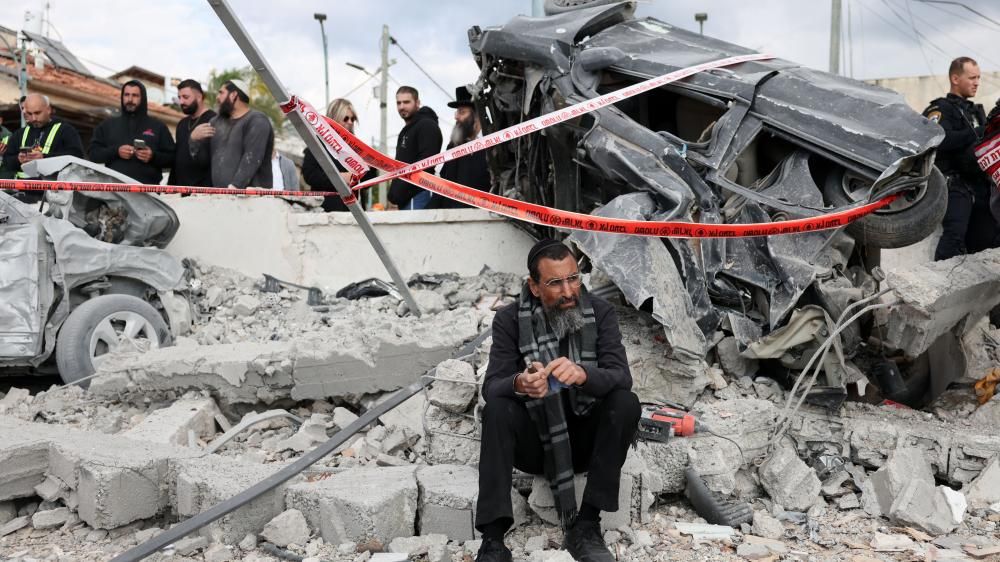
Iran military posture in an expanding confrontation with Israel and the United States suggests Tehran is not pursuing victory in the traditional battlefield sense. Instead, the Islamic Republic appears to be fighting to stay standing—and to do so on terms it can live with.
Iranian leaders and commanders have long anticipated that regional ambitions could eventually trigger a direct clash with Israel or Washington, and that a conflict with one could quickly pull in the other. That dynamic was visible during last summer’s 12-day war, when Israel struck first and the U.S. joined days later. In the current fighting, strikes on Iran began with U.S. and Israeli action unfolding in parallel.
Given the technological edge, intelligence reach and advanced military hardware fielded by the U.S. and Israel, it would be unrealistic to assume Iranian planners expected an outright conventional win. Instead, Tehran appears to have constructed a strategy centred on deterrence and endurance.
Deterrence Through Missiles, Drones and Regional Allies
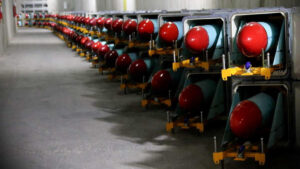
Over the past decade, Iran has invested heavily in layered ballistic missile capabilities, long-range drones and a network of allied armed groups across the region. The logic, analysts say, is not necessarily to overpower opponents directly but to ensure Iran can impose costs and shape risk calculations.
Iran recognises key limits: U.S. mainland territory is beyond reach, but American bases across the region—especially in neighbouring Arab countries—are not. Israel is also within range, and recent exchanges have shown that air defences can be penetrated. Each successful strike carries both military impact and psychological weight.
The “War Economy” Calculation: Costly Interceptors vs Cheaper Threats
A central element of Iran’s approach appears to be economic attrition. Many interceptors used by Israel and the U.S. are significantly more expensive than some of Iran’s one-way drones and missile systems. In a prolonged conflict, Tehran may be betting that forcing repeated interceptions drains high-value stockpiles and drives up the financial and logistical burden on its adversaries.
Energy as Leverage: Pressure Through the Strait of Hormuz
Energy security is another lever. The Strait of Hormuz remains one of the world’s most critical chokepoints for oil and gas shipments. Iran may not need to fully shut the waterway to influence the conflict’s economics: credible threats or limited disruptions can push prices higher and potentially generate outside pressure for de-escalation.
In that sense, escalation can function less as a route to military defeat of opponents and more as a way to increase the costs—financial, political and strategic—of continuing the war.
Strikes on Neighbours: Signalling Risk to Hosts of U.S. Forces
Iranian missile and drone attacks on regional states such as Qatar, the United Arab Emirates, Kuwait, Oman and Iraq appear intended to send a message: hosting U.S. forces could bring danger home.
Tehran may be hoping those governments will press Washington to scale back operations. But analysts warn this is a dangerous gamble. Expanding attacks risks hardening hostility and pushing regional states more firmly into alignment with the U.S. and Israel—potentially isolating Iran further even after the war ends.
If survival is Tehran’s overriding objective, widening the circle of adversaries is a high-stakes move. Yet from Iran’s perspective, restraint may also look risky if it is interpreted as weakness.
Decentralised Launch Authority: Resilience With Added Risk
Reports that local commanders may be choosing targets or launching missiles with relative autonomy raise further questions about how Iran is operating under sustained pressure.
If accurate, this would not necessarily mean a breakdown. Iran’s doctrine—especially within the Islamic Revolutionary Guard Corps (IRGC)—has long included decentralised elements designed to keep operations going under heavy attack. Communications can be jammed or intercepted, senior commanders can be targeted, and U.S.-Israeli air superiority can limit central oversight. Under such conditions, pre-authorised target lists and delegated launch authority could be built-in safeguards against “decapitation” strikes.
This may help explain how Iranian forces have continued operating after the killing of senior IRGC figures and even after the killing of Iran’s supreme leader, Ali Khamenei, in the opening strikes described in the account.
But decentralisation also increases danger. Local commanders working with partial information may hit unintended targets, including neighbouring states trying to remain neutral. Without a unified operational picture, the risk of miscalculation rises—and prolonged fragmentation could eventually degrade command and control.
A Bet That Time and Pain Tolerance Decide the Outcome
Ultimately, Iran’s approach appears to rely on a belief that it can absorb punishment longer than its opponents are willing to sustain costs and political pressure. In that framework, escalation becomes calculated: endure, retaliate, avoid collapse and wait for fractures—domestic or international—to emerge on the other side.
However, endurance is not unlimited. Missile stockpiles are finite, production lines are vulnerable, and mobile launchers can be targeted while relocating. Replacing high-value systems takes time.
The same pressure applies to Iran’s adversaries. Israel cannot rely perfectly on air defences, and each breach intensifies public anxiety. The U.S. must weigh the risks of regional escalation, volatility in energy markets and the financial burden of prolonged operations.
Both sides appear to believe time favours them—yet both cannot be correct.
In this war, Iran may not need a clear triumph. It needs to remain standing. Whether it can do so without permanently alienating its neighbours remains the central unanswered question.