
Iran military says it has targeted the headquarters of Iranian Kurdish forces in northern Iraq, escalating attacks across Kurdish مناطق in both Iran and Iraq.
In a statement, the military said it struck “Kurdish groups opposed to the [Islamic] revolution in Iraqi Kurdistan with three missiles.” The BBC confirmed that one person was killed and three others were injured in strikes carried out on Tuesday and Wednesday.
Tehran Steps Up Pressure Amid Claims of Possible Kurdish Role
Iran’s latest attacks come as fighting continues in the wider region, with U.S. and Israeli strikes ongoing and reports suggesting U.S. President Donald Trump wants Iranian Kurdish groups to join the fight against Iran.
Kurdish Iranian opposition parties based in Iraq have rejected claims that their forces have crossed into Iran.
“This is not true. Do not believe it,” said Hanna Hussein Yazdan Pana of the Kurdistan Freedom Party (PAK). “Not a single Peshmerga [fighter] has moved. No-one moves alone.”
She said six Kurdish opposition groups—recently formed into a coalition—were coordinating plans but insisted any movement would require U.S. conditions to change first. She told the BBC nothing would happen this week.
Calls for Air Cover and a No-Fly Zone
Pana said Kurdish groups could not advance without protection from above.
“It’s not about the hours or days. We cannot move if the air above us is not cleaned,” she said, arguing that weapons depots belonging to Iran’s security forces would need to be destroyed. Otherwise, she warned, “it would be suicidal.”
She also called for a no-fly zone to protect Kurdish forces, saying they remain outgunned. “The regime is very brutal,” she said, adding that the most advanced weapon they have is a Kalashnikov.
The White House has denied a report claiming the president is considering arming Kurdish forces.
BBC Sees Damage at Two Sites After Missile and Drone Attacks
On Wednesday, the BBC visited the aftermath of strikes at two separate Kurdish opposition locations.
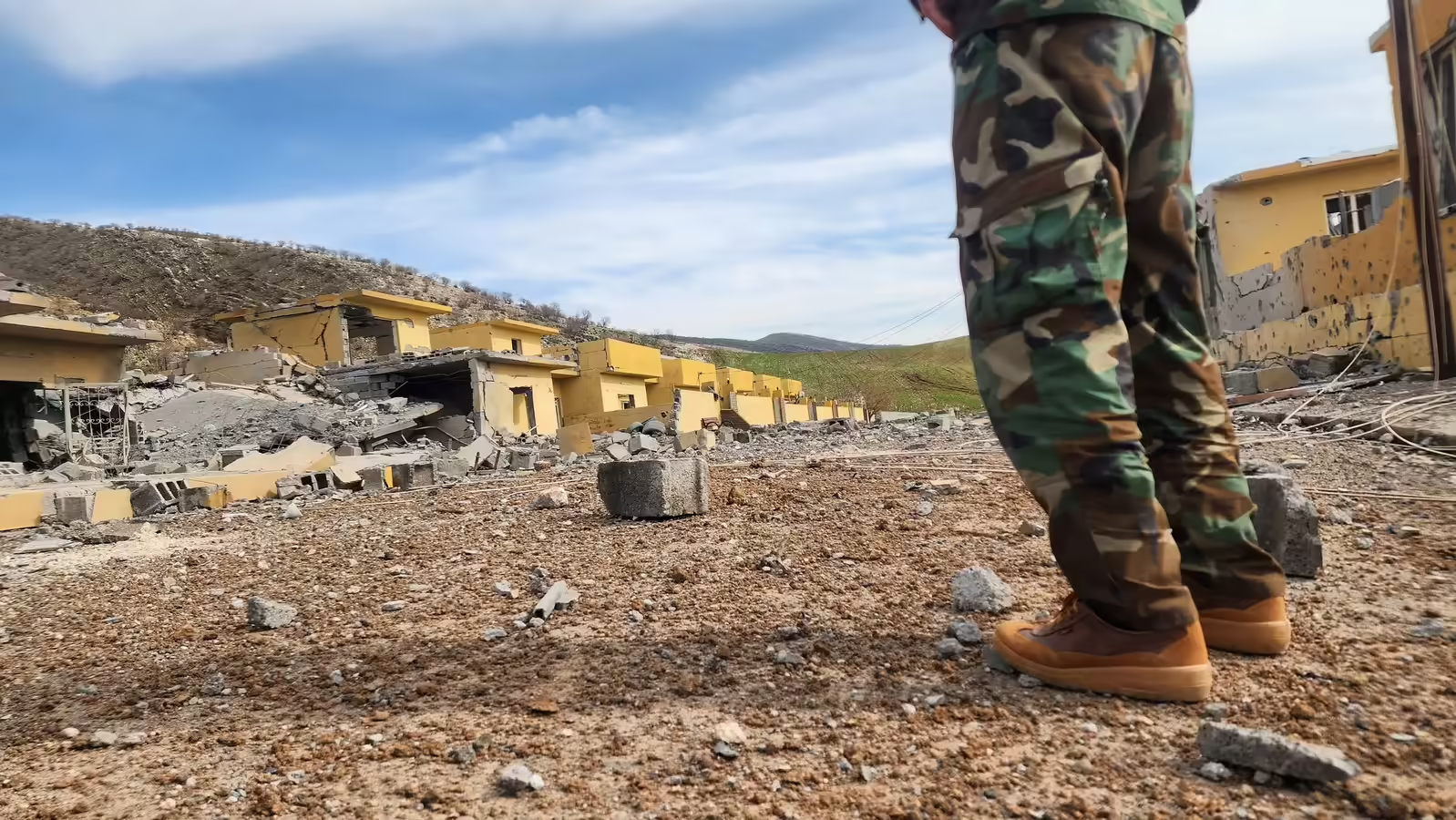
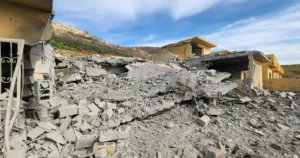
At one base, a ballistic missile hit at about 11:00 local time (08:00 GMT) on Wednesday, injuring four Kurdish Peshmerga fighters. One later died from injuries, according to the report. The BBC described a crushed building, debris spread across a wide area, and a crater where the missile struck.
At another base belonging to the Democratic Party of Iranian Kurdistan (KDPI), the BBC reported a double drone strike on Tuesday that was said to have injured one civilian.
A senior KDPI political figure told the BBC he believed Kurdish forces would soon be fighting inside Iran, though he did not give a timeline. He also declined to comment on reports that Trump had spoken to the KDPI leader in recent days.
A 25-year-old fighter named Hassan, carrying an AK-47, told the BBC he wanted to go to Iran to fight. “We are closer than ever,” he said.
Analysts Warn Iran’s Ethnic Fault Lines Could Become Another Front
Sir Simon Gass, a former British ambassador to Tehran, described Iran as “a patchwork of different ethnicities,” with Persians the majority and sizeable minority communities including Kurds, Balochs, Arabs and Azeris.
He said that if the United States and Israel found a way to encourage armed uprisings among minority groups, it would present Iran with a major additional challenge. However, he noted Iranian Kurdish fighters are “relatively lightly armed” and, under normal conditions, would struggle against Iran’s military—unless outside special forces support and air power changed the equation.
Who the Kurds Are—and Why the Region Is Sensitive
More than 30 million Kurds live across a mountainous region spanning parts of Turkey, Iraq, Syria, Iran and Armenia. They are often described as the Middle East’s fourth-largest ethnic group, yet have not established a permanent nation state.
In Iran, Kurds are estimated at about 10% of the country’s roughly 91 million people, mainly Sunni Muslims concentrated in the north-west.
Amnesty International has said Iranian Kurds have long faced entrenched discrimination, with restrictions on social, political and cultural rights, as well as pressure on economic opportunities.