

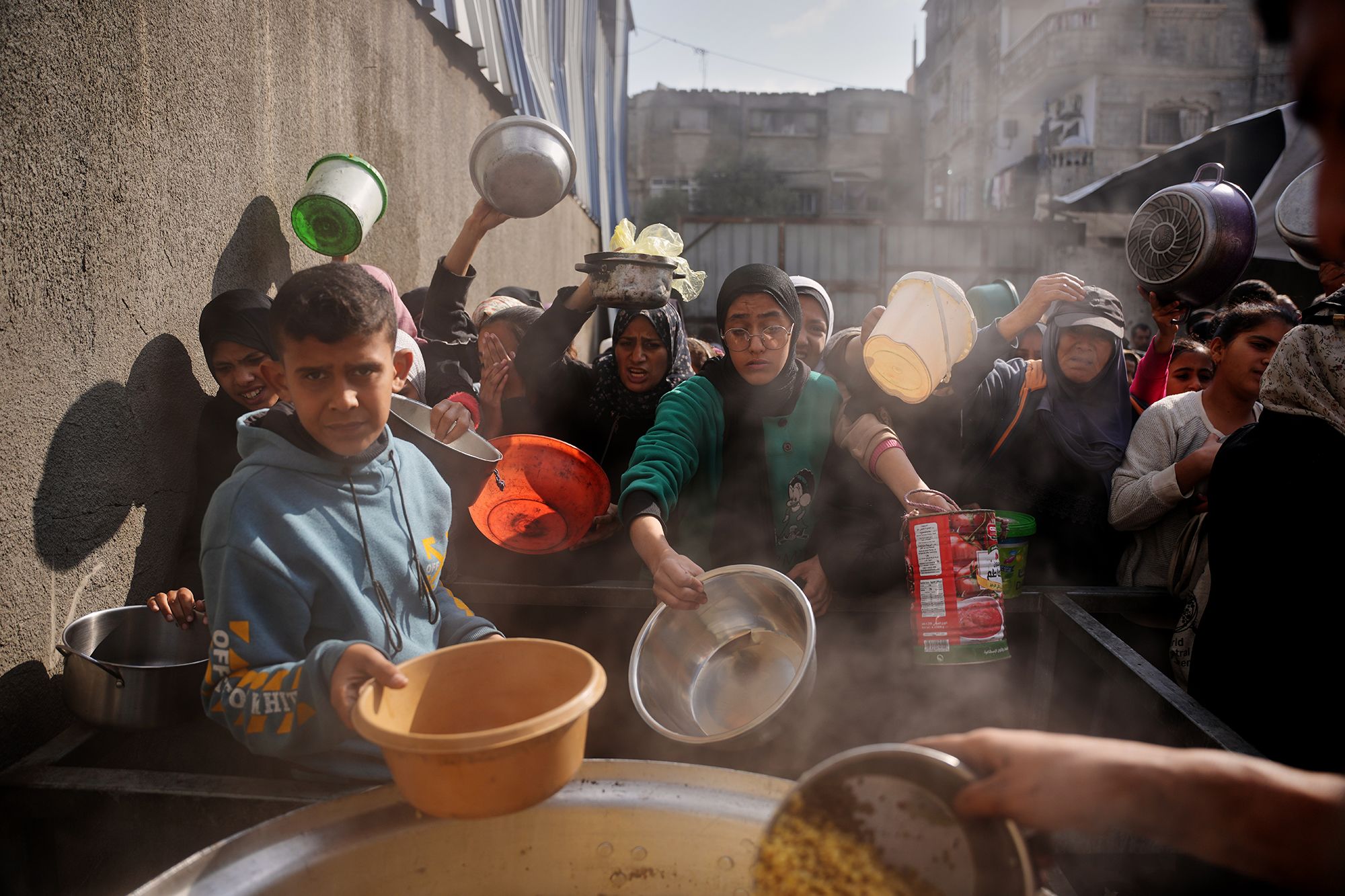
Gaza is no longer classified as being in a state of famine, according to a United Nations-backed hunger monitoring body, following a significant increase in humanitarian aid after a ceasefire agreement reached in October between Israel and Hamas.
The Integrated Food Security Phase Classification (IPC) said on Friday that food security conditions in the Gaza Strip have improved due to reduced fighting, better access for humanitarian assistance, and increased commercial food deliveries.
“No areas are classified in Famine,” the IPC said, noting that the combination of a ceasefire, a proposed peace framework, and improved access for aid has helped ease the most extreme conditions. In August, the IPC had warned that parts of Gaza were experiencing a “man-made” famine.
Despite the improved classification, the watchdog stressed that the situation remains fragile. Most of Gaza’s population is still facing high levels of acute food insecurity, with many households struggling to meet more than basic survival needs.
“Although humanitarian assistance, including food aid, has increased, only minimal needs are currently being met,” the IPC said, highlighting that long-term food security remains far from assured.
Famine Risk Could Return if Conditions Worsen
While famine conditions have eased for now, the IPC warned that Gaza could slide back into famine if the situation deteriorates. Under a worst-case scenario involving renewed hostilities and a halt to humanitarian and commercial aid, several areas — including North Gaza, Gaza Governorate, Deir al-Balah and Khan Younis — could face famine risks through mid-April 2026.
Israel had previously rejected claims that Gaza was experiencing famine, arguing that it was facilitating the entry of aid into the territory. Responding to the IPC’s latest report, Israel’s ambassador to the United Nations, Danny Danon, said the findings confirmed Israel’s position that famine conditions no longer exist in Gaza.
Israel’s aid coordination body, the Coordination of Government Activities in the Territories (COGAT), said that between 600 and 800 aid trucks are now entering Gaza each day, with roughly 70% carrying food supplies.
However, Hamas has disputed those figures, arguing that the amount of aid reaching civilians remains insufficient. Media organizations, including CNN, have extensively reported on hunger and malnutrition in Gaza, particularly during periods before the ceasefire when aid access was heavily restricted.
The IPC’s famine classification follows a strict methodology. Under its five-phase scale, famine can only be declared when multiple thresholds are met, including extreme food shortages affecting at least 20% of households, severe child malnutrition rates, and elevated death rates linked to starvation or disease.
Although Gaza no longer meets those criteria, the IPC emphasized that sustained access to aid and continued restraint are essential to prevent a renewed humanitarian crisis in the enclave.