

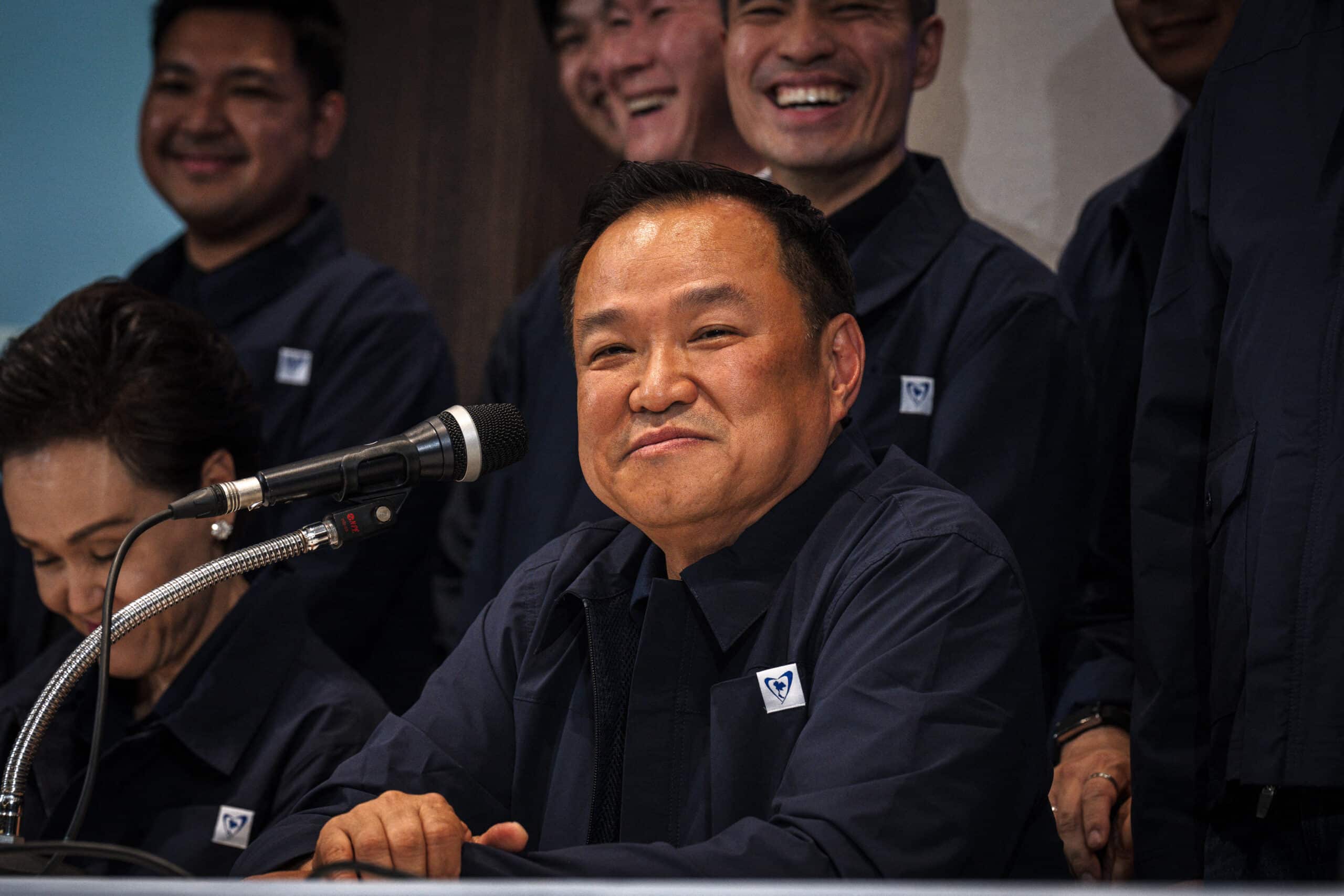
Thailand’s political landscape shifted sharply on Monday after Prime Minister Anutin Charnvirakul’s Bhumjaithai Party delivered a stronger-than-expected victory in the general election, paving the way for coalition negotiations in the coming days.
With about 94% of ballots counted, Bhumjaithai emerged as the clear frontrunner from Sunday’s vote, securing 193 of the 500 seats in parliament, according to Reuters calculations based on data from Thailand’s election commission.
Markets Welcome Reduced Political Risk
The outcome was welcomed by investors. Thai equities surged roughly 3% on Monday, pushing the benchmark index to its highest level in more than a year as fears of prolonged political deadlock eased.
Trailing Bhumjaithai were the reform-oriented People’s Party with 118 seats and the populist Pheu Thai Party with 74. Smaller parties captured a combined 115 seats, though final allocations may shift slightly due to Thailand’s proportional representation system.
Nationalism Shapes the Outcome
Anutin called the snap election in December after spending less than 100 days in office, seeking to harness a surge of nationalist sentiment triggered by Thailand’s three-week border confrontation with Cambodia late last year.
He described the result as “a victory for all Thais,” saying voters had endorsed stability and strong leadership.
Analysts said Bhumjaithai consolidated the conservative vote, winning 30.2% of constituency ballots and capturing seats previously held by Pheu Thai, long dominated by the Shinawatra family.
Coalition Talks Loom
Asked about forming a government, Anutin said he was waiting for final results before opening formal negotiations but made clear he was seeking a commanding parliamentary majority.
“We need a strong government,” he said in a televised interview on Monday.
The prime minister has previously indicated that key cabinet positions—including finance, foreign affairs and commerce—would remain unchanged if he succeeds in forming a new coalition.
Hardline Border Pledges
Highlighting the role nationalism played in the campaign, Anutin reiterated pledges to strengthen the military and pursue tougher border policies with Cambodia.
“I still have to build the wall,” he said, referring to a proposed barrier along the frontier. “We must continue to strengthen our armed forces. I believe Thai soldiers can prevail against anyone, and border crossings should remain closed.”
Reformists Rule Out Coalition Role
The People’s Party, which had led several opinion polls earlier in the campaign, has ruled out joining an Anutin-led government. Party leader Natthaphong Rueangpanyawut said on Sunday night that the party would not attempt to assemble a rival coalition either.
Political analysts said the late swing toward conservatives reflected heightened nationalist sentiment stemming from the Cambodia dispute, which overshadowed earlier reform-focused campaigning.
Voters Endorse Constitutional Change
Alongside the parliamentary vote, Thai voters also backed a proposal to replace the country’s current constitution. Nearly two-thirds supported drafting a new charter to replace the one introduced following the 2014 military coup, which critics argue entrenched the power of unelected institutions, particularly the Senate.
The constitutional overhaul is expected to take at least two years and will require two additional referendums—one to approve the drafting process and another to ratify the final text.
As coalition negotiations begin, Thailand appears set for a conservative-led government with a strengthened mandate, even as debates over reform and constitutional change continue to shape the country’s political future.