

China Supreme People’s Court has overturned the death sentence of a Canadian man convicted on drug-related charges, in a development that could signal a thaw in long-tense relations between Beijing and Ottawa, according to his lawyer.
Robert Schellenberg, who was arrested in China in 2014 on suspicion of drug smuggling, was originally sentenced to 15 years in prison in 2018. However, following a retrial in January 2019, his punishment was dramatically increased to the death penalty.
The escalation came just one month after the detention in Canada of Meng Wanzhou, a senior executive at Huawei, on a U.S. extradition request—an event that sharply worsened diplomatic ties between China and Canada.
Supreme Court Orders Retrial
Beijing-based lawyer Zhang Dongshuo told Reuters that China’s highest court ruled on Friday to reject the death sentence imposed by a lower court.
The case has now been sent back to the Liaoning Provincial High People’s Court for a retrial, Zhang said.
While welcoming the decision, Zhang cautioned that the likelihood of a full acquittal remains low, given the severity of the charges and the original ruling.
Timing Raises Diplomatic Questions
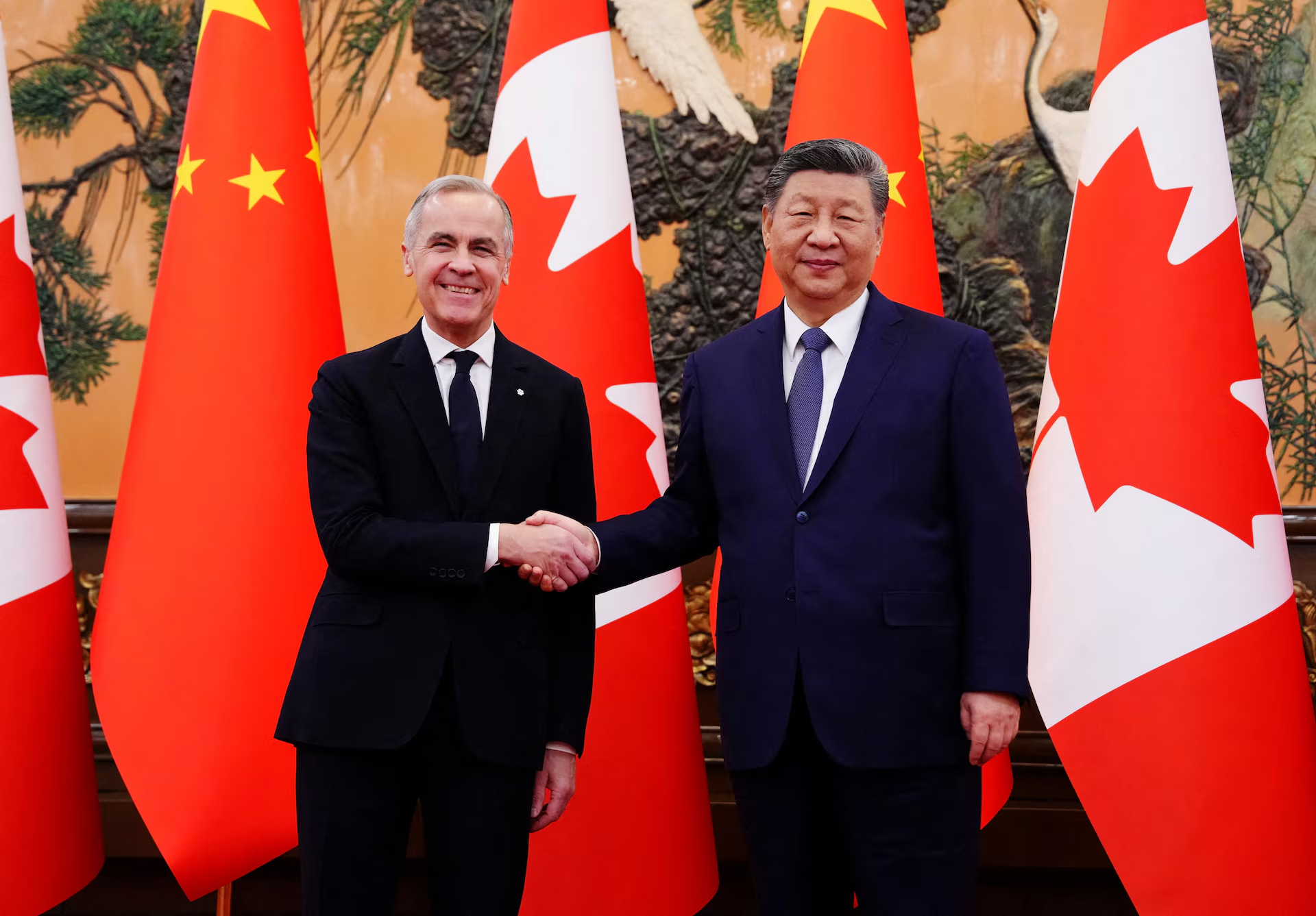
The court decision comes less than a month after Canadian Prime Minister Mark Carney concluded a four-day visit to China, during which he publicly described bilateral relations as improving after years of strain under former Prime Minister Justin Trudeau.

“Based on my experience, the timing strongly suggests a connection,” Zhang said, pointing to positive official statements released by both governments following Carney’s visit.
Canada’s foreign ministry confirmed it was aware of the ruling and said it would continue to provide consular assistance to Schellenberg and his family, without commenting further on the court’s decision.
Long-Running Source of Tension
Schellenberg’s case has been a major point of friction between the two countries. His death sentence was upheld by the Liaoning court in 2021, prompting strong condemnation from Ottawa.
Last year, Canada said that four Canadian citizens had been executed in China on drug-related charges, underscoring the sensitivity of such cases.
Relations between Beijing and Ottawa deteriorated sharply after China detained two Canadian nationals on espionage allegations shortly after Meng’s arrest. The two were released in 2021 on the same day the United States dropped its extradition request against Meng, allowing her to return to China—an episode widely described by critics as “hostage diplomacy.”
Trade Disputes and Recent Rapprochement
Tensions flared again in 2024 after Canada imposed tariffs on Chinese electric vehicles, following similar measures by the United States. China responded with tariffs on more than $2.6 billion worth of Canadian agricultural and food products, including canola oil, meal and seed.
Following Carney’s visit, both countries agreed to sharply reduce tariffs on electric vehicles and canola, marking a significant reversal and signalling renewed efforts to stabilise ties.
Analysts say the improving relationship between Canada and China could influence the broader geopolitical landscape, particularly amid growing rivalry between Beijing and Washington. However, they caution that Ottawa is unlikely to fundamentally shift away from its close alignment with the United States.
As Schellenberg’s case heads back to a provincial court, the ruling is being closely watched as both a legal turning point and a barometer of China–Canada relations.