

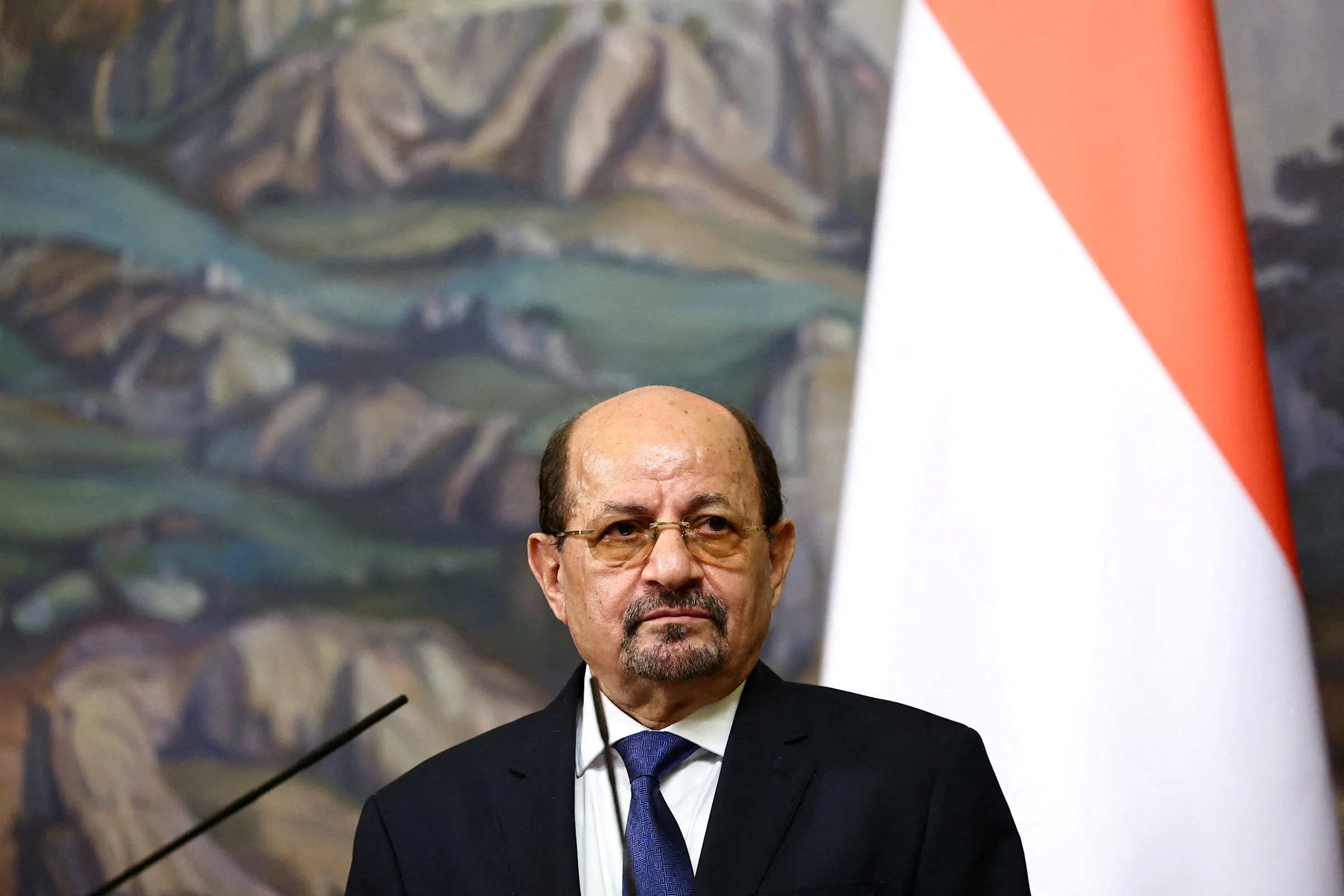
Yemen internationally recognised government has announced a new cabinet following weeks of consultations in Riyadh, a move officials say is aimed at restoring governance in a country fractured by war and competing political forces.
The announcement by the Saudi-backed Presidential Leadership Council (PLC) comes after a turbulent period marked by the collapse of the Southern Transitional Council (STC) and the withdrawal of United Arab Emirates forces from southern Yemen. The developments briefly allowed UAE-backed southern separatists to seize control of two provinces bordering Saudi Arabia, prompting a military response from Riyadh and straining relations between the two regional allies.
A Broad but Bulky Cabinet
The newly formed 35-member cabinet is larger than its predecessor, expanding by 10 posts. Its members come from a wide range of political affiliations, regions, and professional backgrounds, including economics, law, public administration, and academia.
Supporters see the broad composition as an attempt to reflect Yemen’s diversity and stabilise governance. Critics, however, argue it represents a redistribution of influence among entrenched elites rather than meaningful reform.
Yemeni political researcher Yaseen al-Tamimi said the size of the cabinet reflects a return to a politics of appeasement, designed to accommodate rival groups and regions.
“While this approach places a heavy burden on the state’s finances, the current phase requires power-sharing to bring factions into alignment with the government’s agenda,” she told Al Jazeera.
Al-Tamimi added that the cabinet appears to be the product of intense negotiations aimed at presenting a team capable of exercising political responsibility during a fragile period.
Government Priorities and Saudi Support
Prime Minister Shaya Mohsen al-Zindani said the new cabinet would prioritise improving living conditions, restoring basic services, fighting corruption, and strengthening state institutions.
In a statement, he said these efforts were essential to counter the influence of the Houthi movement, which controls much of northern Yemen, including the capital, Sanaa.
The PLC currently governs from the southern port city of Aden, having consolidated control over parts of the south with Saudi backing. Northern Yemen, home to most of the population, remains under Houthi control.
Political journalist Mohammed al-Samei said the cabinet’s success would depend on unity among its members and sustained political will from Yemen’s leadership.
“This government will only succeed if internal divisions are set aside and national interests come first,” he said, adding that continued Saudi financial support would be critical.
Information Minister Moammar al-Eryani said Saudi Arabia has pledged to cover salaries in southern Yemen, including those of military personnel, as part of efforts to restructure the armed forces and bring them under state authority led by PLC chairman Rashad al-Alimi.
Vice Foreign Minister Mustafa Noman, speaking in Doha, stressed that restoring security was the government’s most urgent task.
“Without stability, infrastructure and services cannot function,” he said, warning that failure could create a vacuum exploited by armed groups such as al-Qaeda and ISIL.
Humanitarian Crisis Looms Large
Beyond political and security challenges, the new cabinet faces an acute humanitarian emergency. Roughly 18 million Yemenis—about half the population—are experiencing severe food insecurity, with tens of thousands living in famine-like conditions.
Analysts say addressing humanitarian needs will be a key test of the government’s credibility, particularly in areas under its control.
Women’s Representation Welcomed
The new cabinet includes three women, a notable increase compared with previous governments. Afrah al-Zuba was appointed minister of planning and international cooperation, Ishraq al-Maqatri became minister of legal affairs, and Ahed Jaasous was named minister of state for women’s affairs.
Activists welcomed the appointments as a positive signal. Human rights advocate Najiba al-Naggar said the inclusion of women in senior roles reflects growing recognition of their political competence and constitutional rights.
For many Yemeni women, the move carries symbolic weight. “It’s been years since we heard of women ministers,” said Fatima Saleh, a university graduate in Sanaa. “This sends a message that women are not being dismissed, even if conditions remain difficult.”
Southern Divisions Persist
Reactions in southern Yemen remain sharply divided. While some residents urged patience, others—particularly supporters of the STC—rejected the new government outright.
Ahmed Maher, a journalist in Aden, said the cabinet should be judged by its actions rather than its composition. “This is a beginning, not an endpoint,” he said.
Tribal groups in Hadramout province criticised the cabinet’s formation process, arguing it failed to address deeper political grievances or provide a comprehensive solution for the south’s future. Southern separatists continue to call for independence, staging protests and rejecting Saudi influence.
Unity Still Elusive
Despite the cabinet’s broad makeup, observers say repairing Yemen’s fractured unity remains a daunting challenge.
“The war has deeply damaged national cohesion,” said al-Samei. “Even within the south, divisions persist. Whether this government can stabilise the south and challenge Houthi control in the north will determine Yemen’s future.”
The Houthis have dismissed the PLC as illegitimate, insisting that authority comes from control on the ground rather than international recognition. A Houthi fighter in Sanaa told Al Jazeera that any government backed by foreign powers lacks legitimacy and should be resisted.
As Yemen’s new cabinet begins its work, expectations remain tempered by years of conflict, political fragmentation, and unmet promises—leaving the country balanced between cautious hope and deep scepticism.