
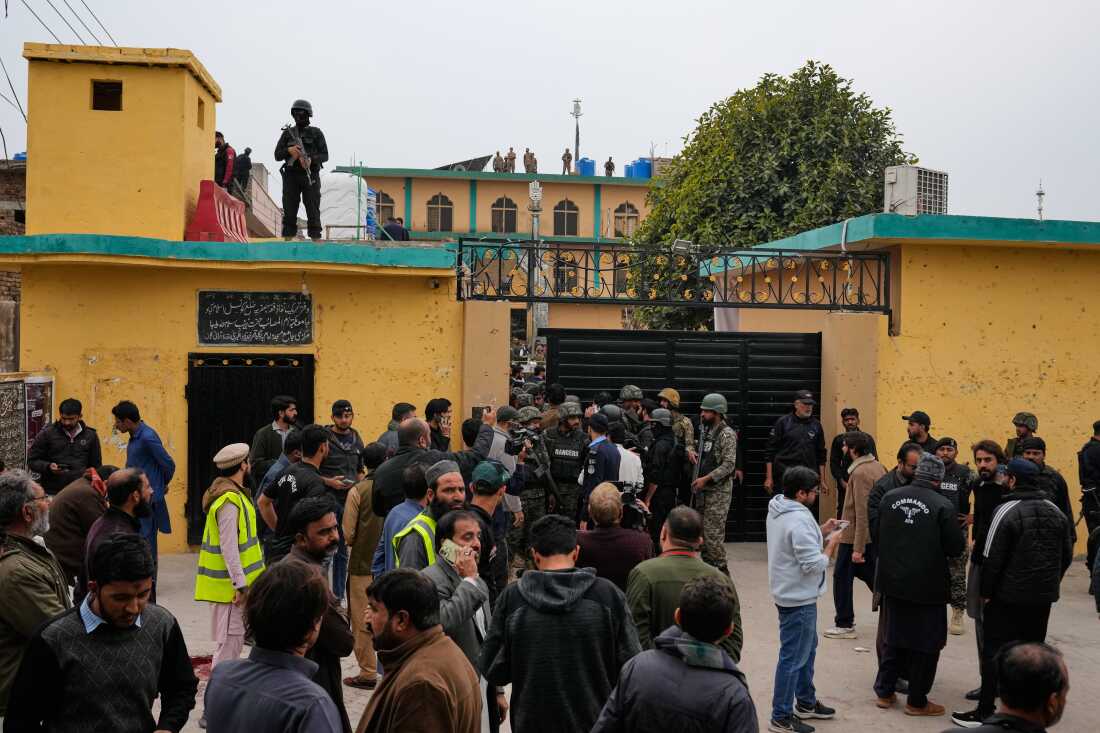
Funeral prayers were held on Saturday for more than 30 people killed in a suicide bombing at a mosque in Pakistan’s capital, as analysts warned the attack could signal a broader attempt to inflame sectarian divisions in the country. The blast occurred during Friday prayers at the Khadija Tul Kubra Mosque, a Shia place of worship located in Islamabad southeastern Tarlai Kalan area. Rescue teams transported at least 169 injured people to nearby hospitals, according to the Islamabad administration.
Hours after the attack, a Pakistan-based splinter faction linked to ISIL claimed responsibility through its Telegram channel, releasing an image it said depicted the attacker, with his face covered and eyes obscured.
Authorities Point to Possible Cross-Border Links
Pakistan’s Defence Minister Khawaja Asif said mosque security personnel attempted to stop the suspect, who opened fire before detonating explosives among worshippers. He alleged the attacker had been travelling between Pakistan and Afghanistan.
Security officials later told Al Jazeera that several arrests had been made, including close relatives of the bomber in Peshawar and Karachi. Authorities did not clarify whether those detained were directly involved in planning the attack.
A Shift in Islamabad’s Security Landscape
Islamabad had experienced a relative decline in militant violence in recent years. However, the latest bombing marked the second major attack in the capital in recent months, following a suicide blast targeting a district court last November.
Conflict analyst Abdul Sayed, based in Sweden, said the group identifying itself as ISIL’s Pakistan branch carried out what appears to be its deadliest operation since emerging in 2019. He noted that most of the group’s past attacks had occurred in Balochistan and largely targeted security forces.
Rising Militancy Across the Country
Pakistan has seen a steady increase in militant activity over the past three years. According to the Pak Institute of Peace Studies, 699 attacks were recorded nationwide in 2025, representing a 34 percent rise compared with the previous year.
Islamabad has repeatedly accused the Afghan Taliban—who returned to power after the withdrawal of United States forces in 2021—of allowing armed groups to operate from Afghan territory. The Afghan Taliban have denied these allegations and condemned the mosque bombing.
A United Nations report last year stated that the Afghan Taliban provided support to the Pakistan Taliban (TTP) and highlighted growing links between the TTP, ISIL affiliates, and separatist groups such as the Balochistan Liberation Army.
Sectarian Concerns Take Centre Stage
Security analyst Manzar Zaidi cautioned against equating the mosque attack with last year’s assault on a district court, describing the latest incident as explicitly sectarian in nature.
Shia Muslims make up more than 20 percent of Pakistan’s population and have periodically been targeted in sectarian violence, particularly in Kurram district near the Afghan border. The region has a long history of Sunni-Shia tensions and witnessed heavy clashes last year.
Zaidi warned that regional instability and broader geopolitical tensions could further strain the fragile peace in such areas.
Risk of Further Unrest
Islamabad-based analyst Fahad Nabeel said Pakistan is likely to maintain a hardline stance toward Kabul and may highlight possible Afghan links as investigations continue.
He added that while authorities may move quickly to prevent escalation, the risk of low-intensity sectarian attacks across different parts of the country remains high.
Sayed noted that past investigations show many Pakistani recruits to ISIL-linked groups emerged from anti-Shia extremist organisations, raising concerns that such attacks could fuel further radicalisation and recruitment.